July 2014
Monthly Archive
July 26, 2014
Posted by Grendel's Mother under
God,
Israel,
travel | Tags:
dominus flevit,
dung gate,
garden of gethsemane,
golden gate,
Holy Land,
Jerusalem,
jewish cemetary,
kidron valley,
lion gate,
mt. of olives,
old city |
Leave a Comment

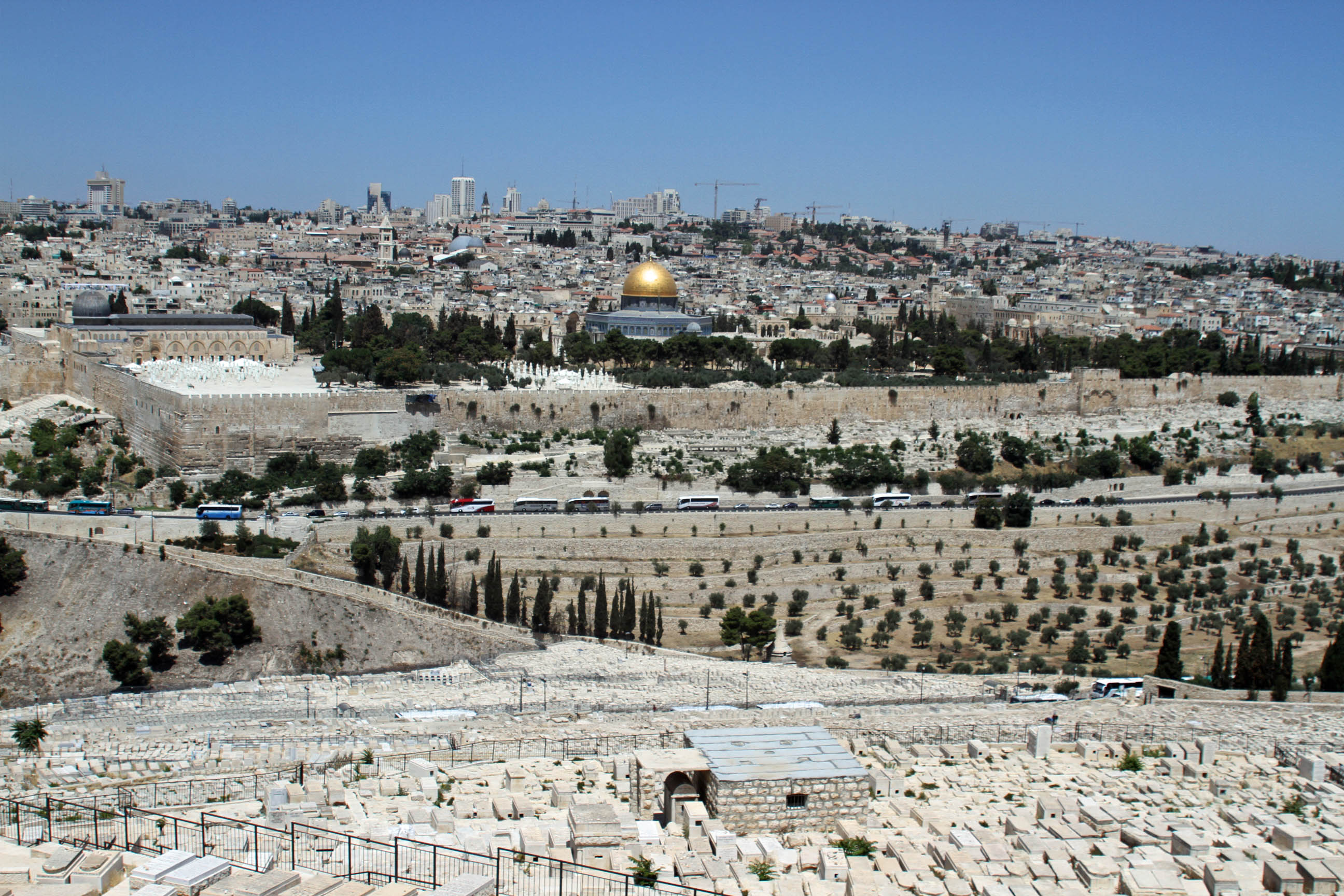
A view of the Old City from the Mt. of Olives.
Our tour of Jerusalem continues with more walking of course! After our visit to the Western Wall, our guide hailed a taxi to take us out through the Dung Gate and up the Mt. of Olives. When I say up I mean a seriously steep climb up a one-lane windy path. Meeting another car along the way had me worried we would not have the horse power to keep going forward if we had to stop. But, after a number of well-timed horn blasts we were at the top, staring out over the ancient Jewish cemetery where the tombs sit up off the ground and covered with a number of rocks from visitors.

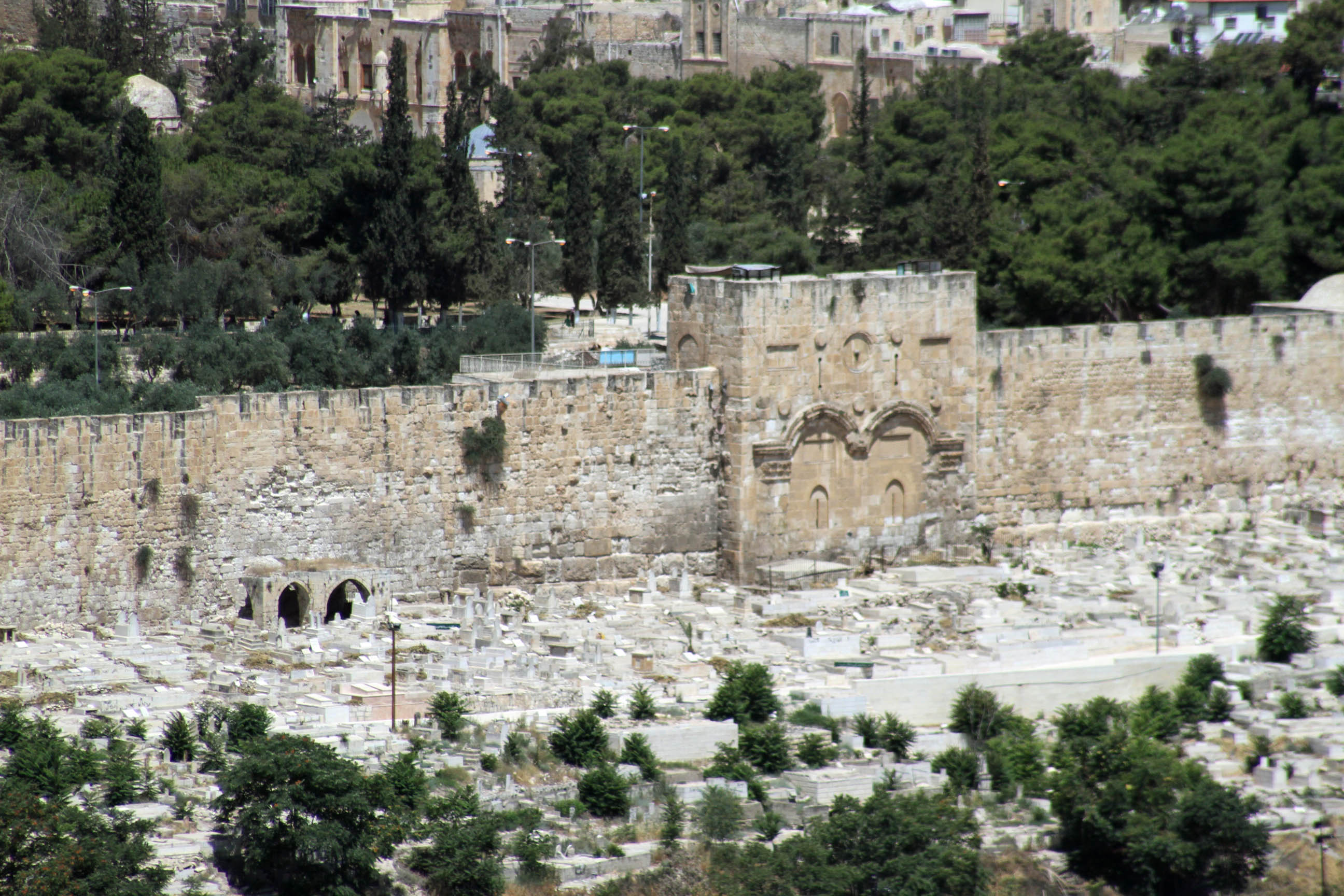
The Golden Gate.
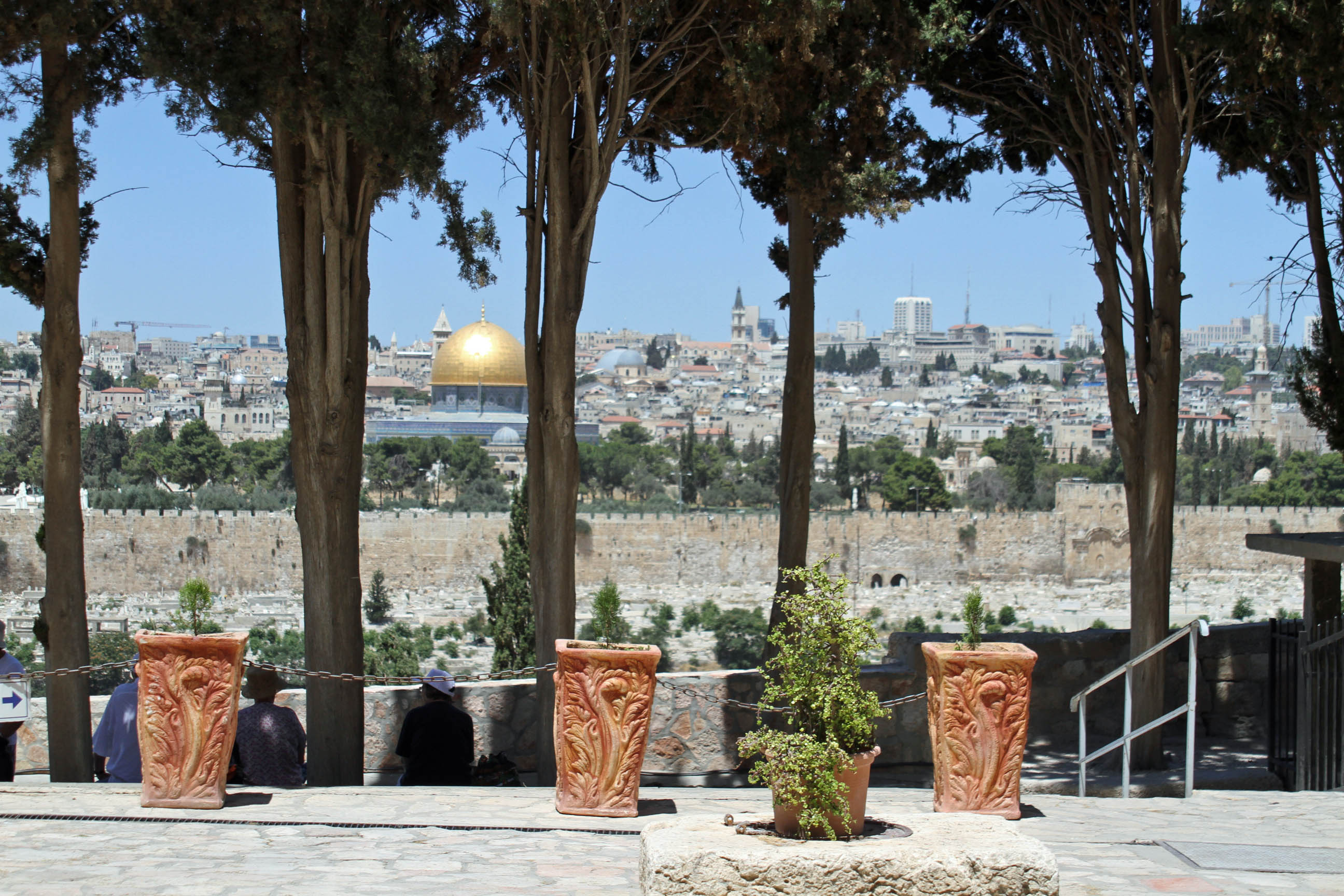
We took in the view of the Old City and the Temple Mount and could see the stretch of the Eastern wall of the city beyond the Kidron Valley where the Golden Gate (also referred to as the Gate of Mercy) is located. It was sealed by an Ottoman Sultan in the 1500s. Some say that was done because that is the gate Jesus passed through on Palm Sunday and where he will return again, and the Sultan wanted to prevent that from happening. Um, Mr. Sultan, I think if God wants to come through that gate, it won’t matter if you seal it.
Once again I thought of the hikes that Jesus took up and around some rough country in pretty hot weather. We could imagine Jesus praying and teaching as they looked across the ancient and holy countryside and sat among olive trees.

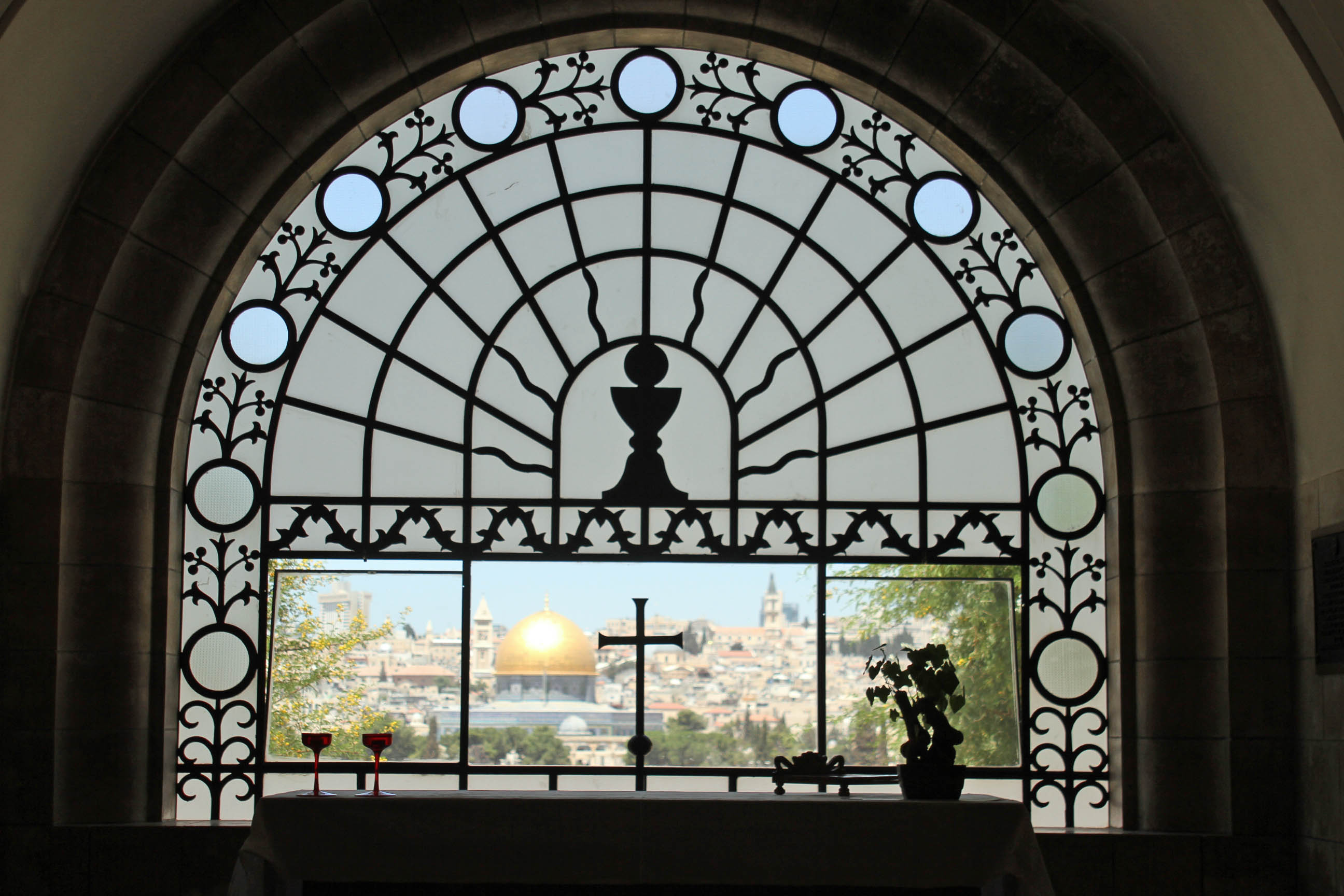
Dominus Flevit–the view through its beautiful window.
It was a cool 108 degrees outside and our slow walk down the slope took us by many security cameras (Israel is known for its security measures) and then in to the Dominus Flevit, a church built to commemorate the Lord’s weeping over Jerusalem. It features a beautiful view of the city and the Dome of the Rock through its chapel window. We saw a number of ossuaries (carved boxes that held the bones of people—collected after a year or so of burial). In the garden of the church area were a few olive trees left from days when they grew over the mountainside.
Garden of Gethsemane
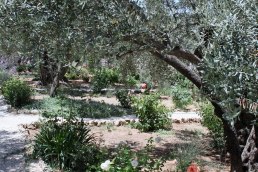
The Garden of Gethsemane.
Our final stop at the bottom was the Garden of Gethsemane where Jesus spent his last night on earth praying with his disciples. This is where he was arrested and taken to trial. It was interesting and a bit strange to hear our Jewish guide tell us the story with a new twist—it was the Romans who arrested him and according to her “there may have been some involvement with the Jewish leaders” but she was doubtful.
My mom and I had some interesting discussions about that later. We have nothing against Jewish people and would never judge the ancient Jews for their part in Jesus’ arrest and conviction. As Christians we believe Jesus took all of our sins upon himself—both people who were there and people who live now—so it may well have been us there mocking him and putting him on trial. Having said that, as a Christian hearing these new testament stories from someone who is reading from a book that does not necessarily follow our beliefs did take something away from the experience. I would recommend to other Christians to visit Israel with a church group or be guided by Christian guides if they feel that would be important to their Holy Land experience. We think it would have enhanced our spiritual experience if we had been led by a believer who shared our faith.

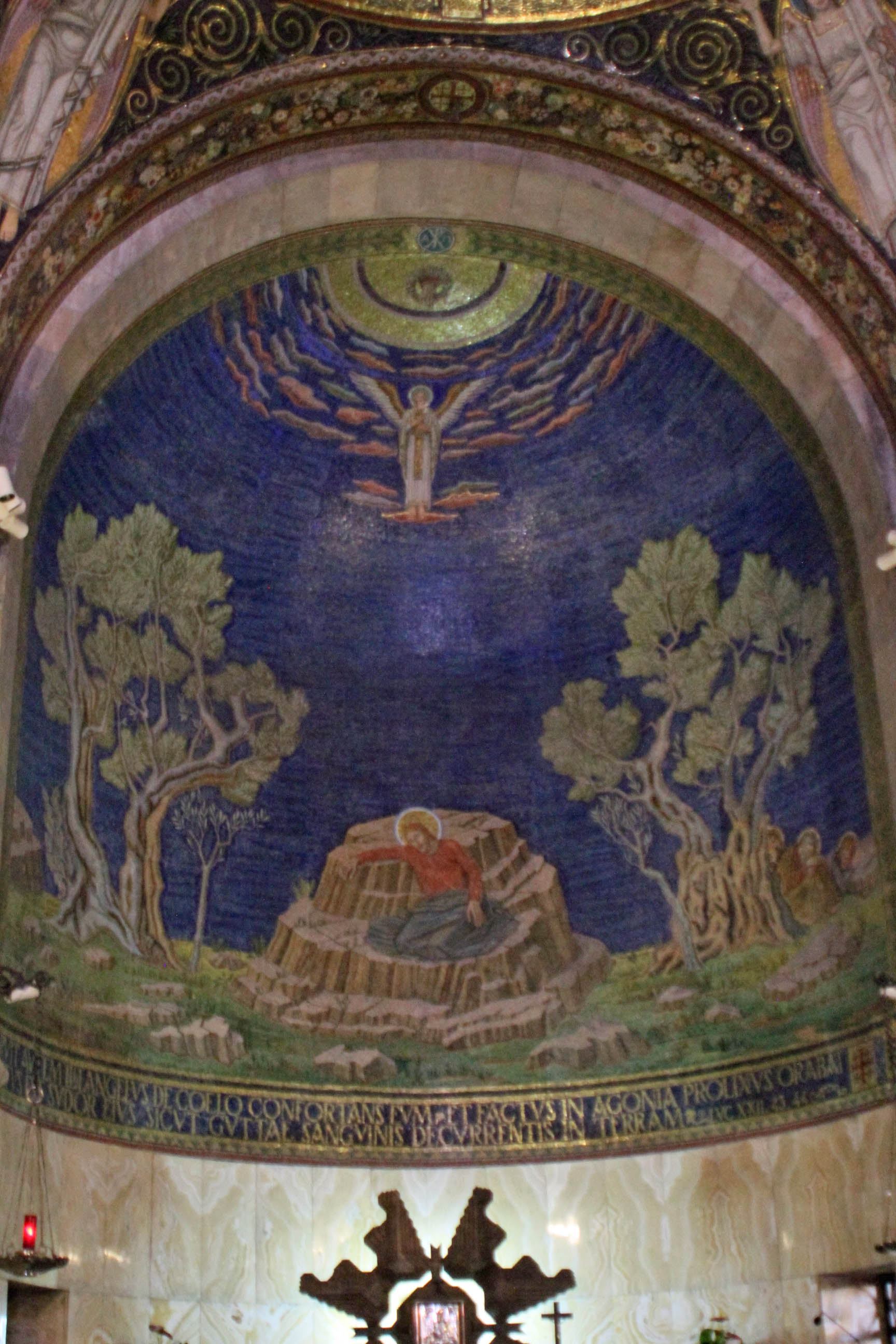
A mosaic in the Church of the Ascension in the Garden of Gethsemane.
From the Garden we continued our trek up a long steep path (this time walking and drinking about three bottles of water) through the Lion’s Gate which leads to the famous Via Dolorosa, the street that took Jesus from his torture to his death on the cross. I’ll cover our travels there and the rest of the holy sites in the next post.

Garden of Gethsemane
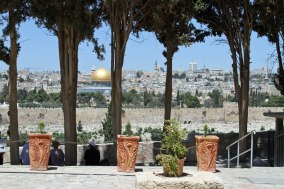
A view from Dominus Flevit of the Eastern Wall and the Dome of the Rock.
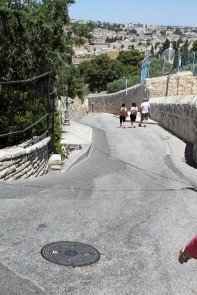
Steep walk down the hill.
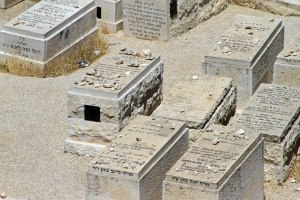
Tombs in the ancient Jewish cemetery on the Mt. of Olives.

The view of the Mt. of Olives from the road outside the Dung Gate.

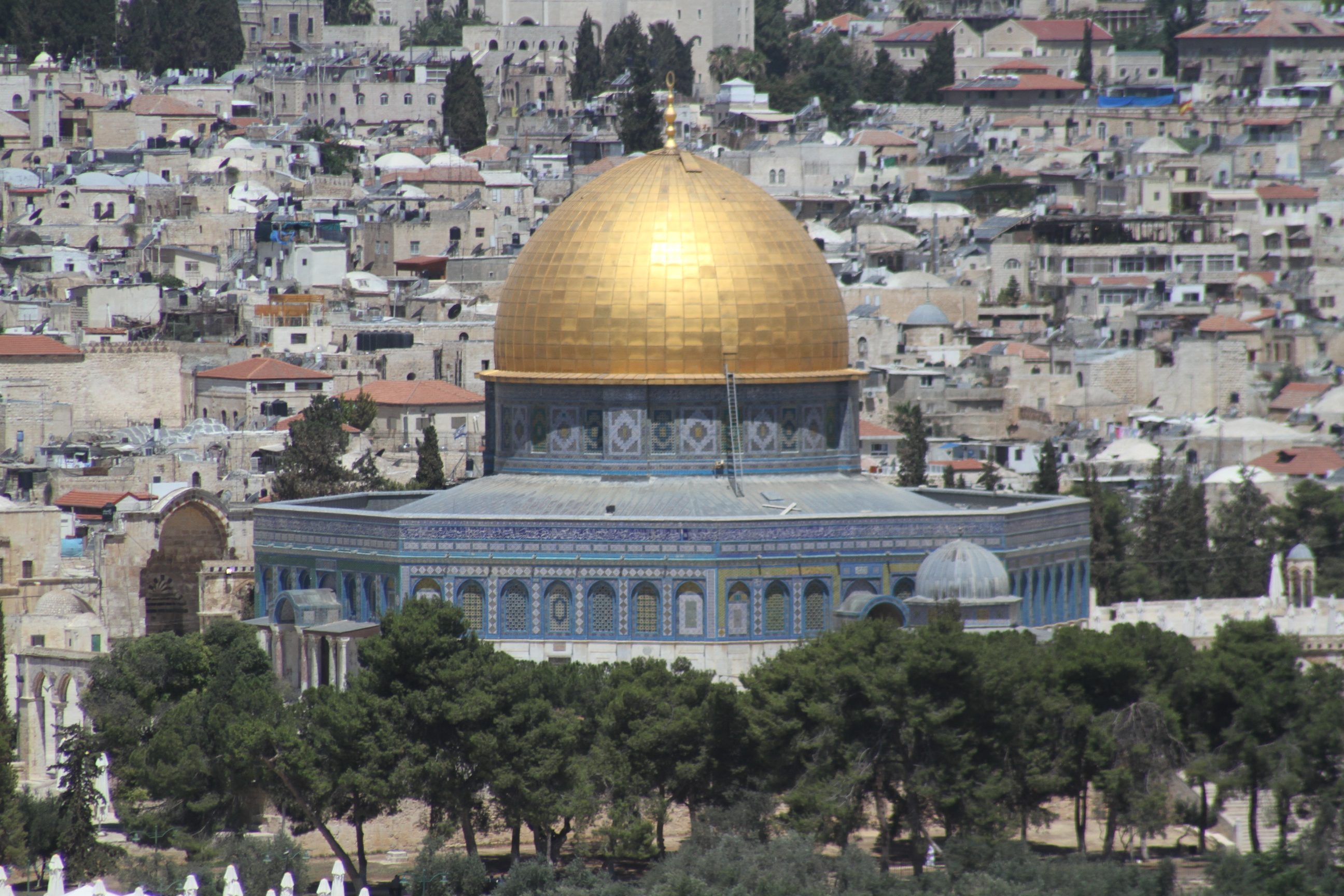
A closer look at the Dome of the Rock. A ladder there shows someone working on some of the golden tiles.
July 16, 2014

The tunnel along the wall. The stone to the bottom right is original.
Our stay in Jerusalem began with a walk to and around the Old City. In the morning we went on a tour through the tunnels that ran under the Muslim quarter and along the Western Wall of the Temple Mount. The city was built up upon platforms so there is room underneath the homes and businesses to walk around close to the foundations.
There’s something about touching stone that is thousands of years old. Imagining what it was like for the 150,000 slaves and 30,000 free workers who built Herod’s temple was a stretch. It was hard to figure out how they managed to move the one stone that comprised the Wall because it was—wait for it—560 tons.
Let’s digress for a moment and ponder how heavy that is. When fully loaded at take-off, the massively huge A380 Airbus airplane we flew out on weighs as much as 110 adult elephants, which coincidentally is about 560 tons. I’ll let you think about that and then imagine a bunch of ancient slaves heaving that up Mount Moriah and into place. I walked up that hill from the valley with just a back pack and thought I was going to faint.

The wing of our Airbus stretched very far out and were huge.
As we walked through the narrow tunnel and touched the ancient wall, we got closer to the holiest place for the Jews. Why so holy? Well, back several thousand years ago when Abraham was living in this land, God told him to sacrifice his youngest son Isaac. Abraham was going through with God’s command but was stopped by God at the last minute. It was on that sacrificial rock that the inner most room of the temple was built and where the ark of the convent was kept. (You remember Indiana Jones, right?)

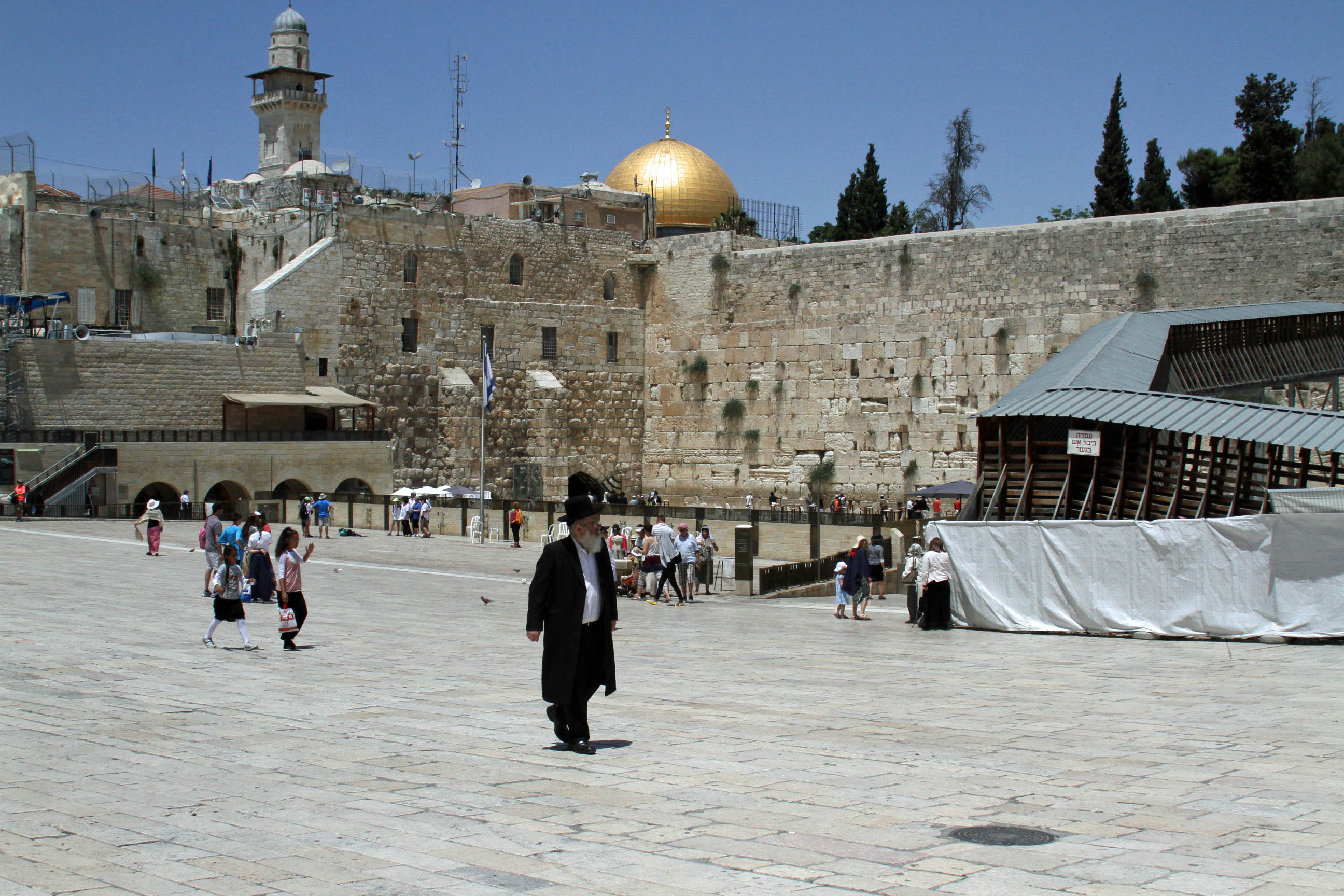
The view of the Western (Wailing) Wall with the Dome of the Rock on top of the Temple Mount.
Only one guy could go in to see the ark and only once a year. The room was called the holy of holies. The closest place to the holy of holies along the walls of the Temple Mount, is a spot in the tunnels. Not everyone can go there at will, so most people pray along the plaza of the Western Wall.
We also went to the plaza area. It was separated into two sections, one for men and the other for women. Standing there, touching it and looking up at how high it was and being so close to something so ancient and so famous throughout the world was a unique experience. My parents and I wrote out blessings or prayers and placed them in the cracks of the walls. Our guide said those notes are considered holy and are collected and buried.
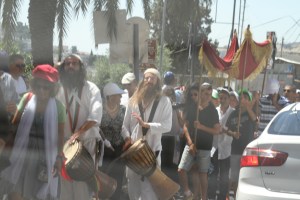
A number of young men have their bar-mitzvah celebrations at the wall.
We beheld so many historical places on our trip through the Old City that it can’t be told all at once. So for now, I’ll end with our quick trip to the museum which was very nice—a good place for visiting if you make it to Israel when peace is at hand.
Israel Museum
We were pretty tired after a day of walking and decided to drive over to the Israel museum. Nice and cool, out of the 100 degree heat, we strolled through more ancient relics, artifacts, anthropods (kind of like an Egyptian sarcophagus), ossuaries, and more. We viewed an amulet with a scripture from Numbers, and some of the Dead Sea scrolls that were actually the book of Isaiah.
To keep costs down we stopped at a market and picked up some dinners and snacks and Israel wine and enjoyed a nice meal on our terrace patio.

A view of the wall from the steps down from the city that open into the plaza area.
July 14, 2014
This post is the second installment in the Holy Land series of our 2014 trip. Fresh off the plane, we got out of the airport with very little fanfare. An interesting tidbit about passport stamps in Israel—they gave us a small slip of paper that had our photo on it—a visa stamp that was not a permanent stamp in the passport. I’m thinking that’s to avoid complications for travelers who want to visit countries not so pro-Israel. Upon exiting the concourse, I saw a huge mezuzah adorning the wall. (A mezuzah is a blessing that is wrapped in a case—something you’ll see on the doors of Jewish homes and businesses.) Anyhoo, we were met by our guide and whisked off to stretch our legs in the ancient city of Jaffa.
First Stop: Jaffa
Jaffa is a 4,000 year old town on the outskirts of Tel Aviv, which is only about 100 years old. In Israel, our guide says that in order to be considered old, a building, ruin, or relic must be about 1,000 years old or more. Several hundred years is considered new.

Andromeda’s rocks in Jaffa.
We walked to the top of a Tel, a man-made hill, and saw layers of excavation revealing the remnants of cultures from thousands of years ago. Before the modern age where we demolish and remove structures, people established towns by building on top of the ruins of previous inhabitants. This created layers of history that we now explore and learn from.
Jaffe is on the coast of the beautiful Mediterranean Sea. As we looked out over a marina, our guide told us the story of Andromeda and Perseus—the rocks Andromeda was placed on as a sacrifice (and that represent her) are said to be located off the shore near this little marina.
The Adventure of the Israeli Meal
After walking through a lovely artistic area, we sat down for our first meal. The owner placed a number of small bowls of various items on our table. Evidently in Israel, traditionally you are given a salad which is comprised of a number of bowls filled with delicious treats such as carrots, potatoes, eggplant, corn, humus, and baba ganush (among other dishes). The baba ganush was yummy and so were the flatbread pitas they brought us. We ordered some falafel and enjoyed the outside café with our new feline friends who came by for handouts. LOTS of cats run around wild in Israel. People feed them scraps and they earn their keep by keeping the rodents away.

Shwarma in the Old City.
Throughout our stay we tried a number of dishes we weren’t quite sure about that turned out to be delicious. A staple over there is a sandwich called a Shawarma—turkey that is cooked in lamb’s fat or oil, salad items, and humus wrapped in a big pita. YUM! On our first night, mom and I went exploring and sat down for a meal where the language barrier was a challenge. So we tried some soup called Kubu which turned out to be a delicious stew. We identified some meat and beets and decided it deserved two thumbs up.
Home Away from Home
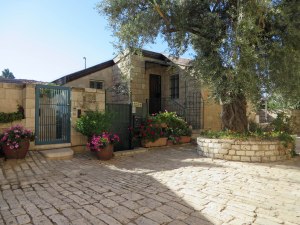
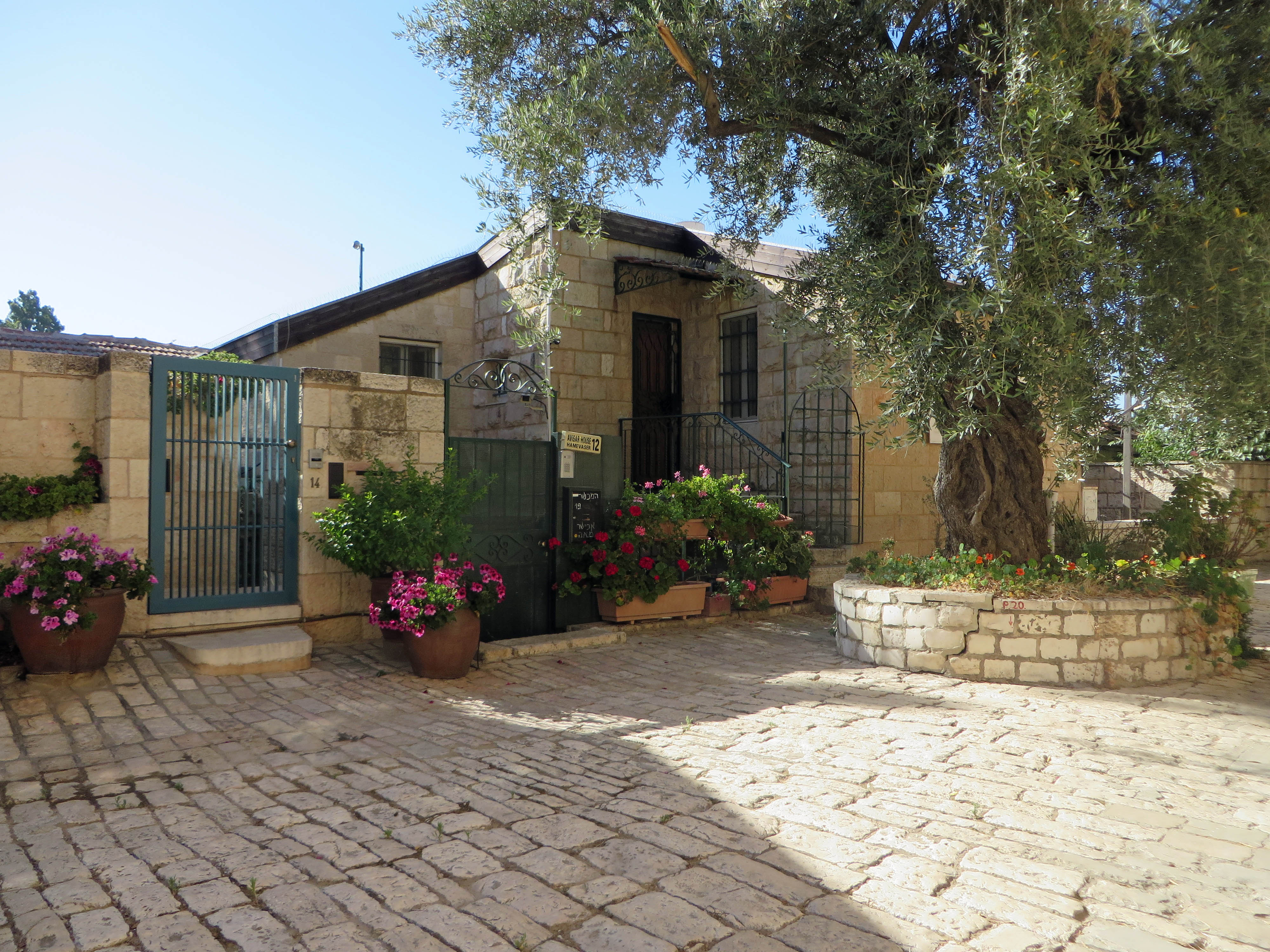
The Avissar House in Yemin Moshe.
Our home in Jerusalem for the next few days was an apartment, the Avissar House, located just a few minutes walk from the Jaffa Gate. It had a little terrace on the roof where I spent several wonderful nights under the stars looking across the road at the walls of the Old City and listening to the sounds of the night—a concert, some young people laughing, dogs, and the breezes through the pines around the neighborhood. Our landlord Yoseph was a kind gentlemen and we loved our accommodations nestled in a very cute pedestrian cobble-stoned street below the Montefiore Windmill in Yemin Moshe. Once we got settled and had a nice walk through the neighborhood to explore, we prepared for the day ahead, and with that we’ll explore the Old City of Jerusalem in the next post.

The Yemin Moshe neighborhood–our apartment was below the windmill. This is a view from the Jaffa Gate.

The view from Avissar House. The building across the road is David’s tomb and the “location” of the last supper.
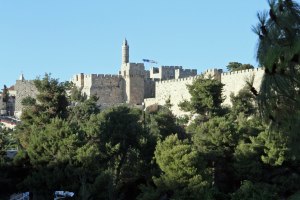
View from our terrace. The Jaffa Gate and walls of the Old City in Jerusalem.
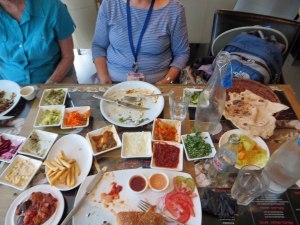
The Italians could take a lesson from the Jews. This is a typical meal–all the little “salad” bowls go with all the meals.
IMG_9833
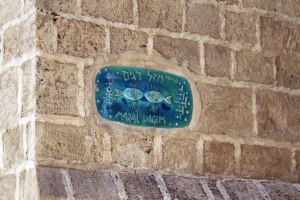
The street sign in the artistic area displayed zodiac signs on pretty tiles.
Next Page »










 From the Observation Deck