
View of Cusco.
Our Peru adventure continued with a very early flight to Cusco. At an elevation of 11,100 feet, the flight in was a bit scary. I could only see high snow-capped mountain tops out the window, which was disconcerting as we heard the sound of the wheels being lowered, meaning landing was imminent. A very steep banking curve brought us down to a strip that was completely surrounded by buildings. I was thankful when the plane came close to the end of the runway that there was a church there to break our stop if need be.

Bulls on the roof are a symbol of prosperity.
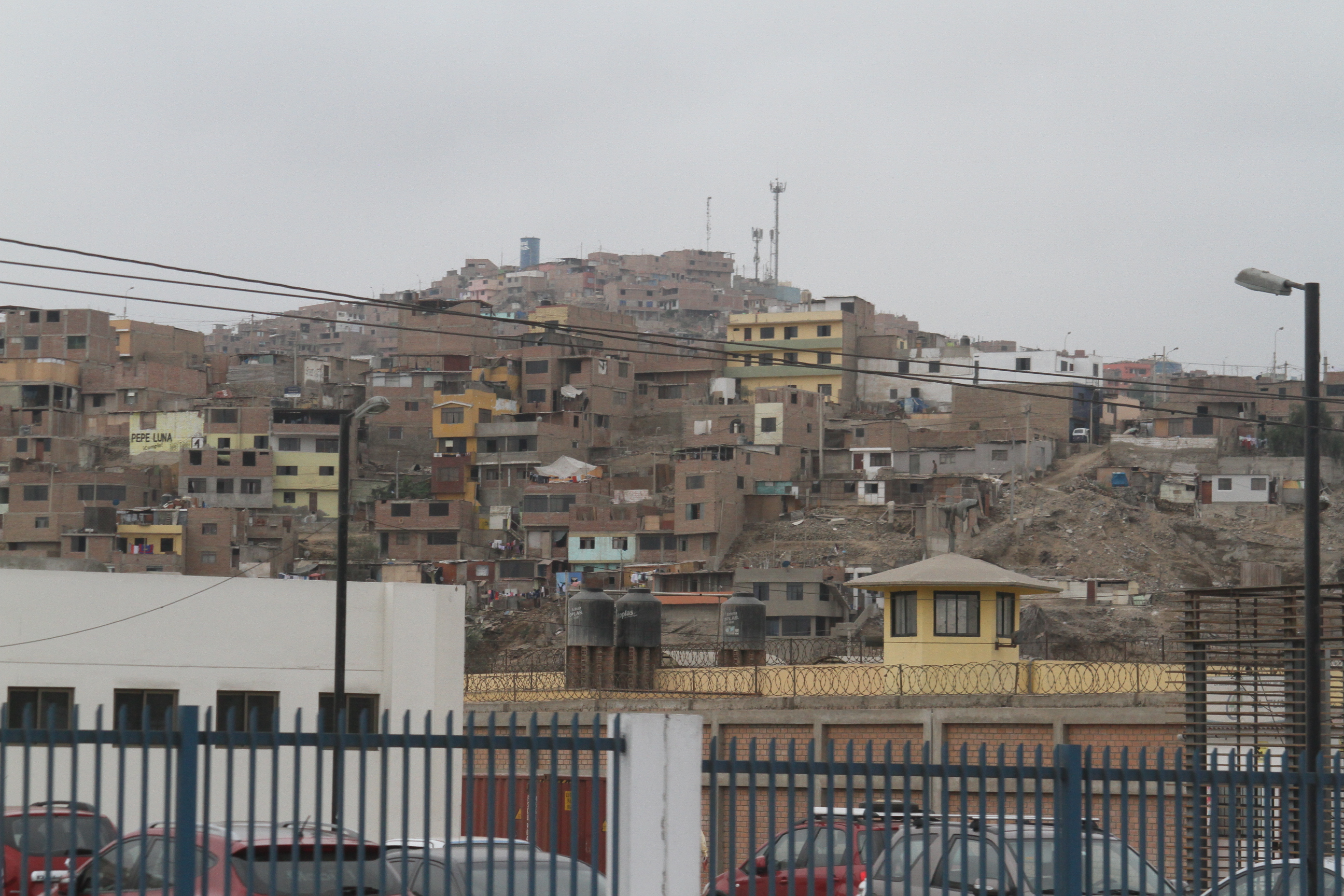
For the first few moments off the plane I felt really dizzy, but was able to adapt to the elevation a little bit better during the bus ride through a town crowded with houses half done and lots of wires between leaning telephone poles. On our way up and out of town, we passed homes that had two small bulls and a cross on the roof. Evidently that is a symbol of prosperity. Many people take years to finish their houses. For one thing, they save up bit by bit for the parts and construct it over time. Also, once the house is done, they have to pay taxes, so there is little rush. They typically leave some rebars up to make new levels for kids when they grow up.
Our guides explained the culture a bit as we rode through the Sacred Valley. Peruvians have public schools but only some are lucky to attend the private schools that go all day. Others can only go half days—they accommodate everyone by having two shifts in the am and pm. Some of the universities are public but there aren’t a lot of openings. I always think of the USA as the melting pot, but all over the Americas we can see diverse populations and Peru is no exception. The original habitants have mixed with Spanish, African, Asians, Italians, and more.

Storehouses at Ollantaytambo.
Evidence of the vast agriculture can be seen all over the mountains. The Incas built terraces everywhere and stored up years’ worth of food in storehouses. There were ancient potatoes recently dug up that when treated and cooked were still edible. Some terraces are still in use as the Peruvians cultivate about 4,000 varieties of potatoes. The soil there is so varied and in fact some is similar to what is on Mars so they are doing some agricultural testing for the Mars missions.
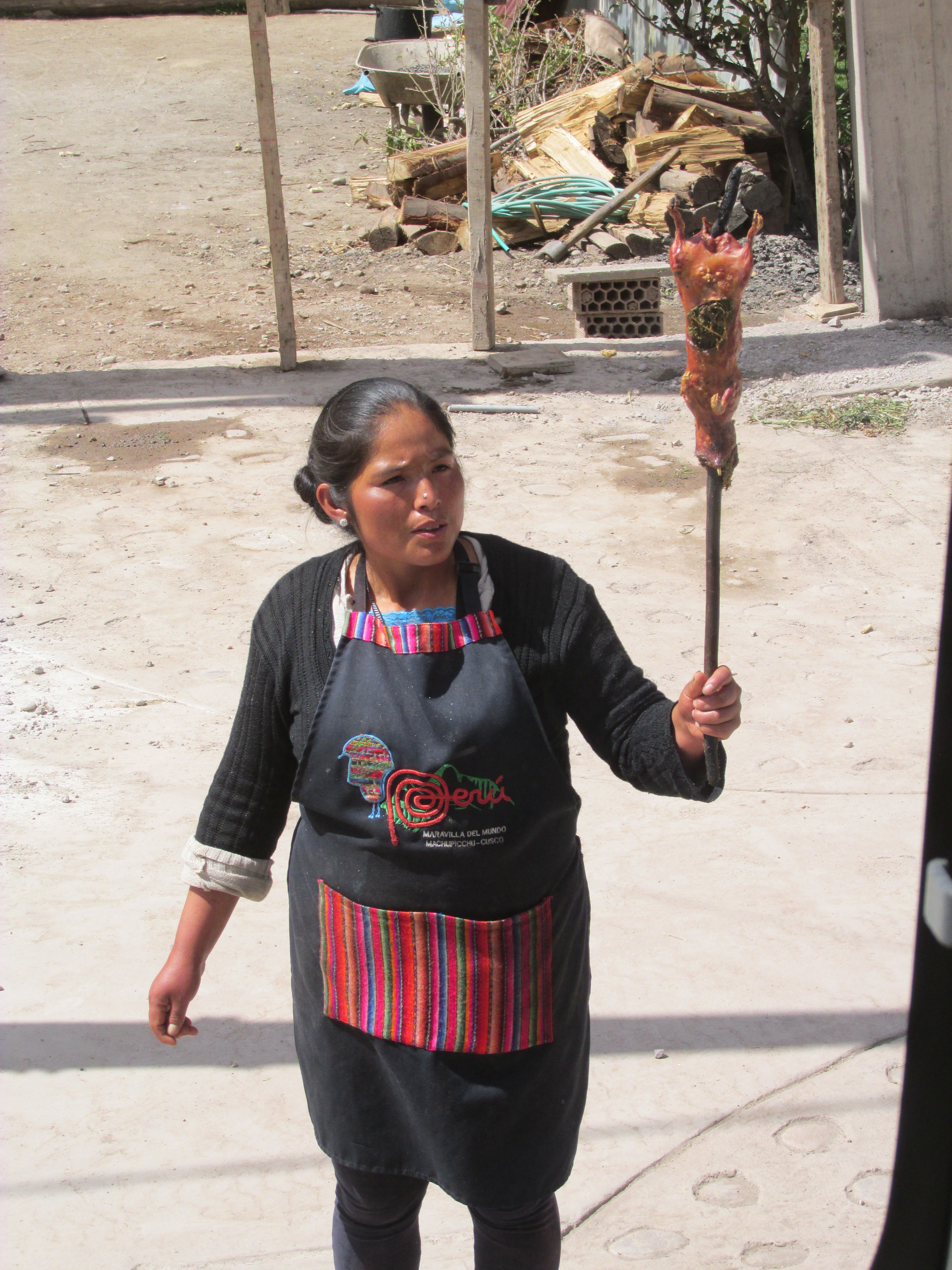
Guinea Pig on a stick.
Some of the sights along the road through the small towns included rainbow flags—the ancients were rainbow worshippers, red flags on poles outside of some homes—which was a sign that they served Chicha or Corn Beer there, and painted advertisements on homes. The ads were mostly political signs for the recent elections. The people would consent to the painted signs because basically they needed their houses painted and could get it done for free. In random places on the road and on small fields, people were drying corn on blankets and they would store lots of corn cobs in chicken wire bins.
One town was famous for its Guinea Pigs. In many homes in Peru, they have a dozen or so pigs living in the house (which is usually just one stone room) and when dinner time comes, they pick the fattest one and cook it up. As we went through this town, outside a restaurant with Guinea Pig on the menu, there was a 6-ft. plastic statue of a pig and a woman holding a roasted Guinea Pig on a stick. I tried fried Guinea Pig at dinner that night. The closest I can describe it, would be like duck. It wasn’t too bad.
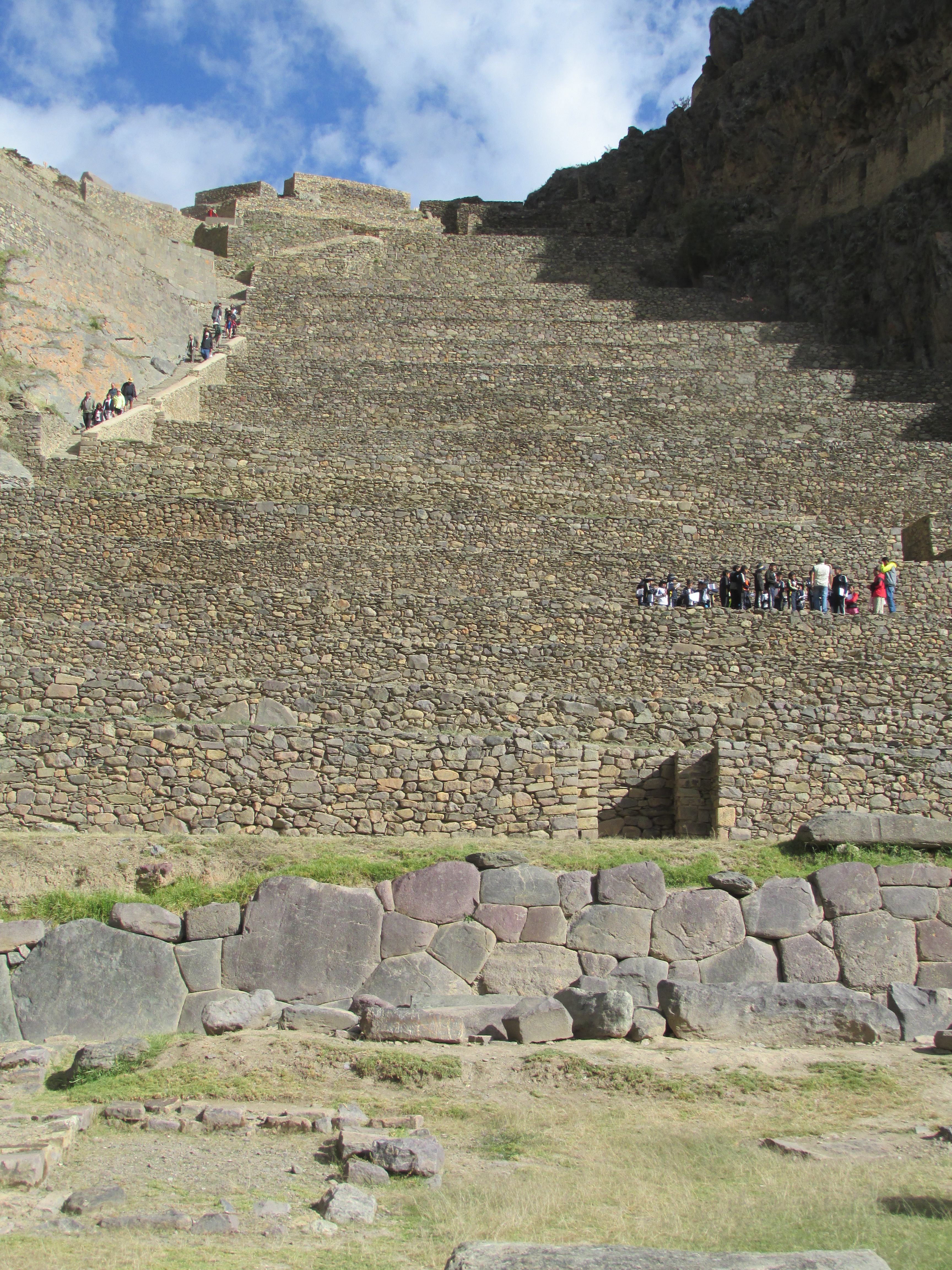
Ollantaytambo terraces.
Mom and I went on a tour to Ollantaytambo, a village near our hotel that was once the site of an Incan emperor and a stronghold for the Incas who were fighting during the Spanish conquest. As we started the tour, Mom got hurt on a step and cut her leg. Not to downplay her pain, but it was just a cut and the reaction from our group and the town officials, which was very kind and caring, was on par with a five car pile-up. Some police showed up and wanted to whisk her away to a local medical hospital of sorts. I thought maybe a bandage and some rest would be fine, so she hung out at a café and people-watched while we took a short tour. We saw how buildings had Incan foundations and doors, Spanish walls, and then modern materials toward the tops of the homes. The next day we all came back for a tour of the ruins.
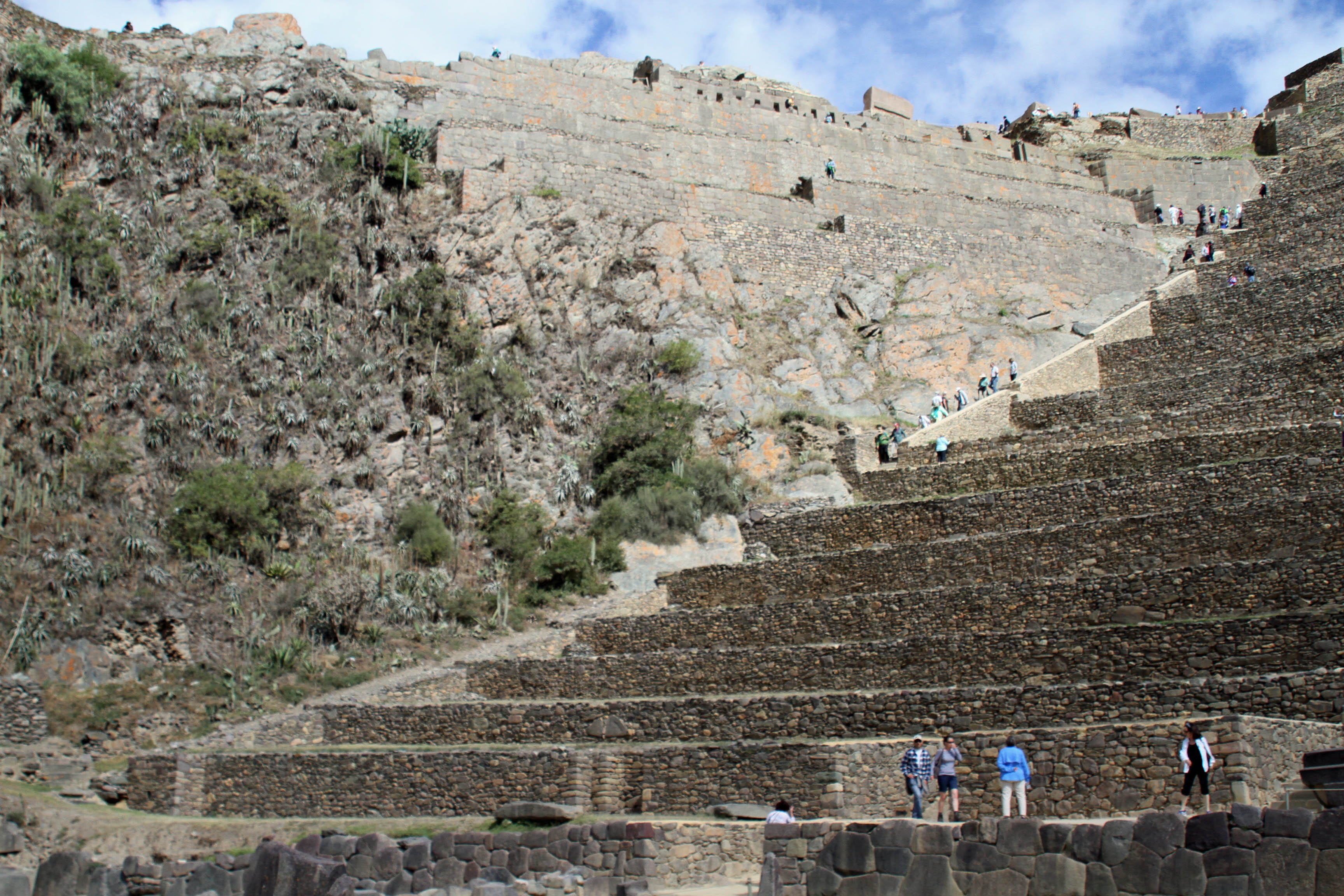
The sun temple at Ollantaytambo.
The Incas built their sun temples high up on the hillsides. We took a long steep climb up the ancient stairs with lots of breathing breaks. The ruins were impressive as somehow they managed to get 50 ton boulders set in place with ancient earthquake-resistant building techniques. When the Christian Spaniards came, they made the locals toss some of the big boulders of the temple down the mountain and when they told the Incas to build a church there they said, “You should have told us that before the boulders were tossed.” So the church was built in the valley. The Incas had built their temples every 20 miles or so and once had a pyramid there that was bigger than the ones in Egypt.
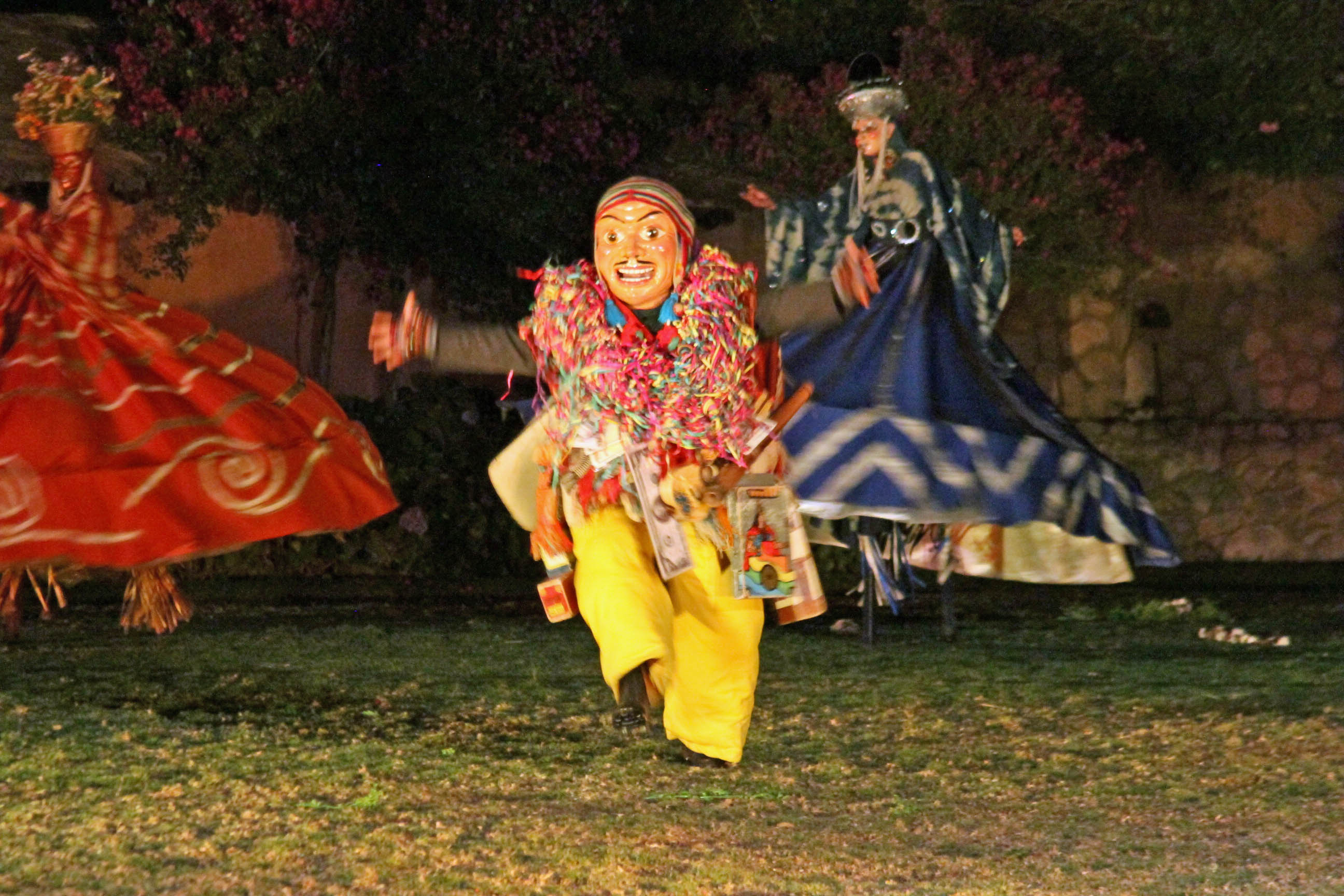
Ekeko dances.
We ended the day with an interesting exhibition of dancing and storytelling. Peruvians tend to mix their Christianity with ancient pagan religions. One of the things we saw in the house and was also part of story/dance was this strange looking guy called an Ekeko which is the mythological god of abundance and prosperity. The people would place the statue in a prominent and comfortable place in the home and load it up with things like money and other symbols of what a person desires. These offerings are meant to bring wealth to the worshippers.
More about the deep rooted mixture of ancient pagan religions and Christian worship later after we return to Cusco from Machu Picchu!

Locals drying corn and potatoes.
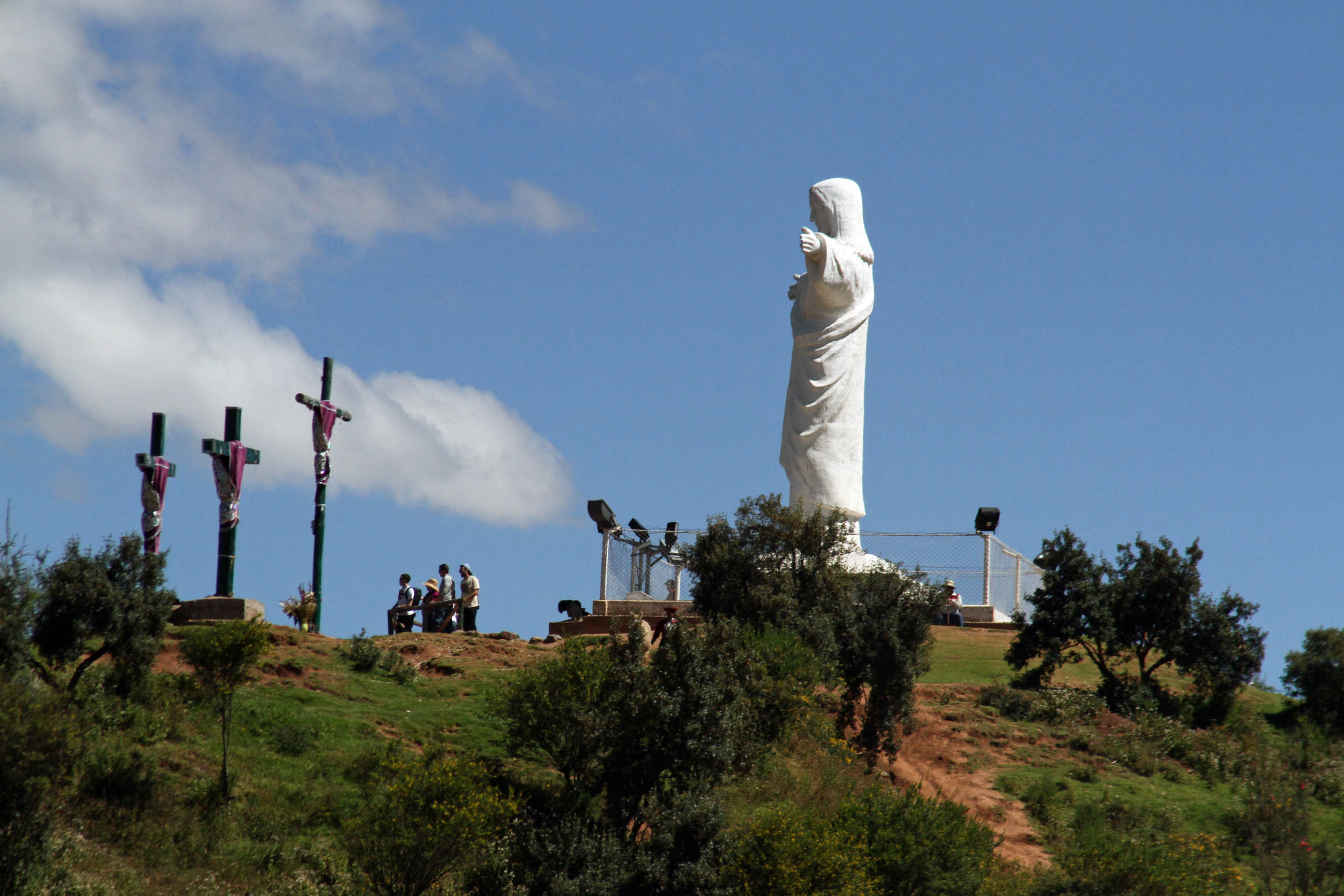
Large Christ statue outside Cusco.
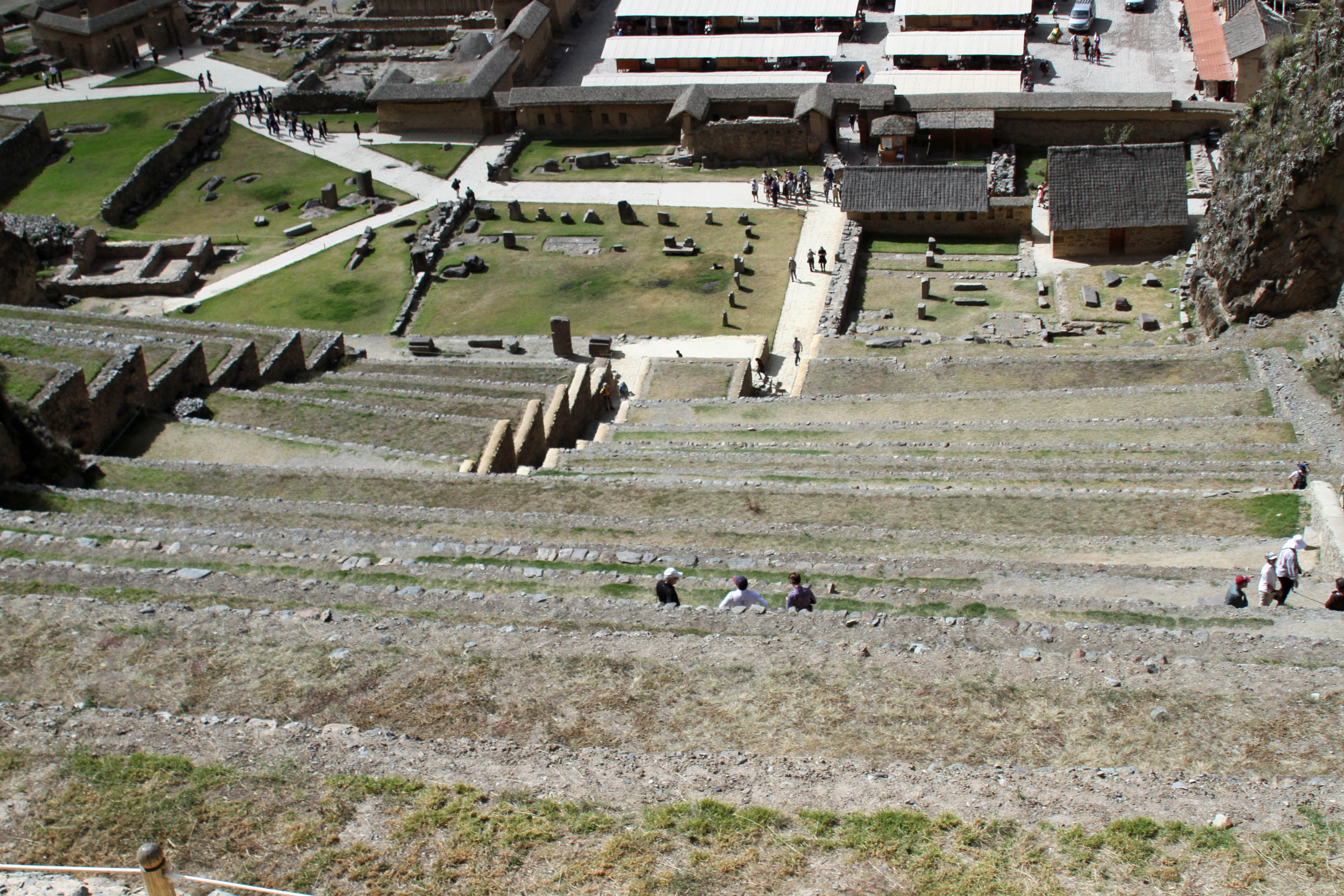
Looking down the terraces at Ollantaytambo.
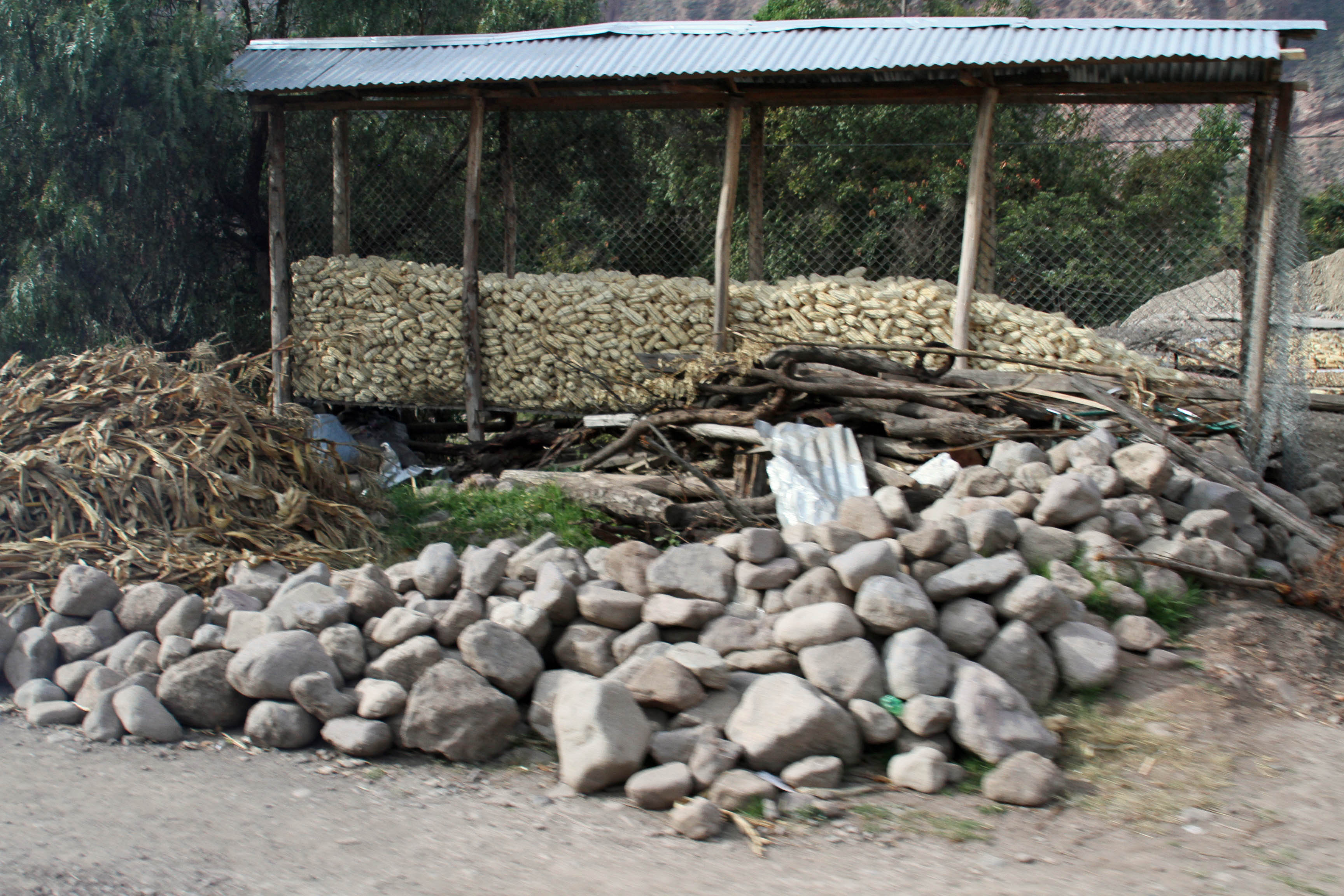
Locals store corn.

Hillside outside Cusco.

Fried Guinea Pig
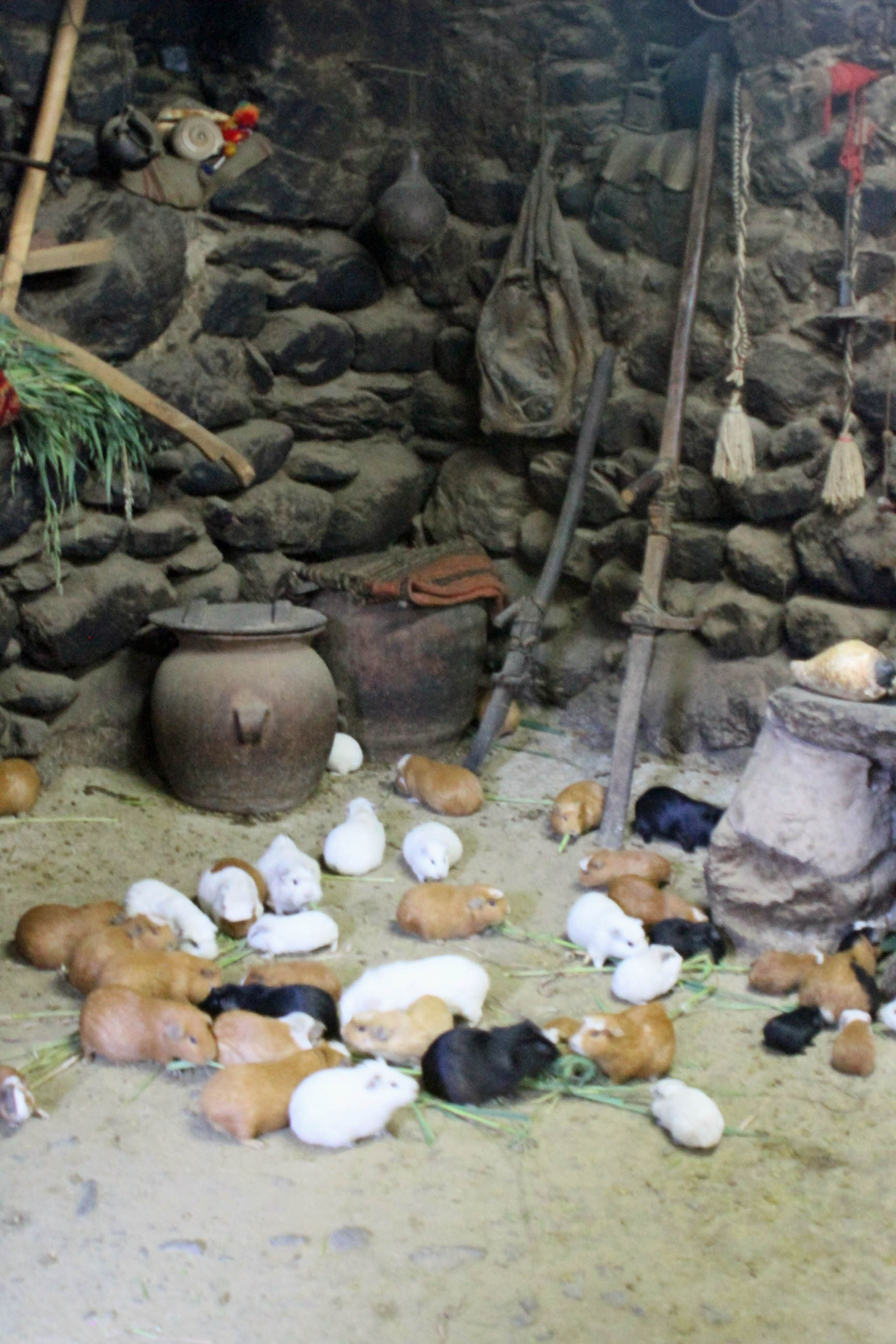
Guinea Pigs live in a local home.

A street in Ollantaytambo with a channel of water running in front of some homes. Stone steps act as mini bridges.

Menu highlights Guinea Pig and Alpaca which tastes like steak.
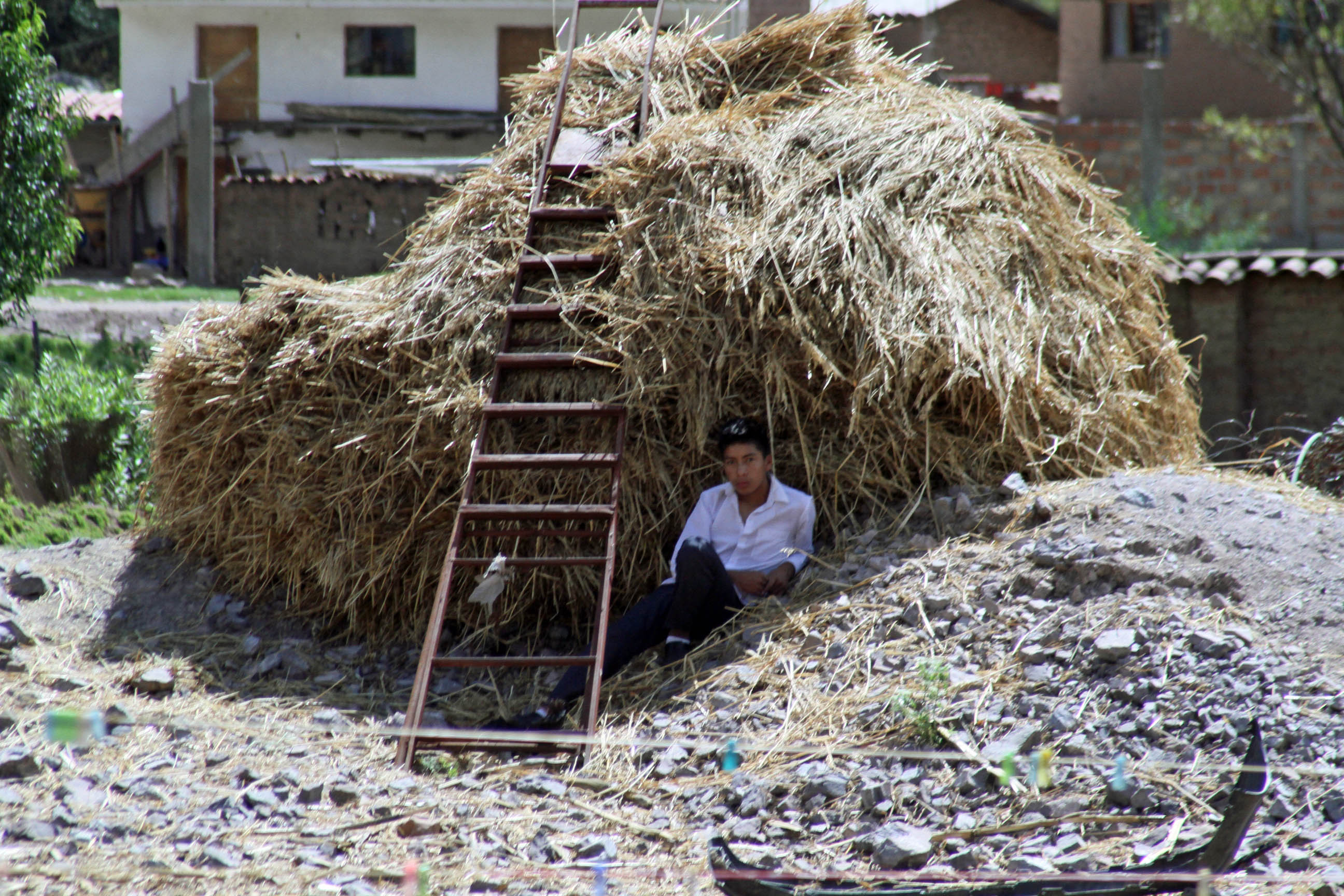
Siesta time on a local farm.
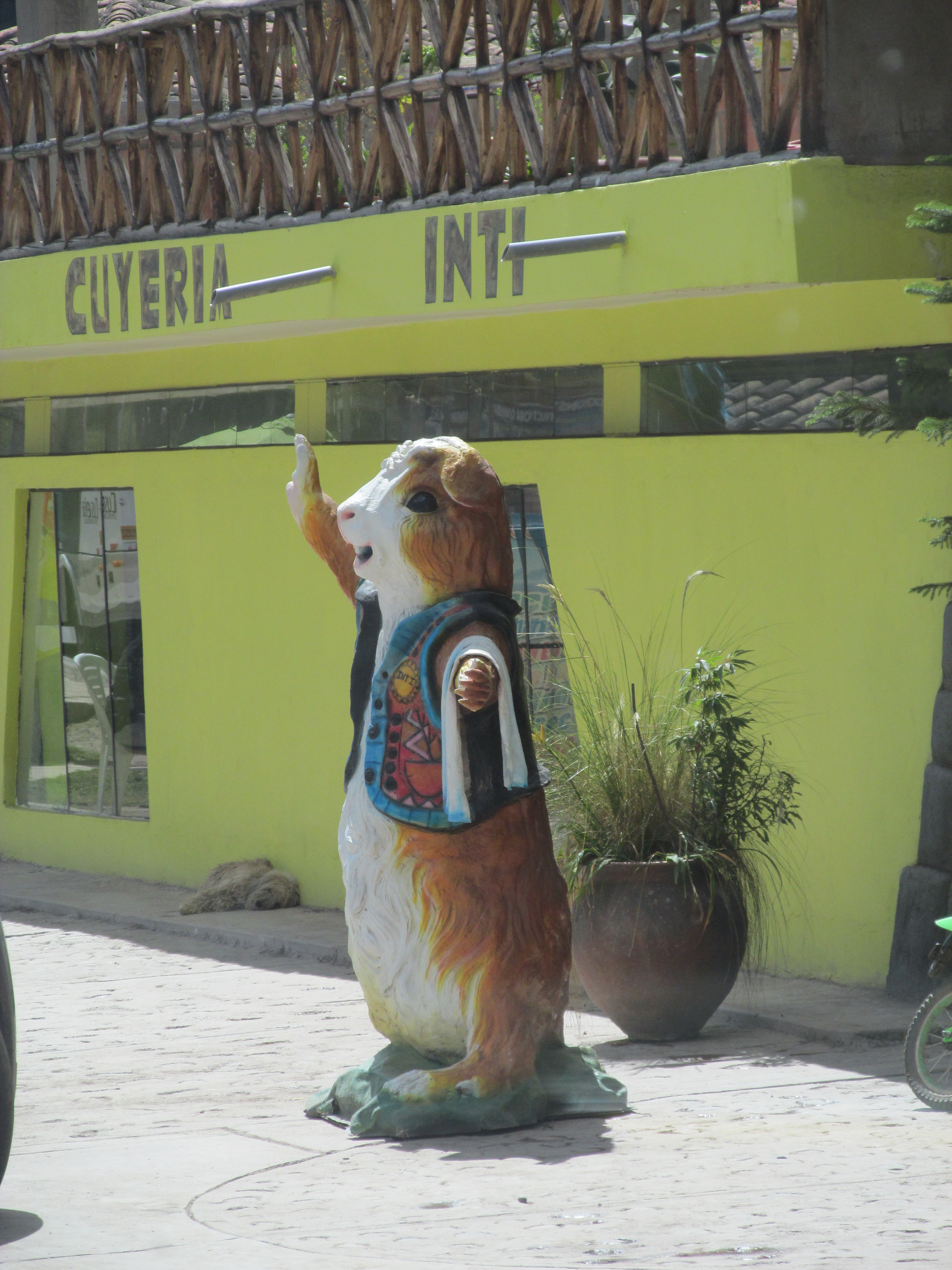
Guinea Pig is on the menu here.
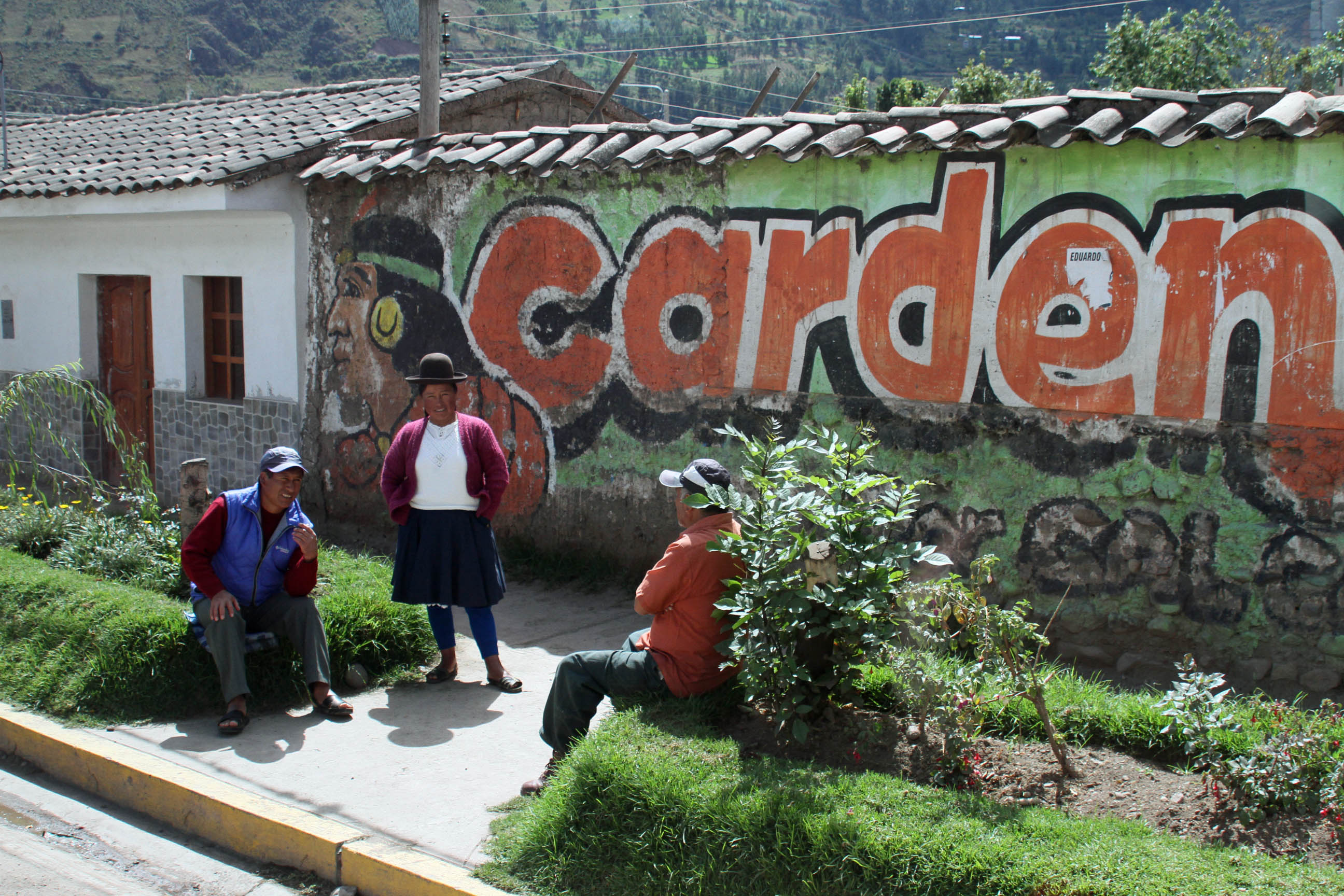
Locals hanging out in front of a house painted with a political advertisement.

The Sacred Valley


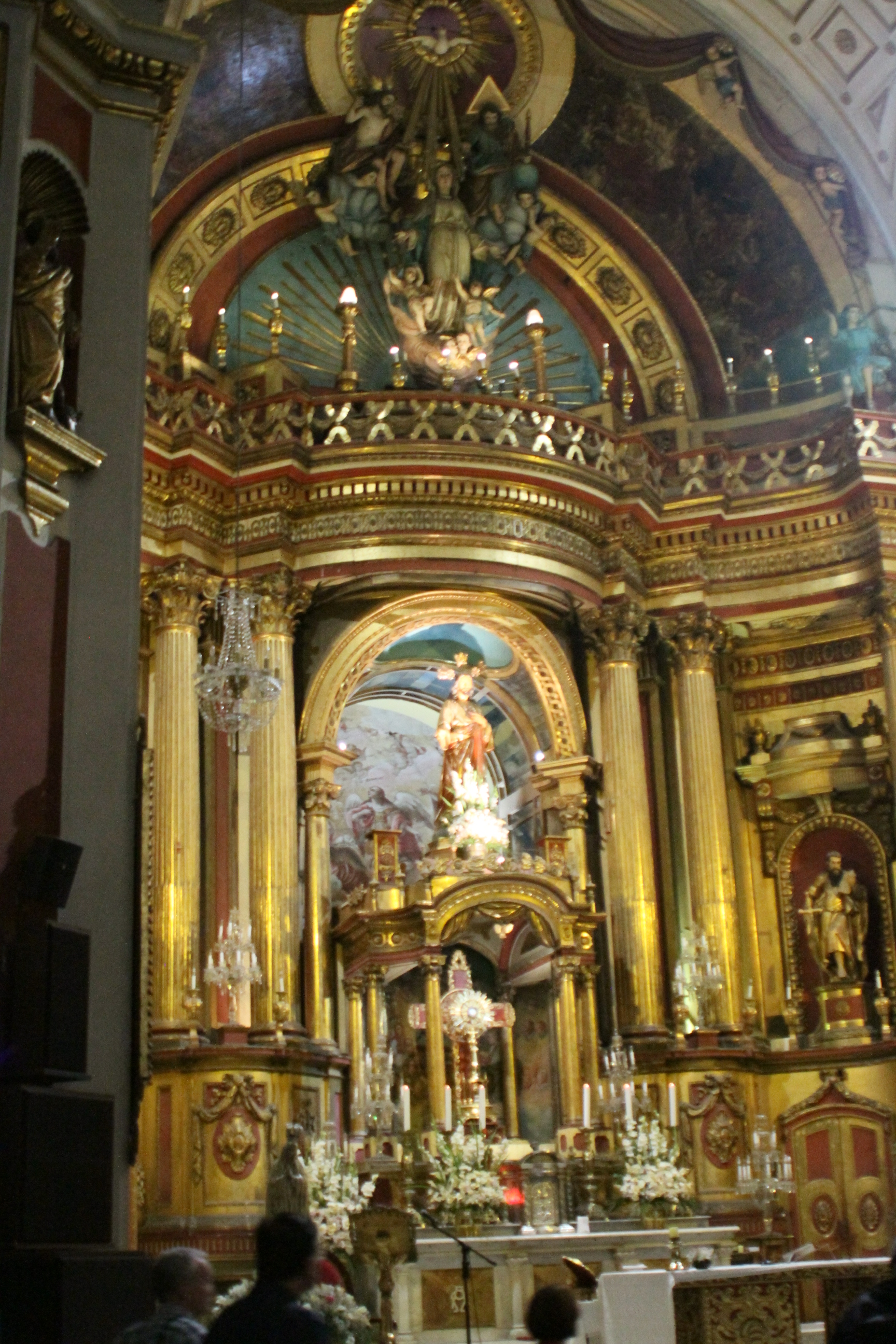









 From the Observation Deck