Greece and Turkey


Our adventure in Greece and Turkey continues aboard the Celestyal Crystal, a cruise ship with 800 plus passengers and several hundred crew. As we got on board, while waiting for our room to be cleaned, we had some beverages on the pool deck. I had to stay there for a while because the crew messed up our drink packages and cards. After finally getting them to fix it, I got in to the elevator to go to my cabin. The second indication this ship was not quite up to snuff was when I had to ask a crew member to help me because the elevator wasn’t moving. He got in and physically shut the doors.
DSCF3146

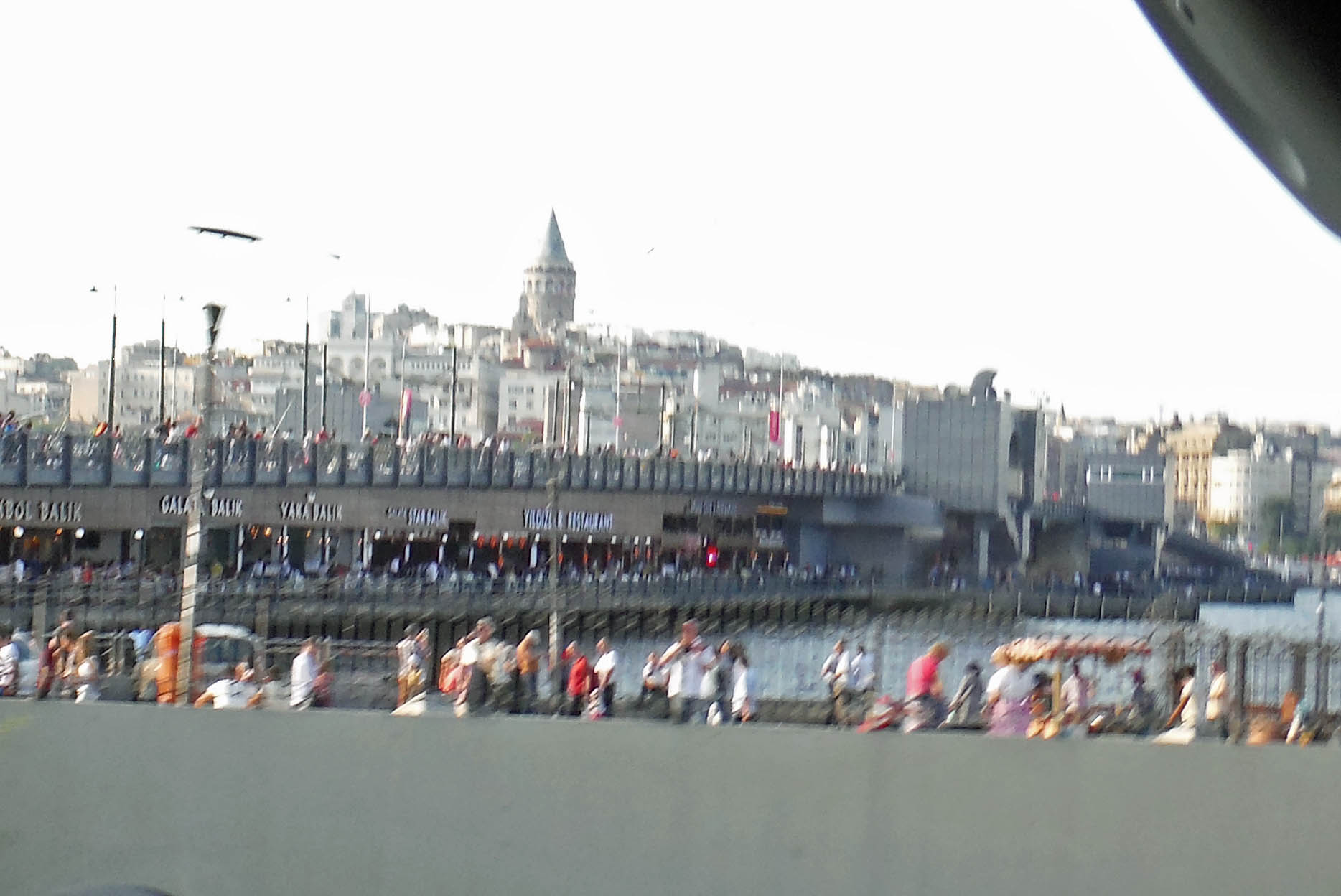
The bridge that crosses the Bosporus and links the European and Asian parts of the city.

Later that night it became apparent this cruise was doomed. I explained the collision in the first post of this trip series so I won’t go into it again. Instead we’ll skip to day six and our day in Istanbul.

On our drive in to this European/Asian city, I was impressed by the size of it. The city is home to more than 14 million people and is one of the largest cities in the world. For thousands of years it has played a major role in human history. Once called Constantinople, it was a center for Christianity before Muslims took over and Islam became the main religion. After a few hours of sleep at the Hilton, we were back on the bus and on our way to explore two very famous religious sites, a palace, and a spice market. Getting there involved crossing the Bosporus Strait as Istanbul straddles Europe and Asia on both sides of the straight between the Sea of Marmara and the Black Sea.

The Topkapi Palace
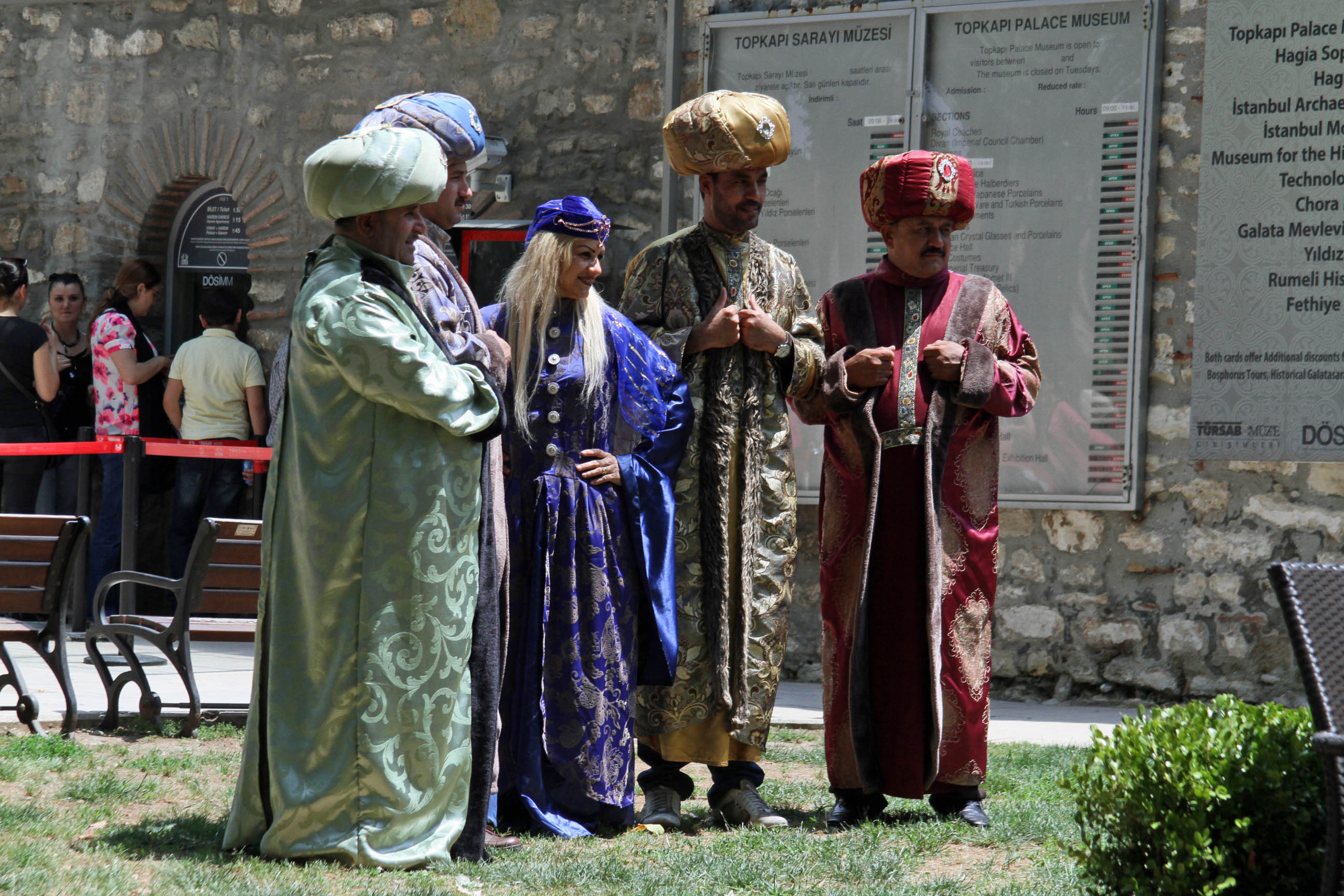
Some actors in the courtyard of the Palace.

Some actors in the courtyard of the Palace.

Our first stop was the beautiful Topkapi Palace, a major residency of the Ottoman sultans for almost 400 years of their 624-year reign (1465–1856). The Palace was a city within a city and access to the inner courtyards was limited. It served as the residency as well as hosting government meetings and functions. We walked around the various buildings that held beautiful ancient artifacts including some very cool sabers, armory, shields, and more. We didn’t have time to see all the buildings and artifacts but I did view a room with paintings of the sultans going back hundreds of years. It was interesting to see how the fashions changed through the years.
IMG_2608The Blue Mosque

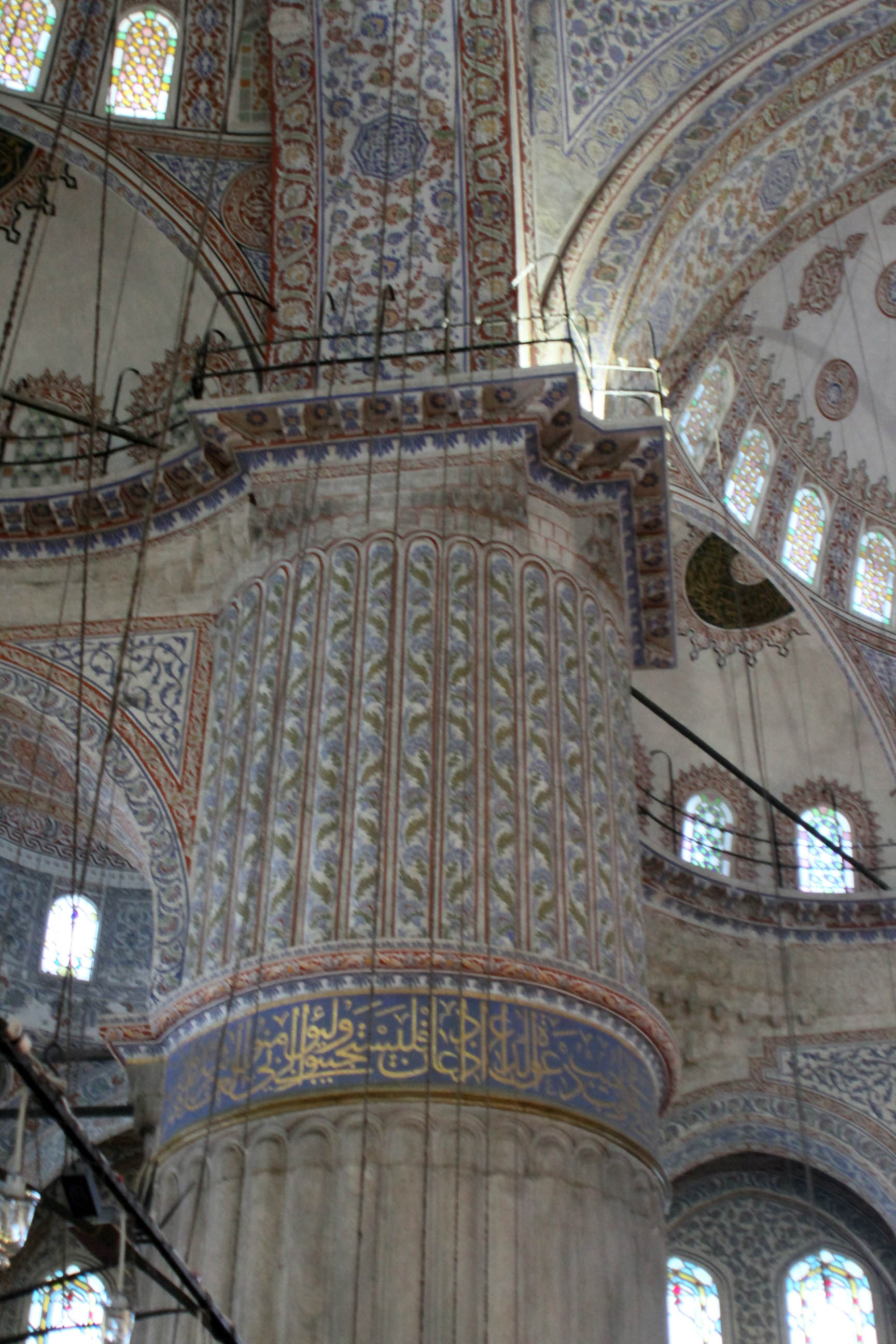
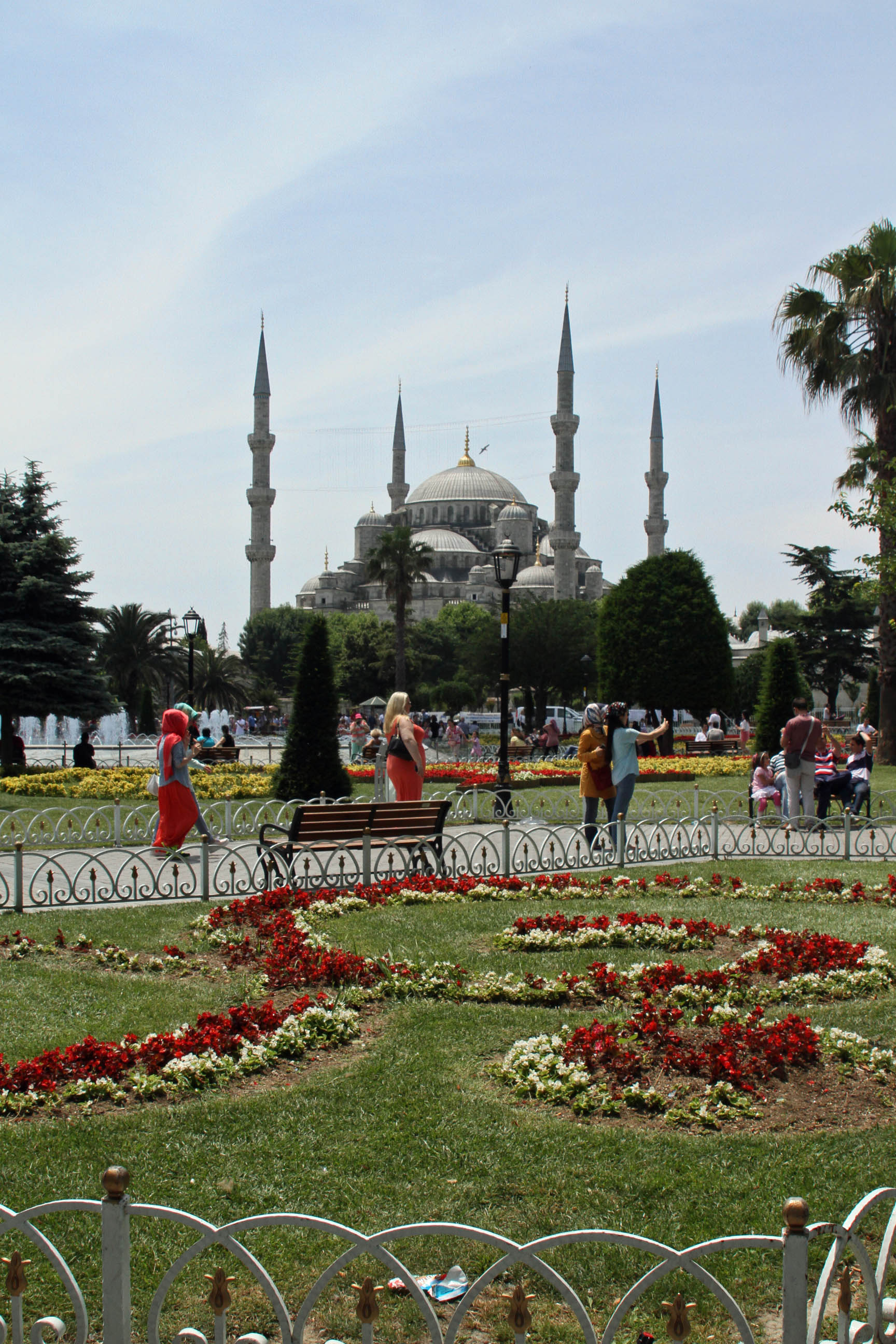
The famous mosque in Istanbul sits just across a garden from the Haggia Sophia and around the corner from the Topkapi Palace. Its real name is the Sultan Ahmed Mosque but is commonly referred to as the Blue Mosque because of the rich blue tiles that adorn the walls and ceilings. This Islamic religious structure is not only vast—reaching nearly 80 feet to the dome (inside)—but also beautifully decorated with ceramic tiles, stain glass windows, chandeliers, and carpets with lovely designs. It’s too much to describe here in this brief story, but photos show how the designers and builders put their hearts and talent into this active place of worship for many Muslims. The men were seen sitting in the main part of the mosque as they prayed and listened to an Imam reading some text. The women had to stay on the outskirts. They explain that is has to do with the way they bend and kneel to pray and how having women in front of the men would be “distracting.”

Haggia SophiaIMG_2737

Upon leaving the Blue Mosque, we turned in our scarves and put our shoes back on and then traversed the streets and gardens to make our way over to the very famous and ancient Haggia Sophia.

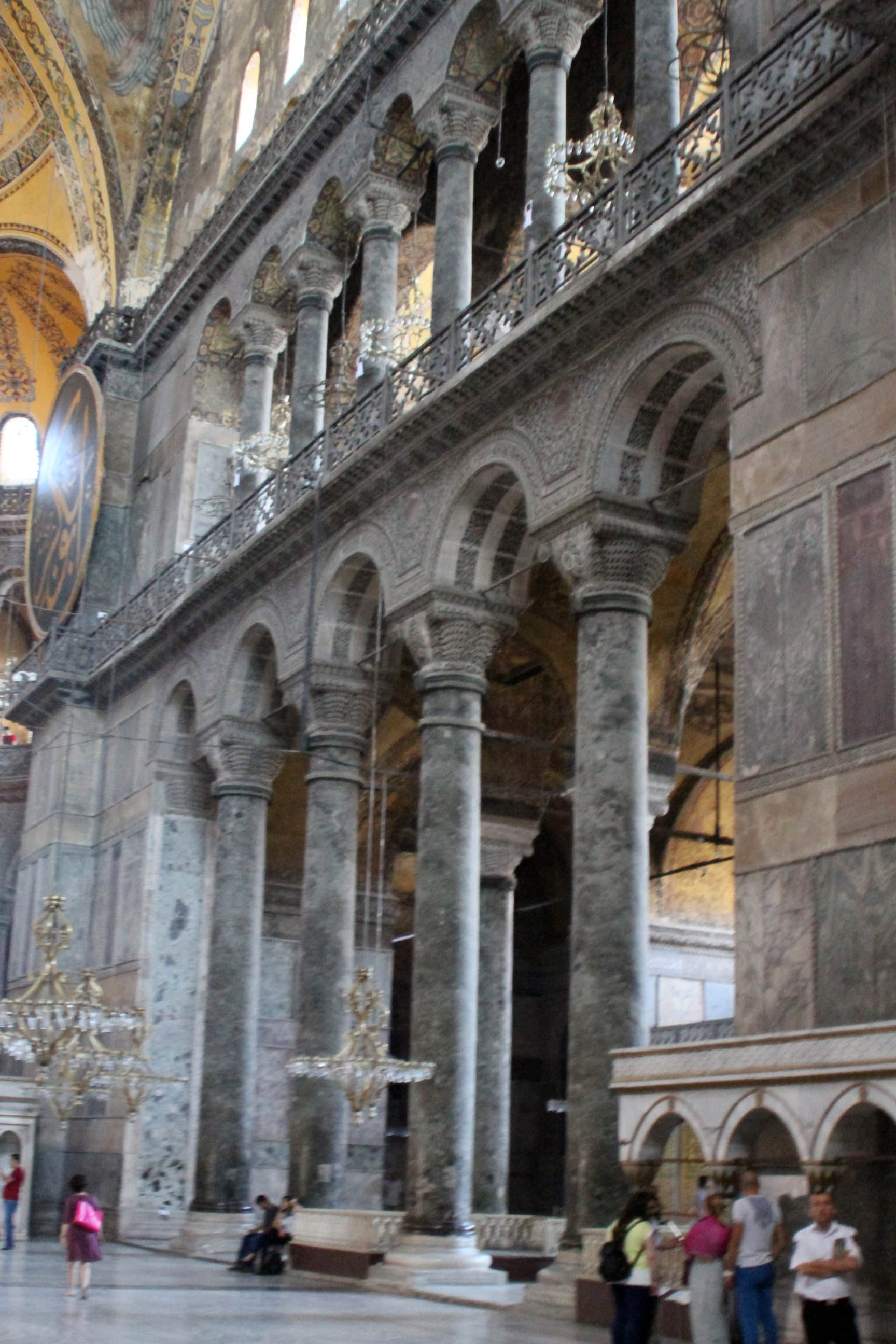
This marvelous and historical structure was built in the 6th century. For a millennia it functioned as one of the largest Christian cathedrals in the world. When the Muslims took over the city in the 15th century it was converted to a mosque and the minarets were added. In 1935 it was turned into a museum.

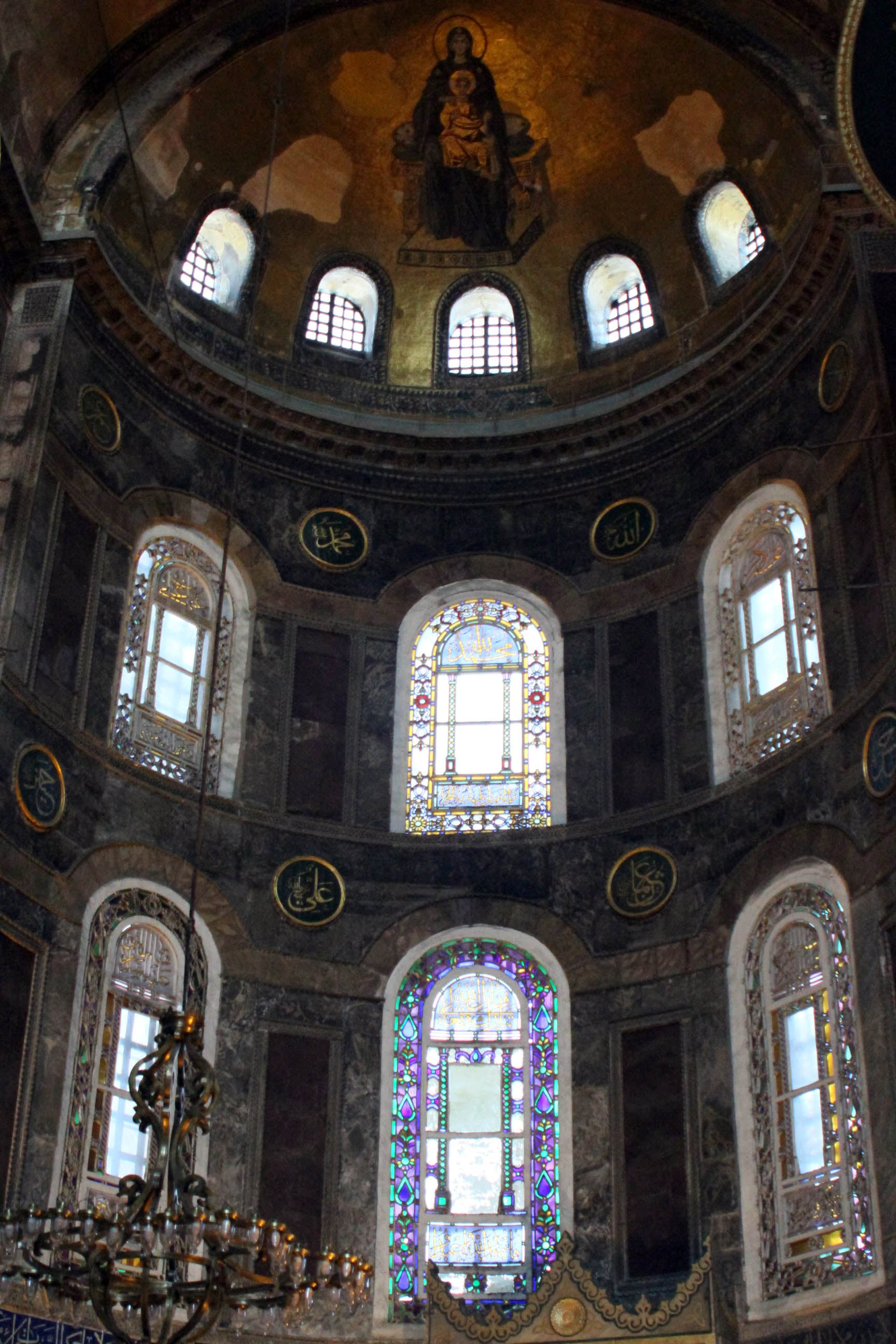
IMG_2781I found it to be not only beautiful but also interesting in that both Christian and Islamic elements were seen throughout the building. Gorgeous paintings on the ceilings of angels, large chandeliers, marble designs and so on caught our eye. It is an epic example of Byzantine architecture and is decorated throughout with mosaics and marble pillars. It’s hard to describe the feeling of being in this ancient church but the photos capture some of its glory. There was scaffolding covering parts of the building as its restoration is a continuous process.

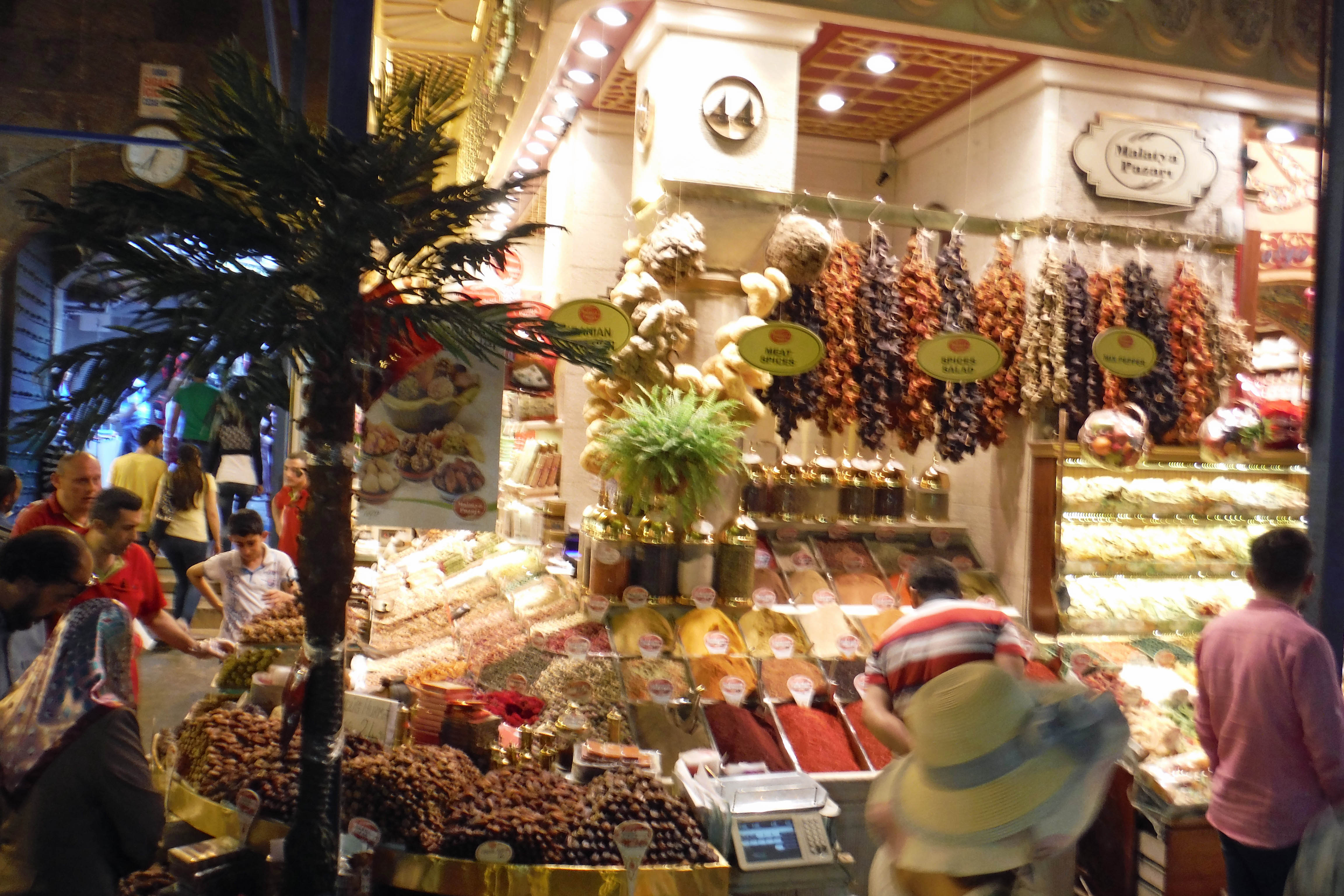
Unfortunately we were limited on time and had to move on to the last stop, which would have been the grand bazaar, but alas, it was Sunday and it was closed so we spent a few minutes in the spice market.

The Spice Market

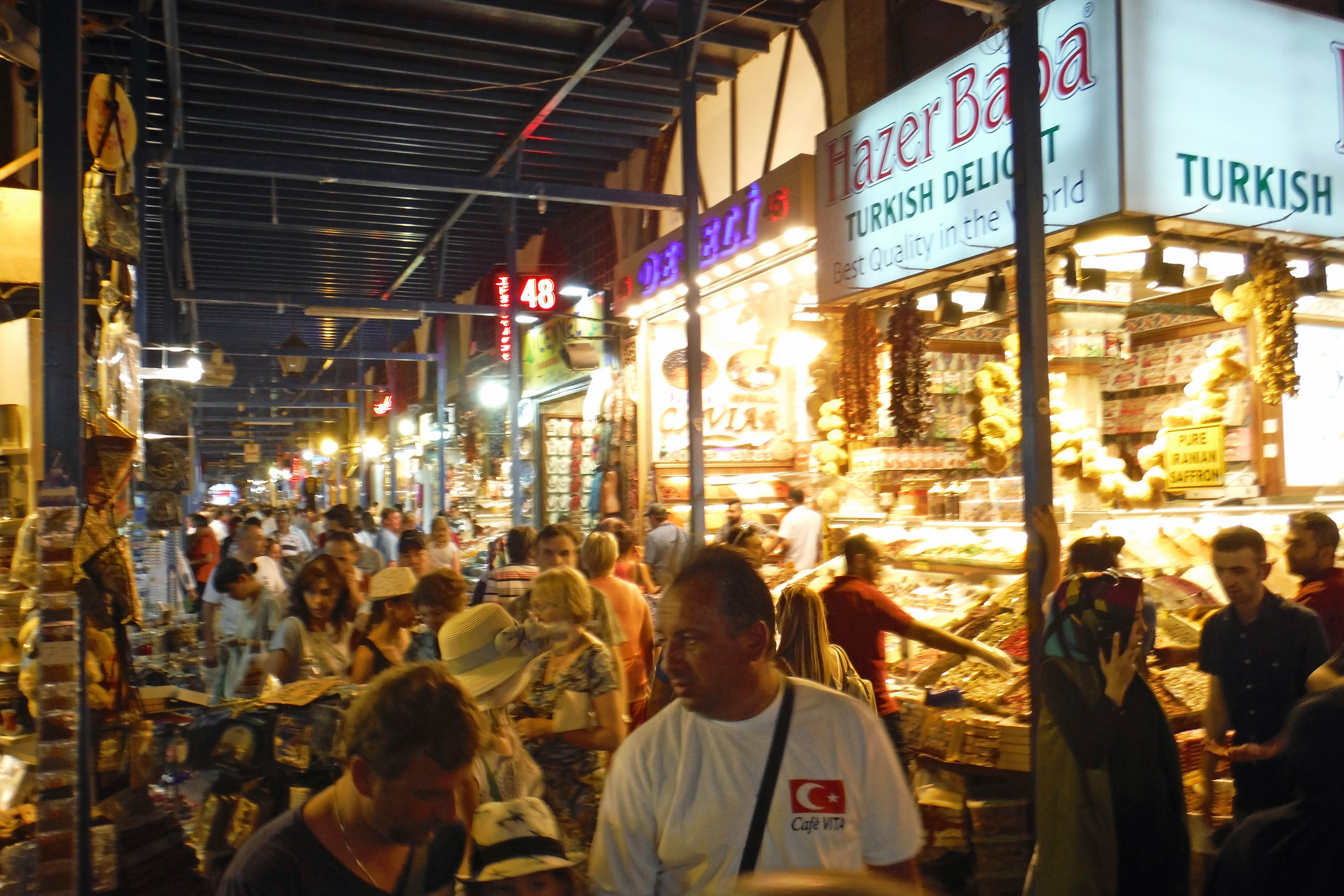
We had a few minutes to walk the street paths of the spice market before it closed. I just loved the colors and smells of the packed stalls. The shopkeepers attempted to entice us to come see their wares—there were many stalls with tourist items other than spices. DSCF3144I found a few presents to bring back home (confession—I fibbed when I told the custom official “no” when asked if I had any spices). At closing time we made our way back to the wonderful hotel and our big comfortable beds and an actual night of sleep.
After a glorious night of sleep we enjoyed the tastes of a wonderful buffet breakfast (which I shared with a cute kitty on the outside porch) and then on to the airport for an early ride to our next stop—and my next blog post.

Enjoy the photos and a video of an old fun song “Istanbul (Not Constantinople)”
DSCF3123

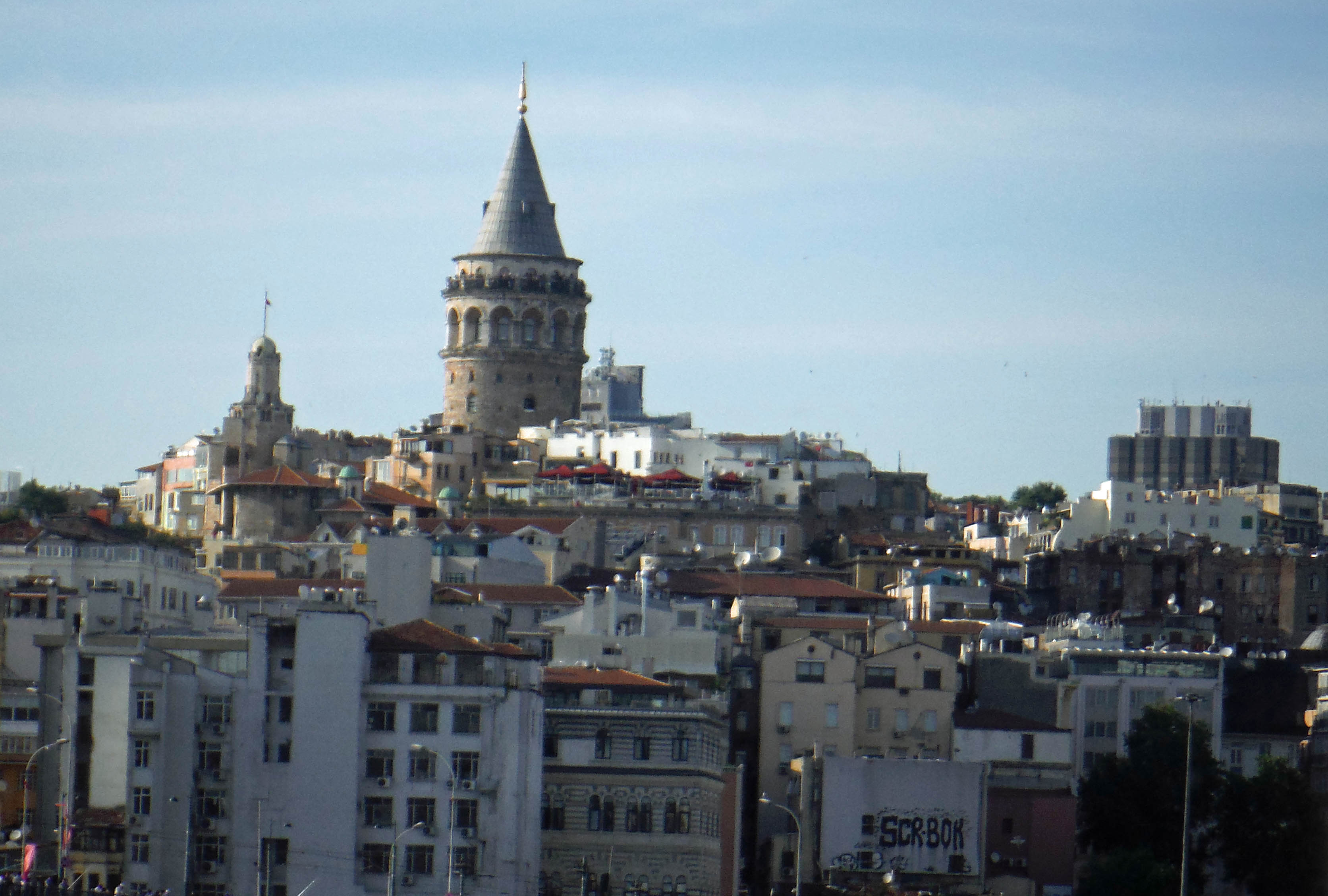
The Galata Tower in Istanbul

DSCF3143

The spice market

IMG_2594

The back side of the blue mosque.

IMG_2623

Two guards on duty at the Topkapi Palace.

IMG_2681

Blue Mosque

IMG_2695

Blue Mosque

IMG_2701

Blue Mosque

IMG_2711

Blue Mosque

IMG_2770

The door to the entrance of Haggia Sophia originally had a cross. It was changed to an arrow when it became a mosque,
IMG_2764

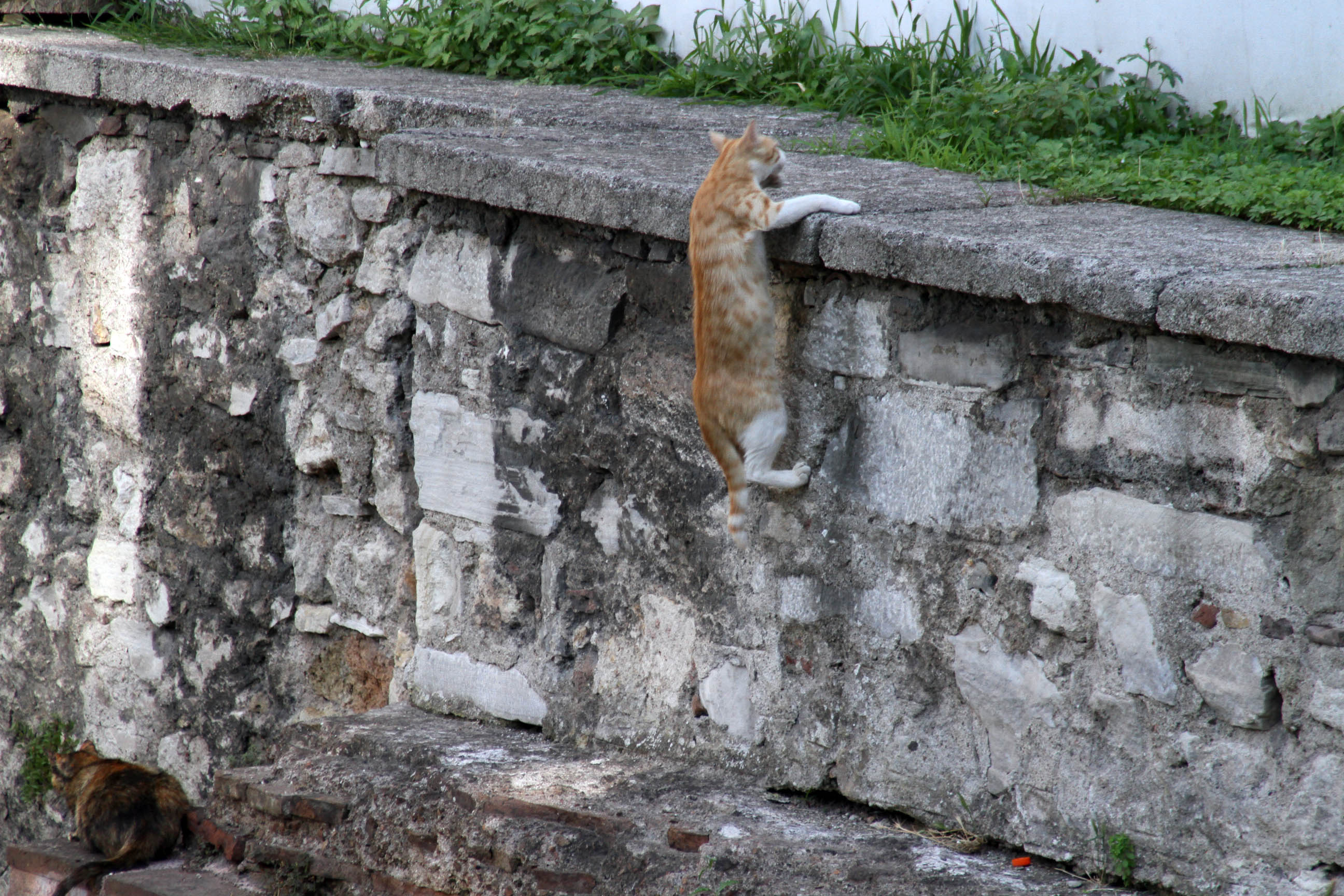
Kitties everywhere, including this one outside Haggia Sophia.

IMG_2777

Haggia Sophia

IMG_2793

Haggia Sophia

IMG_2799

Haggia Sophia

IMG_2815

Haggia Sophia

IMG_2817

Haggia Sophia

IMG_2820

Haggia Sophia

Day two of our trip to Greece and Turkey continues with more hiking around ancient ruins of Athens.

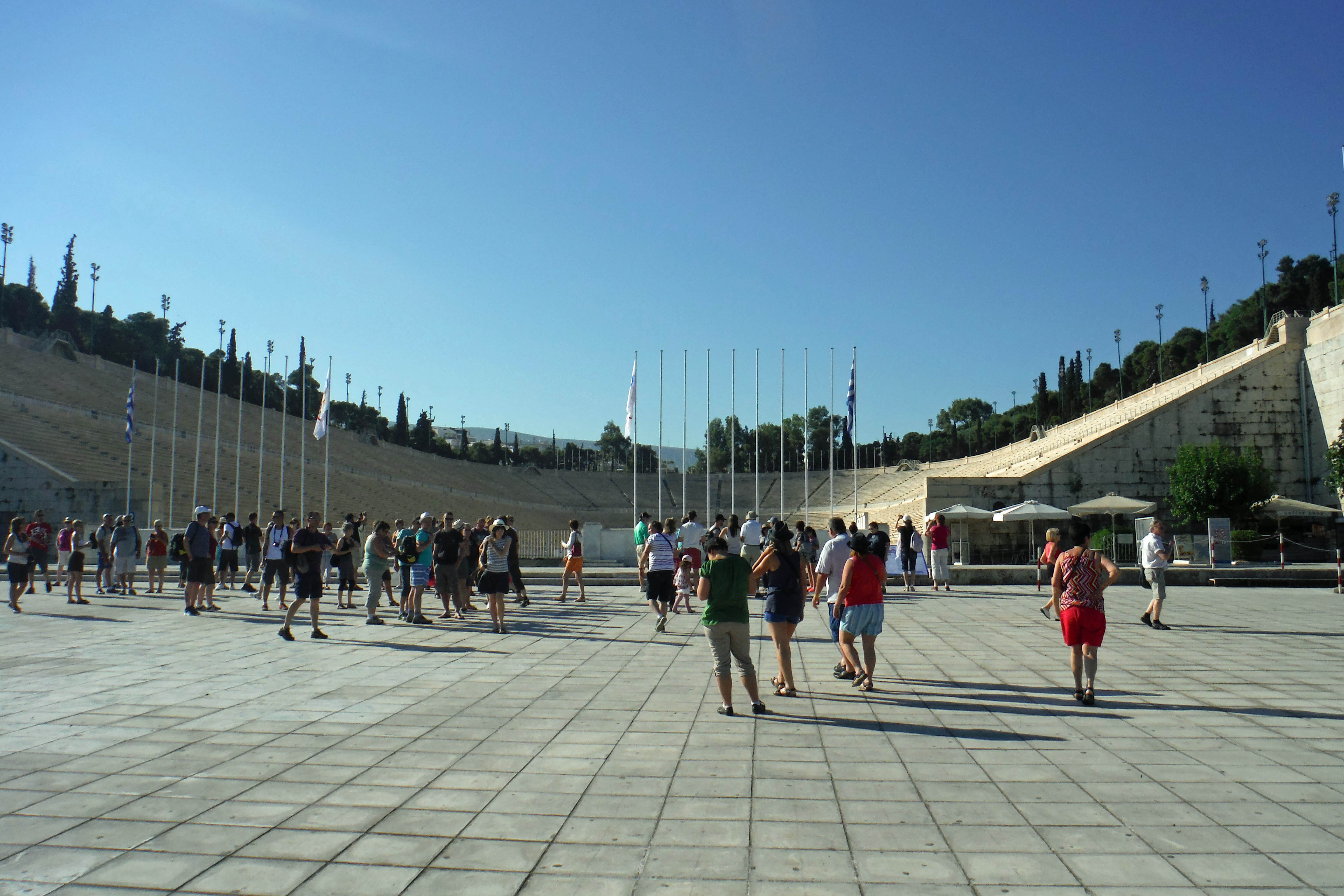
A half day tour took us from the Acropolis which I covered in my last post to the Olympic Stadium, the Acropolis museum, the stadium of Dionysus, and the Temple of Zeus.DSCF3021

Olympic Stadium

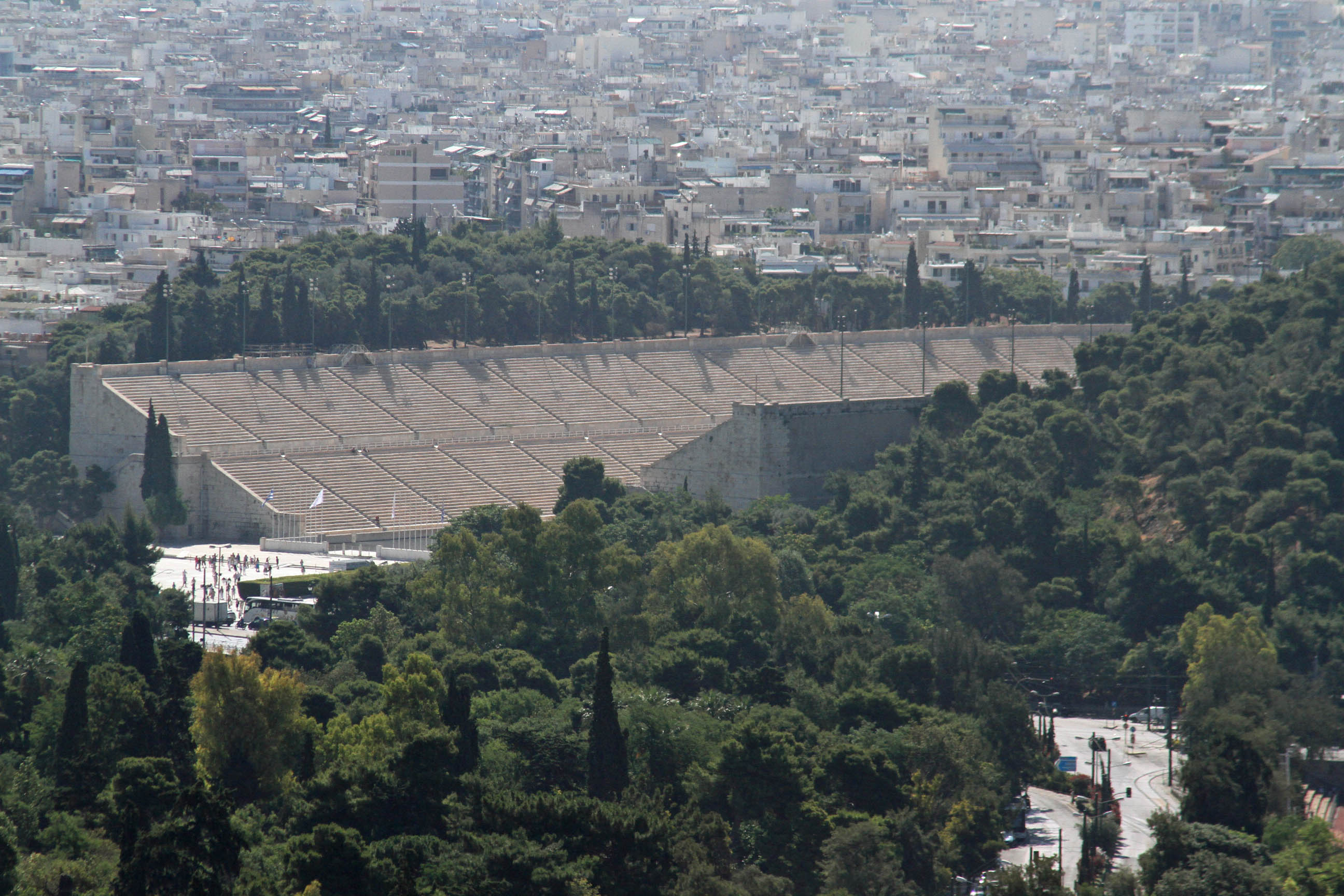
Our first stop of the day was the Olympic stadium. This stadium had been updated from the original one that hosted the first modern day games in 1896. During the Games in 2004, the marathon ended in this stadium before the closing ceremonies. Incidentally the term marathon comes from an ancient story. The Athenians were fighting a war and the people of the city were waiting for news from the battlefield. Once victory was assured, a man was sent out from the town of Marathon to hurry to deliver news to the Athenians. The poor guy ran the entire way and upon delivering the news collapsed and died. So now the long run is called the marathon. Anyway, the stadium holds between 40,000 to 60,000 people depending on who you ask.IMG_2300

Acropolis Museum

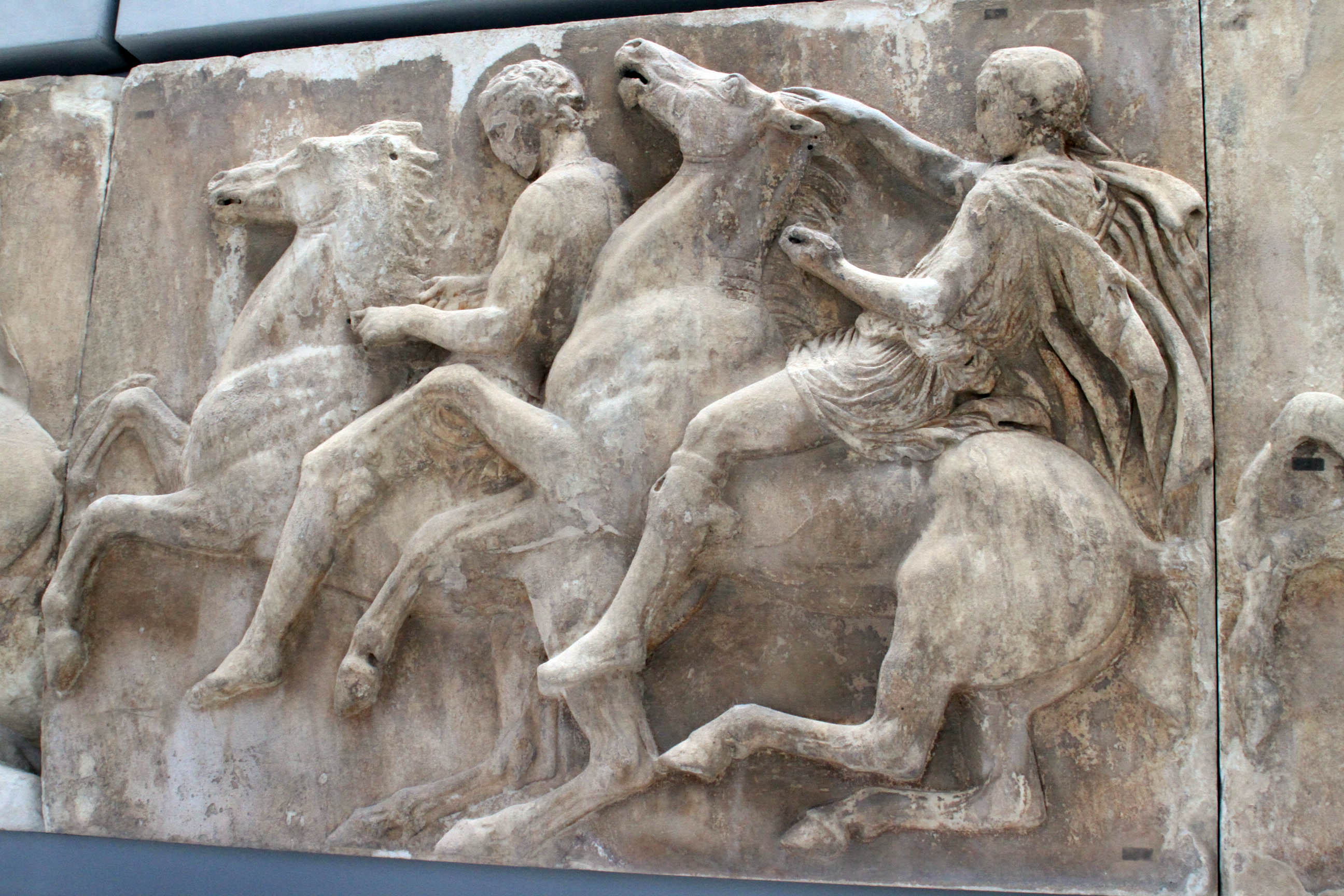
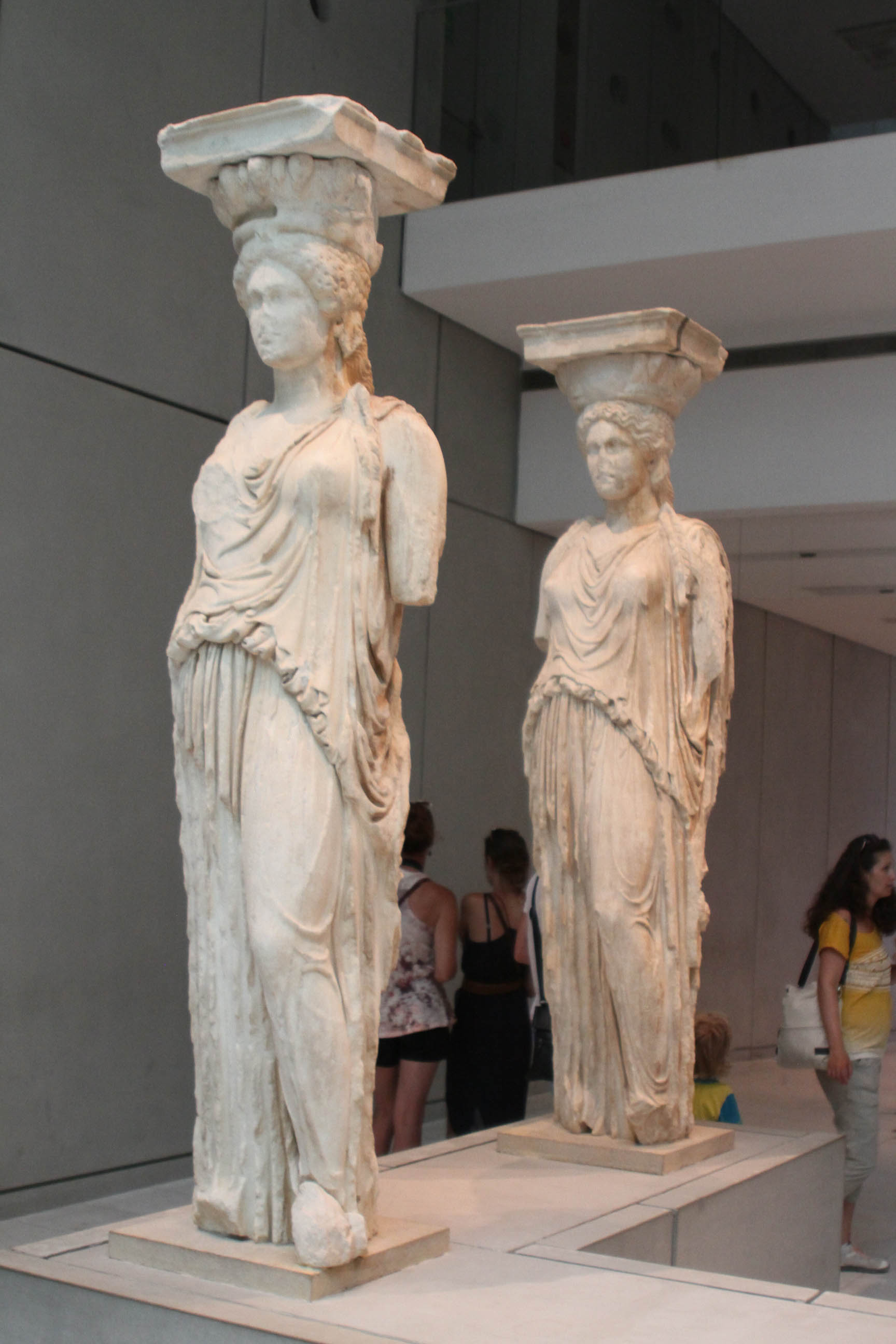
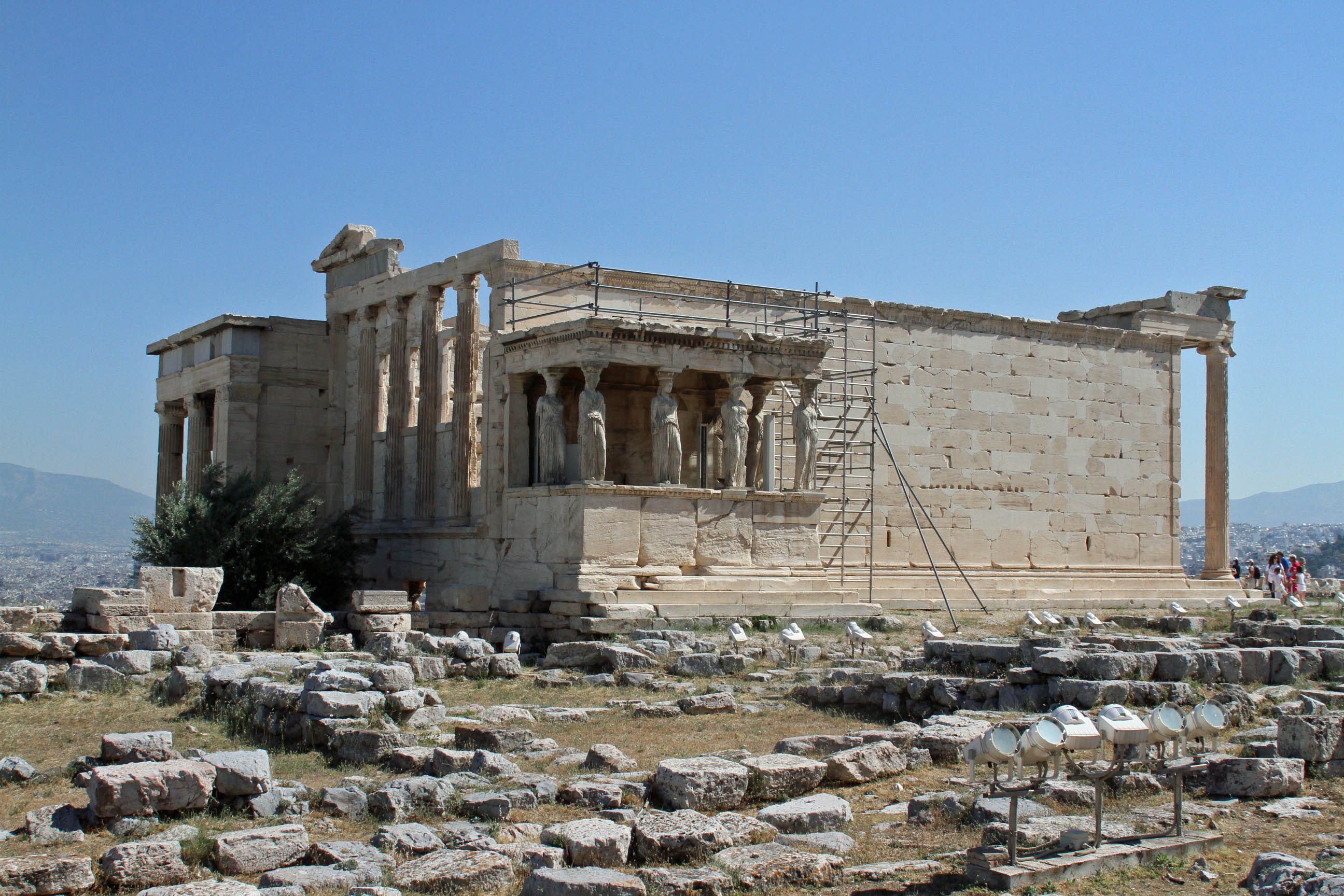
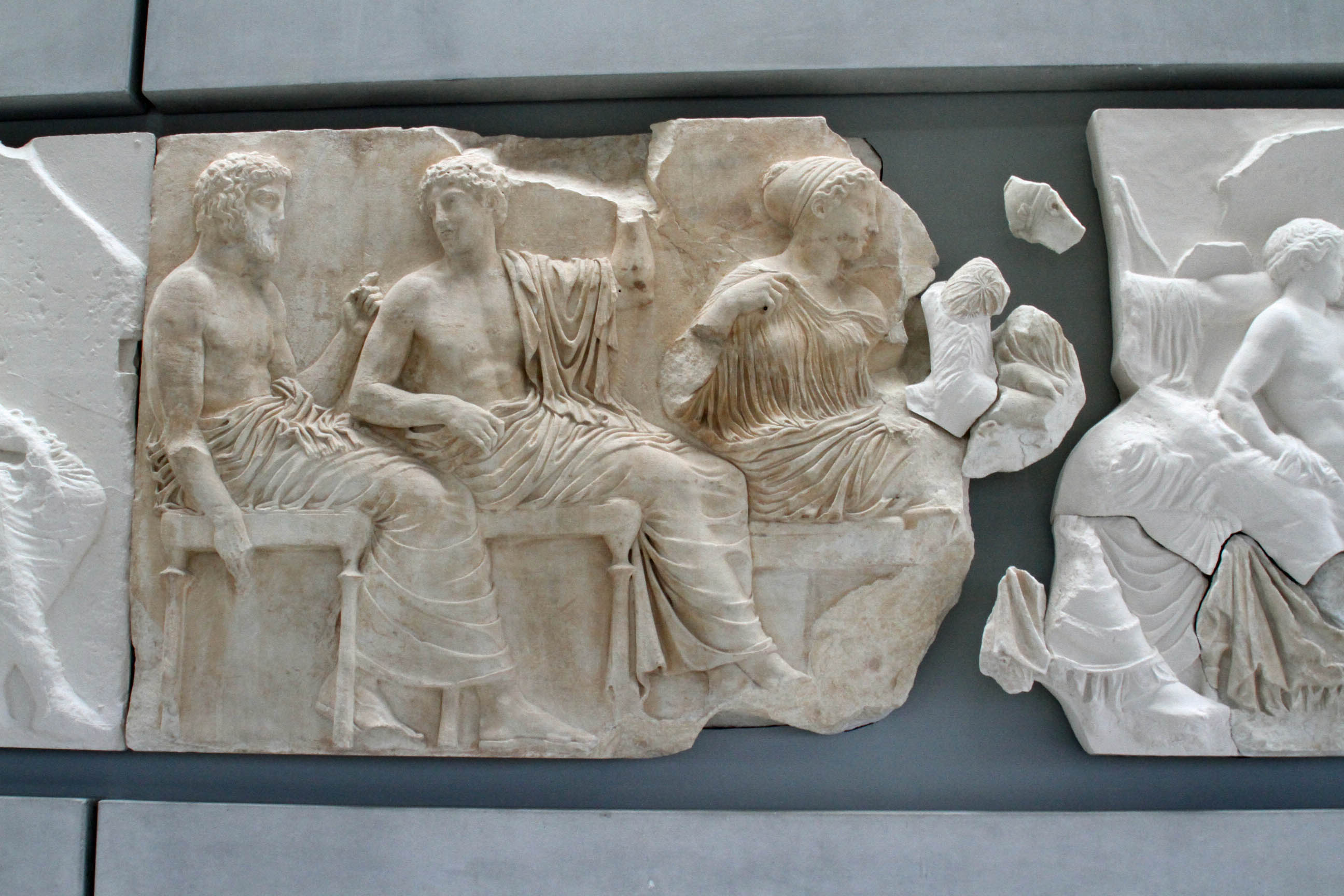
Down the hill from the acropolis is a wonderful museum where replicas of some of the sculptures and pieces of the frieze can be seen up close in person. The frieze composes the carvings that used to decorate the upper portion of the outside of the Parthenon. The originals are mostly in the British museum but these replicas showed a procession of people which continues around the four sides of the building. The museum also houses ancient sculptures depicting various people throughout the ancient world—how they may have looked and the kind of clothes they wore. Some were monuments to gods or just adornments for their noble homes. Some of the original caryatids (which were the women sculptures acting as pillars outside the porch of the Erechtheum on the Acropolis) were on display.

IMG_2341Stadium of Dionysus

After enjoying the artifacts in the museum we wandered over to the stadium of Dionysus which sits just below the Acropolis. The top part of the stadium had eroded away but we could see some marble seats where the nobles sat—up front in the center facing the stage. Some interesting carvings sat amongst the ruins there.

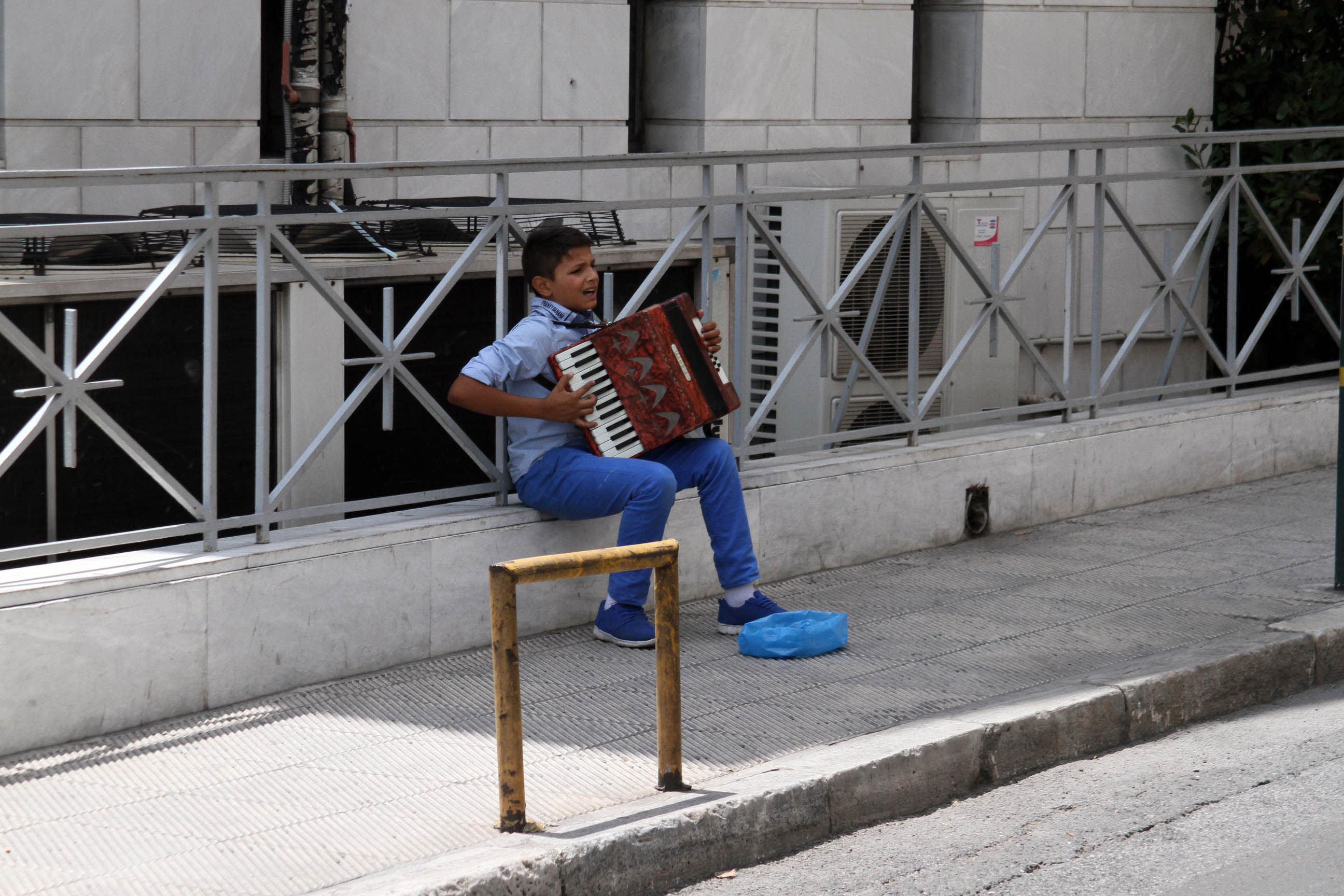
From there we enjoyed a delicious lunch in an outdoor café—the lamb meat basting on a pole which made up the yummy gyros we had. Kids came by with their accordions for change and we got to sit and relax in the shade before heading out.

Temple of ZeusIMG_2200

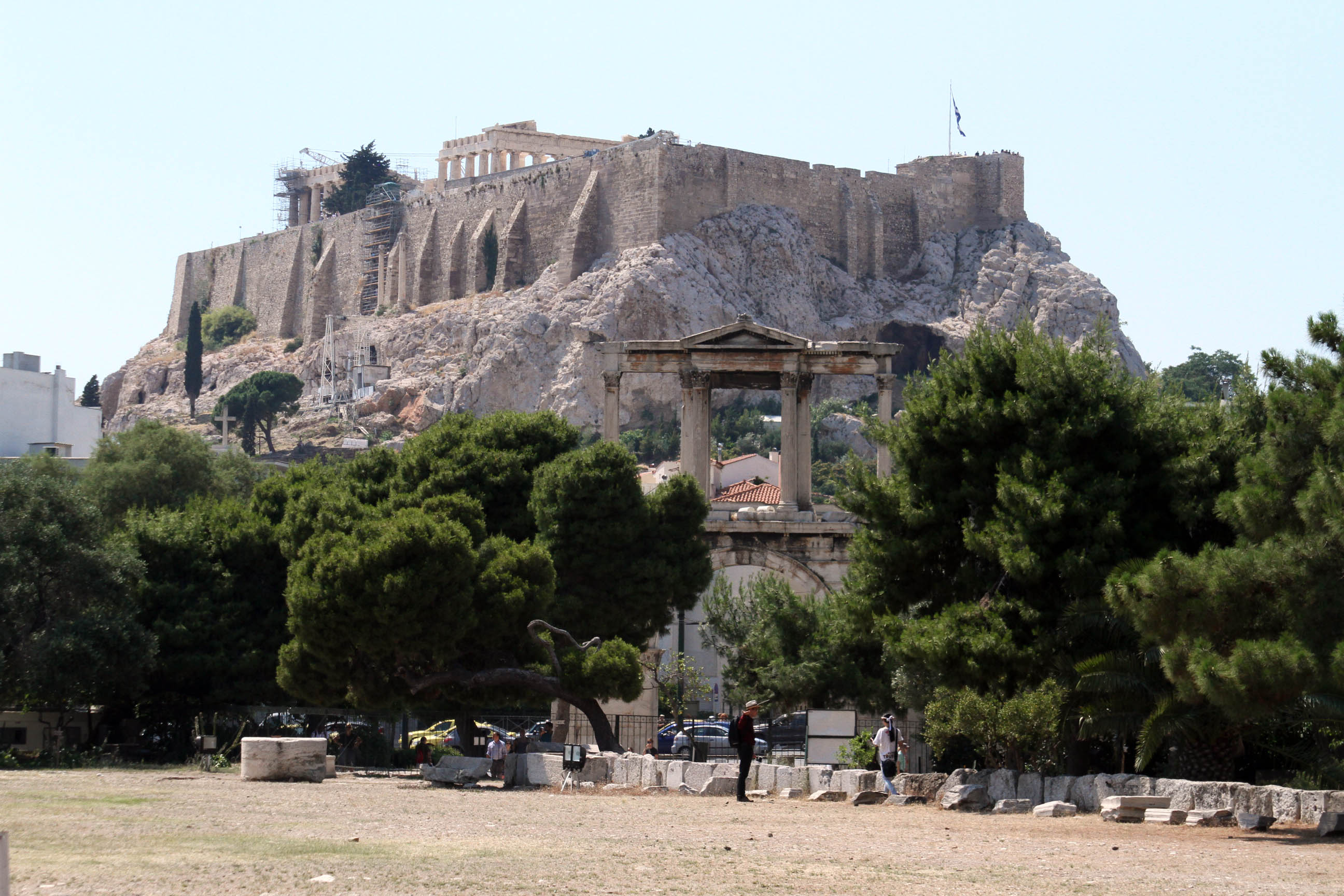
Next stop was the Temple of Zeus and Hadrian’s gate. We had walked by this several times as it sits in the middle of the city and can be seen very easily from the Acropolis. The emperor of Rome, Hadrian, finished up the temple of Zeus and added the gate around 131 AD. We strolled around the tall pillared ruins watching as everyone took selfies. BTW, the amount of people taking selfies and people selling selfie sticks was so prevalent I was starting to actually get irritated by it. But I digress. There was a really cool looking ruin here referred to as the bottle caps. You can see from the photo why it is named as such.

A view of ancient Athens, a model at the museum.

A view of ancient Athens, a model at the museum.

On our way home, mom had an unfortunate accident and hurt her leg. She is now in a boot with a fractured foot but doing better. Needless to say this was pretty much the end of her excursions on this trip.

Dad and I ended the day eating souvlaki (Greek skewers) and got some snacks and fruit at a little market before heading home for the night.

IMG_2355

A view of the Acropolis from the Temple of Zeus. Hadrian’s Gate is at the corner of the lot.

IMG_2279

Part of the Parthenon Frieze procession.

IMG_2309

The original Carytids.

IMG_2199

A view of the Olympic stadium from the Acropolis.

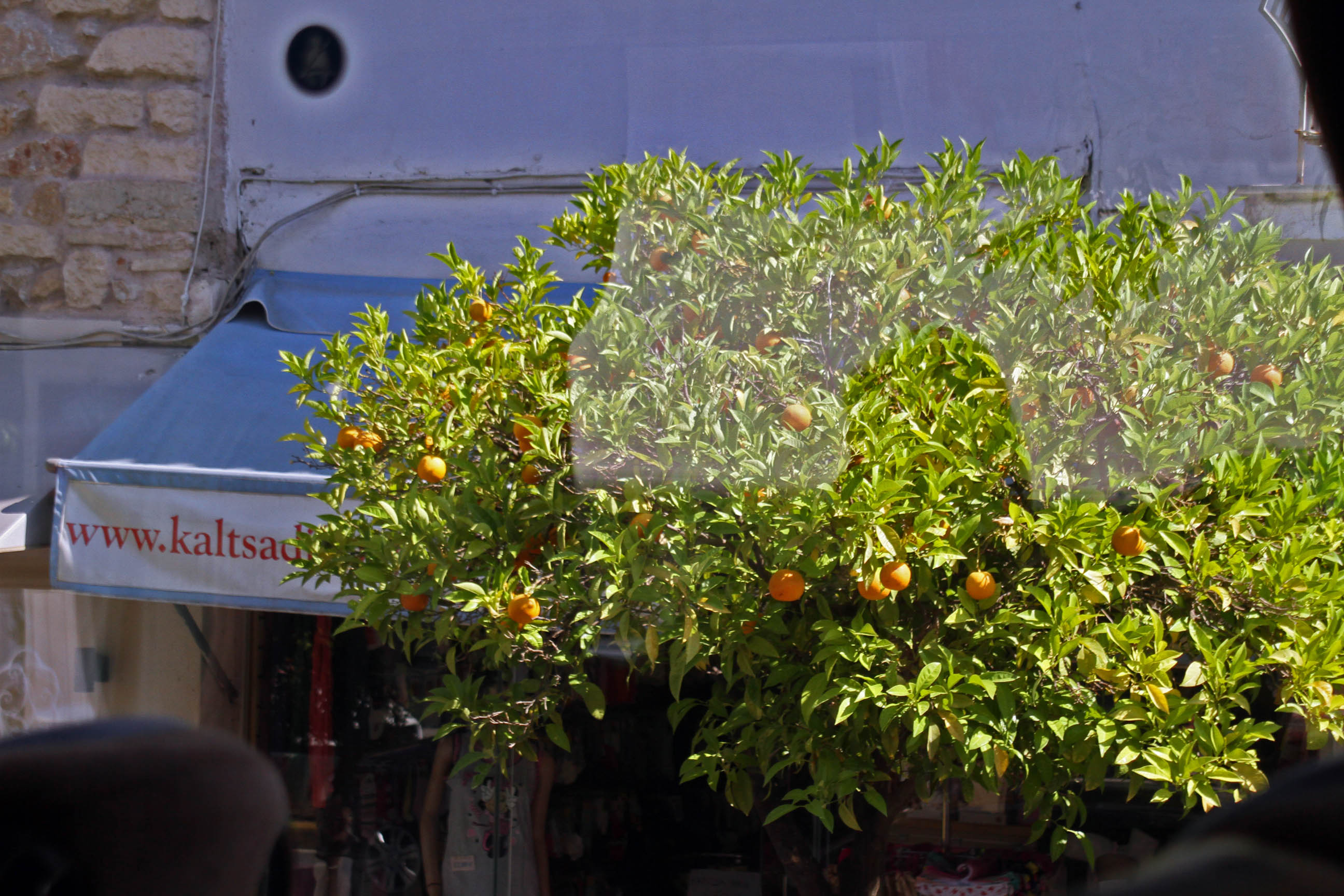
My continuing coverage on our trip to Greece and Turkey begins with the arrival in Athens, Greece where we were picked up by our guide, Kosta, from Homeric tours. As we passed through the ancient narrow streets that were lined with orange trees and tiny cars, we caught glimpses of the Athens Acropolis. The parking was limited so there were many cars parked up on the streets and sidewalks.

IMG_2101Very tired from the overnight flight, the three of us barely fit into the tiny elevator of the Athenian Callirhoe, and went up to our rooms. The beds were rock hard but the staff of this hotel were top-notch. Very helpful and nice to us during our entire stay. It was in a very good location, close to the major attractions and some metro stops and restaurants. Kosta directed us to where the locals eat and we had a nice meal before hiking through the streets where we helped the local economy.

Walking the Streets of AthensIMG_2107

The streets didn’t match up with the maps but the shopkeepers were very helpful giving us directions and then inviting us into their shops. We were making our way up to the Plaka area. We bought our obligatory tourist stuff and gave some coins to some kids on the street who were playing bouzoukis (a Greek guitar) and accordions, attempting to make their daily quota for their adult lords. It was hot and I for one was very weary after traveling so we headed back and had a lovely dinner at the restaurant hotel.

One of my thoughts walking the ancient streets was how much human history lies beneath the concrete sidewalks we were stomping on. For now we have many wonders to explore and more are excavated each year.

IMG_2217One thing I notice when we travel is the general character and décor of the living spaces in these big cities. In some countries you’ll see satellite dishes or water tanks on the roofs. Here in Athens I would describe the apartments that are home to six million residents as having a drab type of architecture with lots of green foliage spilling off their balconies—most having awnings. Their roofs hosted solar panels that also dotted the landscape. None of the buildings were very tall because there was a law to keep the view of the Acropolis open to the surrounding region.

The Acropolis

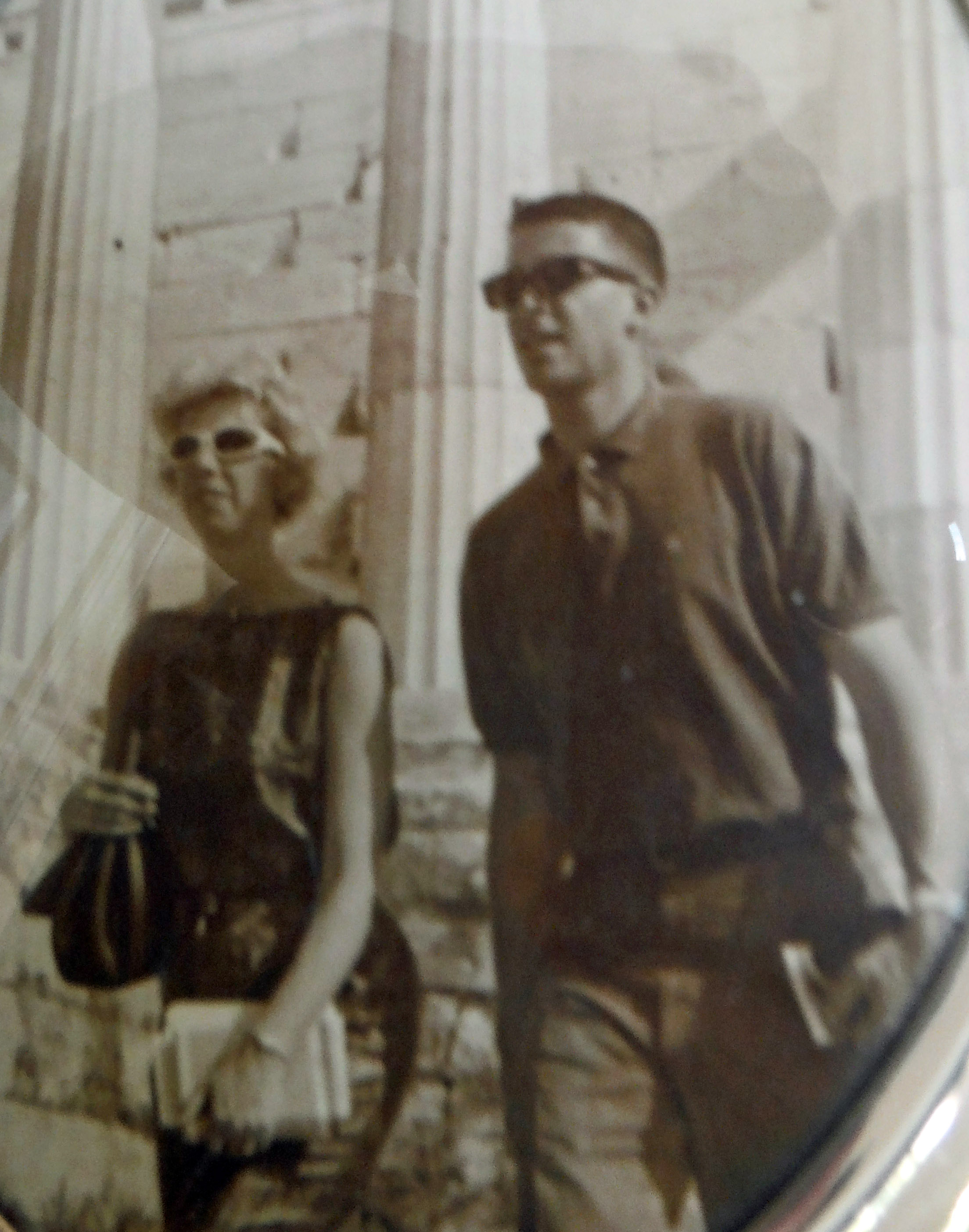
My parents were here 15 years ago and also 50 years ago as a young couple. My brother was a third wheel of sorts on that first trip, but not quite out of the cocoon at that point. We have photos of my parents in 1965 at the Acropolis. They enjoyed seeing the ruins again as we hiked up the tall local hill to the top.IMG_2173

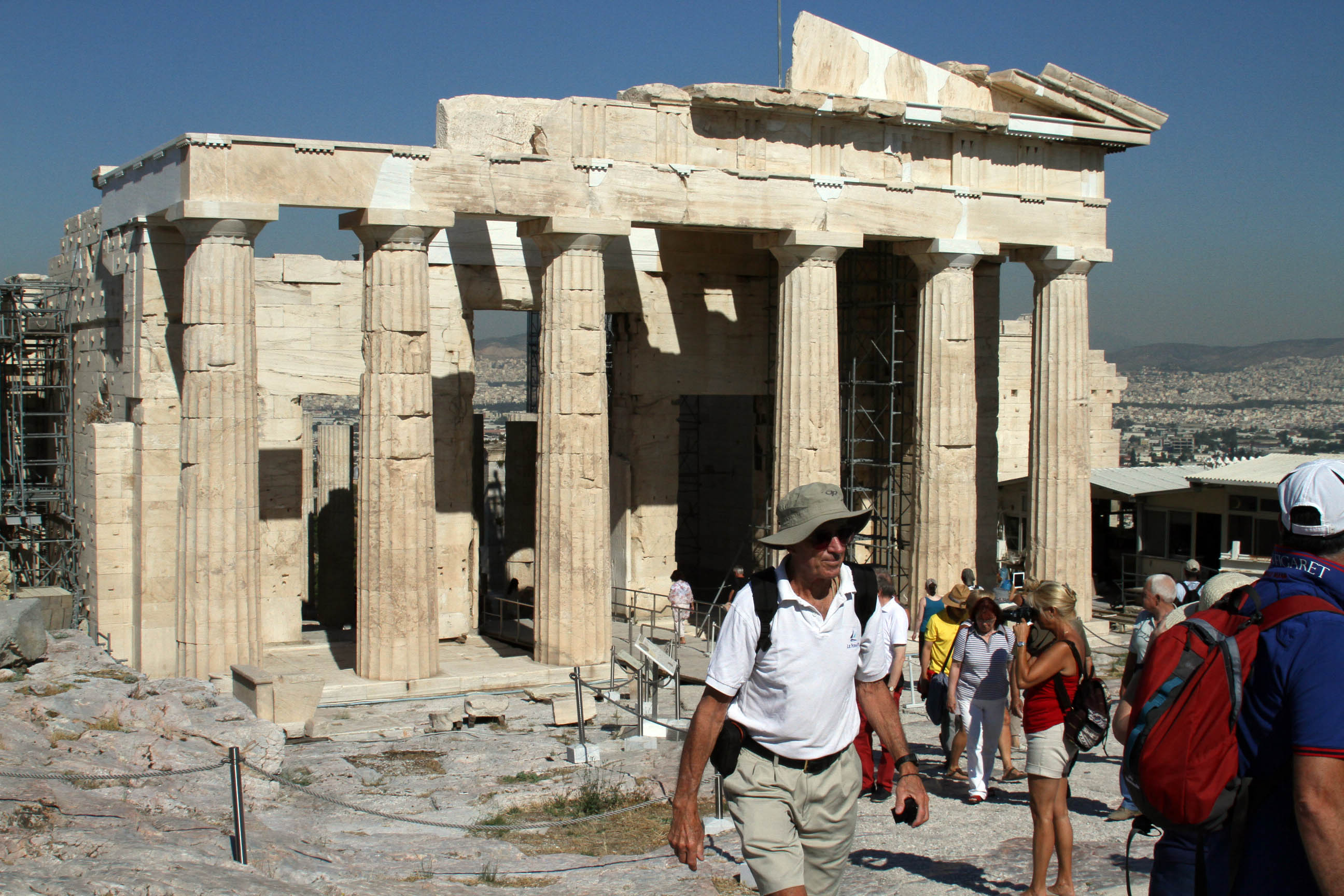
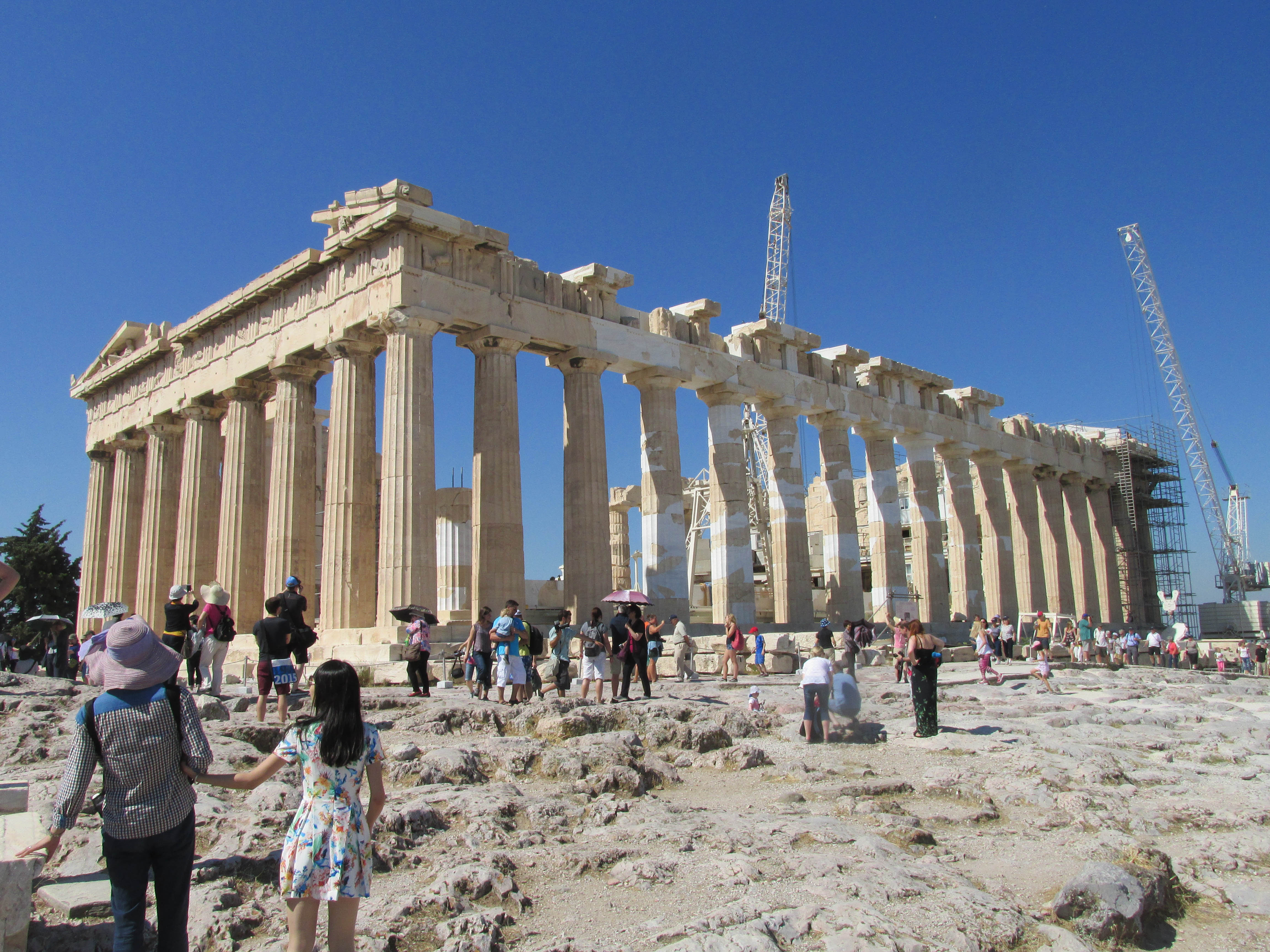
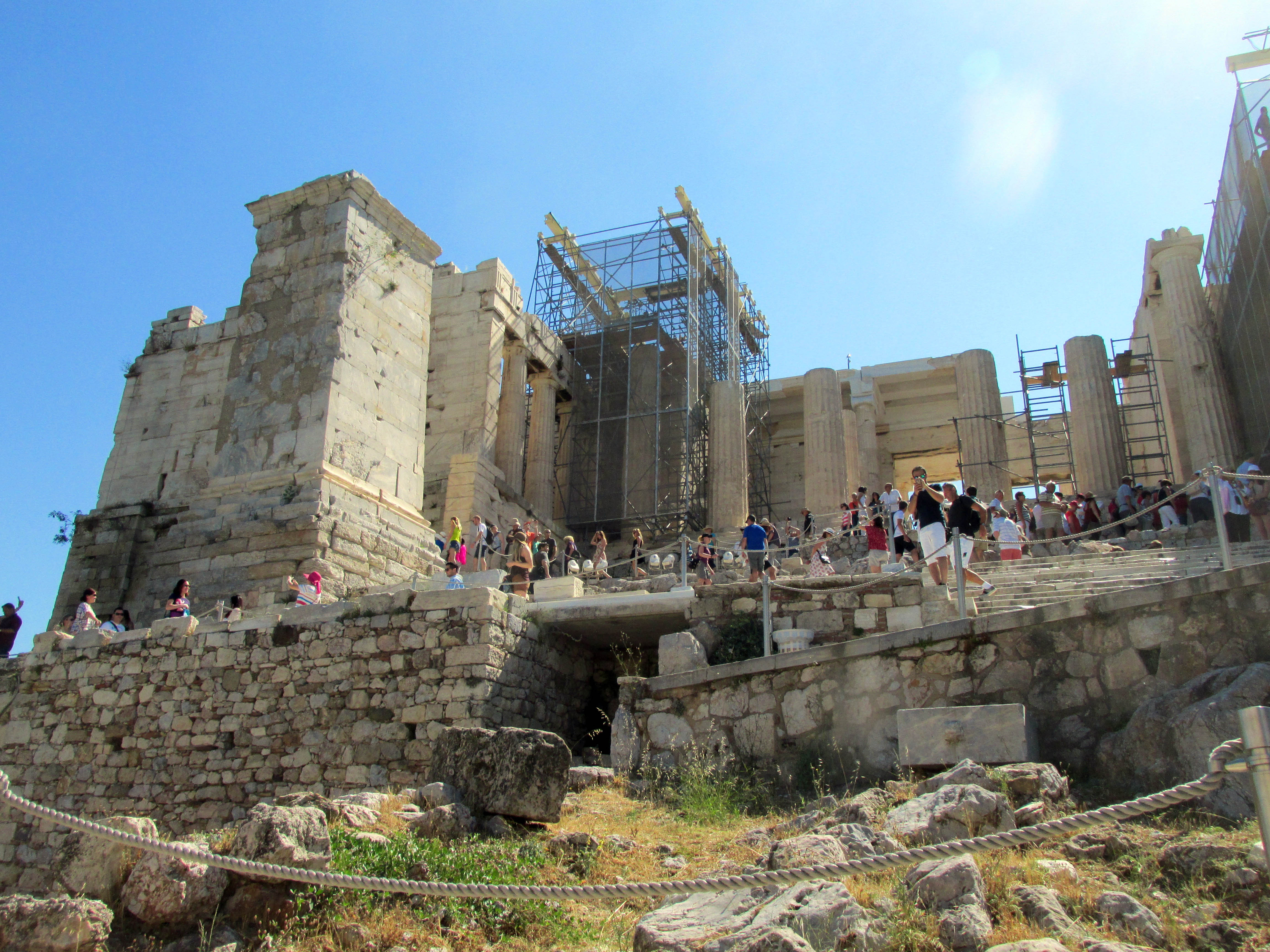
In each of the ancient Greek cities, there was an acropolis. Most people know the one in Athens as the only one but there are many throughout the country. The Acropolis contains several ancient structures including the entryway or Propylaea. A monument to Agrippa still stands as part of the Propylaea. Also on the hill top is the Parthenon, which is the main structure, and the Erechtheum which was a temple to Athena and Poseidon. The Acropolis was the center of the civilized society and where the ancient nobles lived. The little people lived below in the low lands.

IMG_2164As we walked among the ruins I was amused at some of the wardrobes of the tourists, including one woman with blue high heels. This was not exactly an easy place to walk around—uneven rocks everywhere.

A couple of historical side notes…

The story of the Parthenon involved a rivalry among two of the ancient Greek gods, Athena and Poseidon. Looking for a patron for the city, the King asked the two to participate in a contest. Each offered a gift to the people—Poseidon created a spring but it turned out to have salty water, which didn’t do anything for the people there. Athena on the other hand gave them an olive tree, providing sustenance and oil to light there lamps. So Athena won, hence the name Athens.IMG_2207

The Parthenon was blown up when the Turks, who were occupying Athens, kept their arsenal there. The Athenians were fighting back and bombarded the arsenal, taking the ancient ruin with it. It has a lot of scaffolding so they are working to repair it.

In the early 1800s, the British Earl of Elgin obtained permission from the Sultan (who ruled Greece at the time) to take whatever he wanted from the Parthenon and so the ancient Frieze that decorated the outside of the Parthenon went piece by piece to England where it was sold to the British museum.

Day two will continue in the next post with a tour of the Olympic Stadium and more!

IMG_2176

IMG_2194

IMG_2222

Mom and Dad in 2015.

Mom and Dad in 2015.

Mom and Dad in 1965.

Mom and Dad in 1965.

Frieze replica.

Frieze replica.

Part of the Frieze from the Parthenon.

Part of the Frieze from the Parthenon.

27.Parthenon

The monument of Agrippa (on the left) of the Propylaea.

The monument of Agrippa (on the left) of the Propylaea.

« Previous PageNext Page »