travel


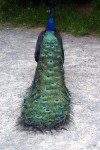
Continuing on with the Nova Scotia trip was our excursion up through the Glooscap Trail. First stop was the wildlife provincial park. Upon entering the park we spotted a beautiful peacock. He had plenty of friends scattered around the park and they communicated by bellowing loudly to each other. Then we passed the cougars—hyper things these creatures are. They pace back and forth continuously like they have ADD or something. Other impressive animals included the moose—the only ones we saw on the entire trip even though the locals boast of seeing them everywhere—and bears, bobcats, owls, and a horse (not really defined as wild) that had an itch. I found it comical to watch it scratch its behind on the fence we were standing in front of. Maybe he was looking for an assist.

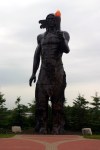
Our trip continued with a drive past the 50-foot Mastodon located at the midway point from the equator to the pole. I thought it was the 49th parallel until my dad pointed out it was the 45th parallel. After thinking about the math for a moment I told him to shut it. (Just kidding.) Just up the road was the Glooscap Heritage Center. This was where we learned all about the history and culture of the native Indian tribe—the Mi’kmaqs. Their mythical legendary hero (for want of a better description) was a massive creature who took the form of a man and could pretty much create mountains and rivers and conduct other miraculous feats. There was statue of him you can see for a distance down the highway.

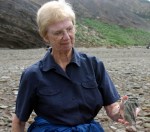
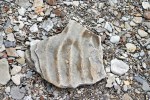
Next stop was the Joggins fossil cliffs—way up the trail near New Brunswick. This was very cool. Due to the nature of the tides and how the land had formed from swamps, glaciers, etc., there were tons and tons of fossils from plants and animals dating back 350 million years. We took a tour and went down to the beach where you can see fossilized trunks from trees right in the side of the cliffs. The cliffs get worn away each day so the scientists there continue to discover new findings all the time. As we walked on the beach, we picked up rock after rock just sitting there that had markings on them. The biology geek in me was fascinated.

After leaving the fossil cliffs we made our way down the Sunrise Trail and stopped off at Jost vineyards. We took a quick tour of the facility and of course shopped for some wonderful local wine. Not much more to say on that.

From there we stopped over night at the slanted house in Pictou and then took off the next day toward the highlands. One last stop before crossing the causeway was at Antigonish for the Highland Games. Unfortunately like so much on this trip, we missed the actually games but got to walk the town during the festival. There were cute girls dancing in costumes, local singers entertaining the crowds, and a few extremely large gentlemen dressed in kilts who demonstrated a few of the contests for us. They had a very heavy metal ball that I could hardly pick up which they told me they toss over their heads as far as it can go. I could only imagine the warriors of the 15th century and how they must have looked like these guys but only dirtier and with bad teeth.

Well that’s it for now. Our adventure continues with a tour of the Cabot Trail in the highlands of Nova Scotia.

One of the main reasons I wanted to go to Nova Scotia was to visit the Bay of Fundy. This area boasts the world’s highest tides. At one point they reach up to 55 feet. That’s akin to a five story building.

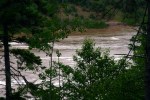
So here’s what happens that makes it kind of interesting. The tide comes in from the ocean and gets funneled into the bay and then into the Minas Basin. It then gets funneled further into a narrow river called the Shubenacadie (Shoo bin ack uh dee). When the tide goes out, the river is almost drained dry—lots of sand can be seen and the water that is left is extremely shallow. Then, when the tide comes in, it meets the water that is receding and forms what is called a tidal bore. A wave.

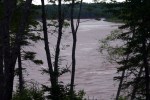
My parents and I arrived at the Tidal Bore Rafting Park and Cottages and sat on the deck of their restaurant overlooking the river. It was dinnertime so we ordered the Lobster rolls and took some photos of the dry river bed. Just a little while later we noticed a very fast moving body of water filling up the river. It was amazing to see. Seriously, the river was filling up before our eyes in less time than it took to have dinner.

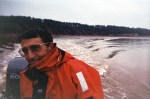
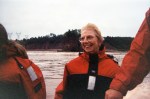
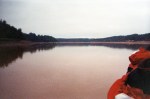
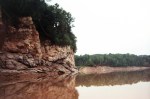
The next night we hopped on board the zodiac and took a nice serene trip up the river. We got to see a few bald Eagles way up in the trees and the banks of wet mud on either side. Travis was our guide and he was a nice local kid who I would characterize as someone who lives for today. Travis just bought a house on the river in the flood zone with no flood insurance. During really high tides his basement floods and they fish right off his deck. When he told us the river widens by two feet each year I teased him about how in a few years he’ll just have to open up his refrigerator door to catch fish. Travis was a good guy though. I must attribute some great wisdom to the guy. He said, “You never know what’s going to happen when the tide comes in.”

And with that we hit the fast running water and he proceeded to drench us in the waves. The last bit of dunking managed to throw me and another camper off the side of the boat. I don’t remember much—just that Travis said not to hold on to the boat or we’d get sucked under. That was precisely what was going through my mind when I was under water. That and getting caught in the motor. But my Dad, who was halfway out the boat after I went over, said I “popped” right up. Yeah. Popped. I swam very hard to the surface with a ton of waders and wet shoes on. But all was well. I got into the boat and up the mud banks back to our warm cabin all safe and sound. Funny how the pulled muscle in my back didn’t hurt until much later.

All in all, it was a really fun adventure and I’d recommend it for all. But try to go during the mid cycle of the moon. If you go during a full moon you may end up getting more than dunked into the “Shubie.”

This is a YouTube clip of a rafting trip. It’s not mine but halfway through it you can see what it’s like on the river.

Next stop on the Nova Scotia tour took us to Blomidon Look Off. The haze kept us from looking off at much but we did get to see an entrepreneur working the system the best he/she knew how. At this blip on the map there was the “Look In guest room,” the “Look & Put,” the “Look and Lick (ice cream of course),” the “Look and Eat” take out, and the “Look Around” gift shop. The only thing missing was the view. So mom and dad and I went up to the nearby national park and hiked a trail (a long, long trail) to another look off. Finding nothing we headed out for what really mattered—the CheeseHouse.

Another marketing ploy. I reasoned that the Foxhill CheeseHouse would offer us a tour of a cheese processing plant or a chance to milk a cow—something. Nope. But once she brought out the sampler tray all was forgiven. We bought lots of yummy Cheddar, Havarti, Gouda, and other stuff along with a loaf of delicious bread and went away from said Fromagerie happy campers.

Next stop was the Acadia Heritage site. This was a nice surprise in our quest for historical and cultural enlightenment. We learned all about the Acadians, a group of French people that settled Nova Scotia around the time the Pilgrims were claiming a rock in Massachusetts. These people built dykes to deal with the huge tides that drenched the land and were neutral in the continuous struggle between the European powers that were fighting over the land. In the mid 1700’s the British instituted an ethnic cleansing campaign and deported all the Acadians—many of whom suffered and died after their belongings and homes were taken and destroyed. Some of these people migrated to various regions, one of which was Louisiana where today they are called Cajuns. Sound familiar? It’s too bad the army corps of engineers didn’t learn how to build dykes like the Cajuns’ ancestors or maybe Katrina wouldn’t have destroyed the levies. Hmmmm.

While at the heritage site we went to a memorial church where Evangeline the cat sprawled out in the window sill allowing all of us to pet her if we wished. She is named Evangeline (just like my Aunt Vangie) after the Evangeline in the story by Henry Wadsworth Longfellow. Evidently her character represents the horror of the deportation and brought it out in the open for everyone to see and to remember. I bought a copy and will be reading it soon. Too bad we are still doing this kind of thing today.

Stay tuned as the adventure heads toward the tidal bore and my near drowning. Okay, I’m exaggerating but I did fall into the rushing waters of the Shubenacadia River. If you think you know how to pronounce it, I’ll give you a prize.

« Previous PageNext Page »