During our trip to the holy land, as our Jewish guide rested on the Sabbath, we took in a tour to Bethlehem. This little town, the birthplace of Jesus, is only a few miles from Jerusalem.

A massive wall with barbed wire separates the inhabitants of Bethlehem and Jerusalem.

A massive wall with barbed wire separates the inhabitants of Bethlehem and Jerusalem.

We were quite shocked to find a massive concrete wall with barbed wire on top lining the border between Jerusalem and Bethlehem. Our guide George, who spoke several languages, including clear and fluent English, told us that back in the year 2000, some terrorists were coming into Jerusalem and attacking people. So, a wall was erected and the Arabs living in Bethlehem stay on their side and the Jews stay on theirs. It has cut down on the violence but as we passed through the security area, it was sad to think it had to be put up in the first place.

A view of Bethlehem and the hills beyond.

A view of Bethlehem and the hills beyond.

A large percentage of the very small Christian population (many are Arab Christians) are concentrated in Bethlehem. I’m not sure if George was a Christian or not but he was well versed in our faith, quoting the bible with accuracy, and we found it pleasing to hear someone who spoke of Jesus and the holy family with excitement and knowledge of the faith.

The Milk Grotto
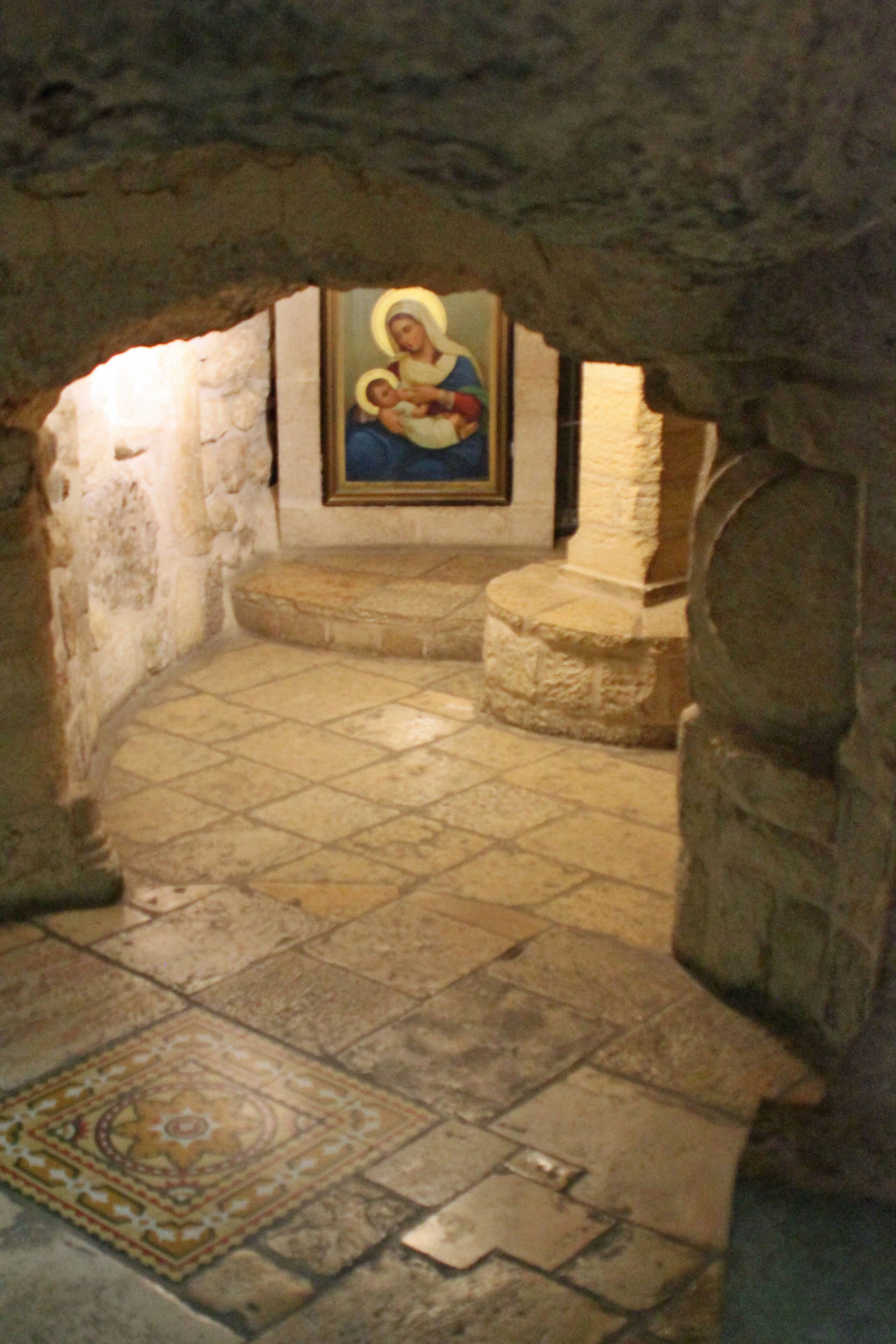
A section of the Milk Grotto.

A section of the Milk Grotto.

The bus took us along Manger Avenue and up a steep hill to our first stop, the Milk Grotto. As the holy family was escaping the town to get away from Herod’s soldiers who were ordered to kill all the baby boys, they stopped at this grotto so Mary could feed Jesus. Of course now it’s a church that is built in and above the cave. It was quite peaceful and simple there. It is said that a drop of Mary’s milk fell upon the stone and it turned white. The white chalky substance is now collected and sold—mostly to women who are trying to conceive or who are pregnant. Our guide very wisely said that it’s not really about the act of mixing the substance with water to get some physical benefit but rather about faith.

Shepard’s Field (Ruth’s Field)
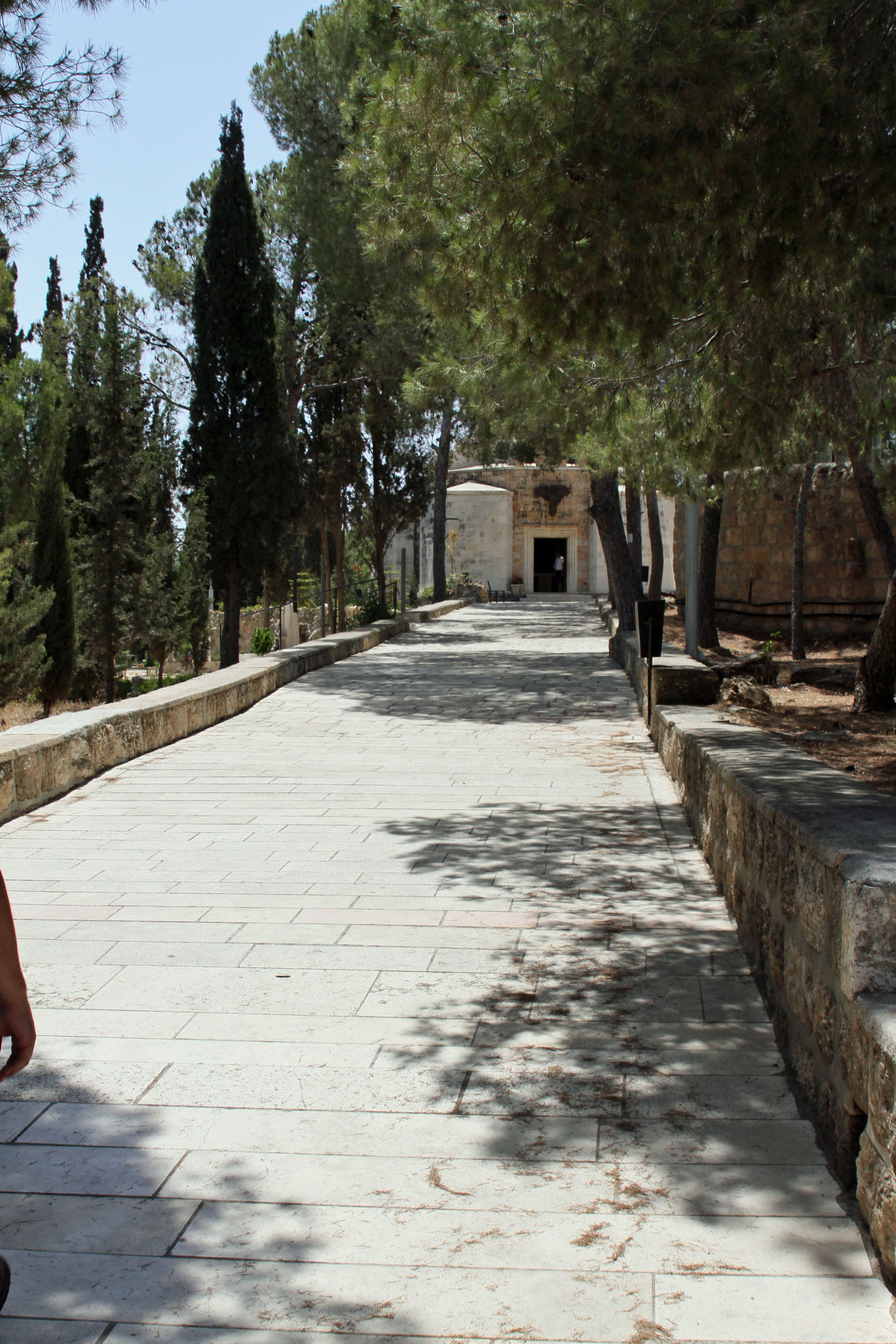
Shepard's Field

Shepard’s Field

Down the narrow curvy road we went and on to the Shepard’s Field. Another church with gorgeous mosaic paintings surrounded by an excavated area and park marked the spot where the Shepards of bible times hung out. These Shepards were blessed with the good news of Jesus’ birth, having heard the announcement from heavenly angels.

The Shepard’s Field is also called Ruth’s Field. Ruth’s story is one of my favorites. Ruth and her mother-in-law were poor widows and they relied on the kindness of the local farmers who obeyed God’s law regarding setting aside corners of their fields for the poor to harvest. Ruth worked hard to glean the grain left behind after the harvest and caught the eye of Boaz, a good man who protected her and eventually became her husband. Boaz and Ruth are Jesus’ direct ancestors.

The spot under the altar marks the place of Jesus' birth.

The spot under the altar marks the place of Jesus’ birth.

Church of the Nativity

Our next stop was the Church of the Nativity. This church was the only Christian holy site not destroyed in 614 A.D. by the invading Persians. Evidently they saw a mosaic on the church facade depicting the Magi dressed in Persian attire and thought it was a shout out to their prophet.

Lots of crowds headed toward this seemingly non-descript church off the narrow street on top of one of the hills of Bethlehem. We entered single-file through a low-framed door and made our way over to an area that covered a cave. As with some of the churches in Jerusalem, the orthodox sects that had a presence within this church decorated the area with paintings, tarps, depictions of Mary, incense burners, and relics among other items.
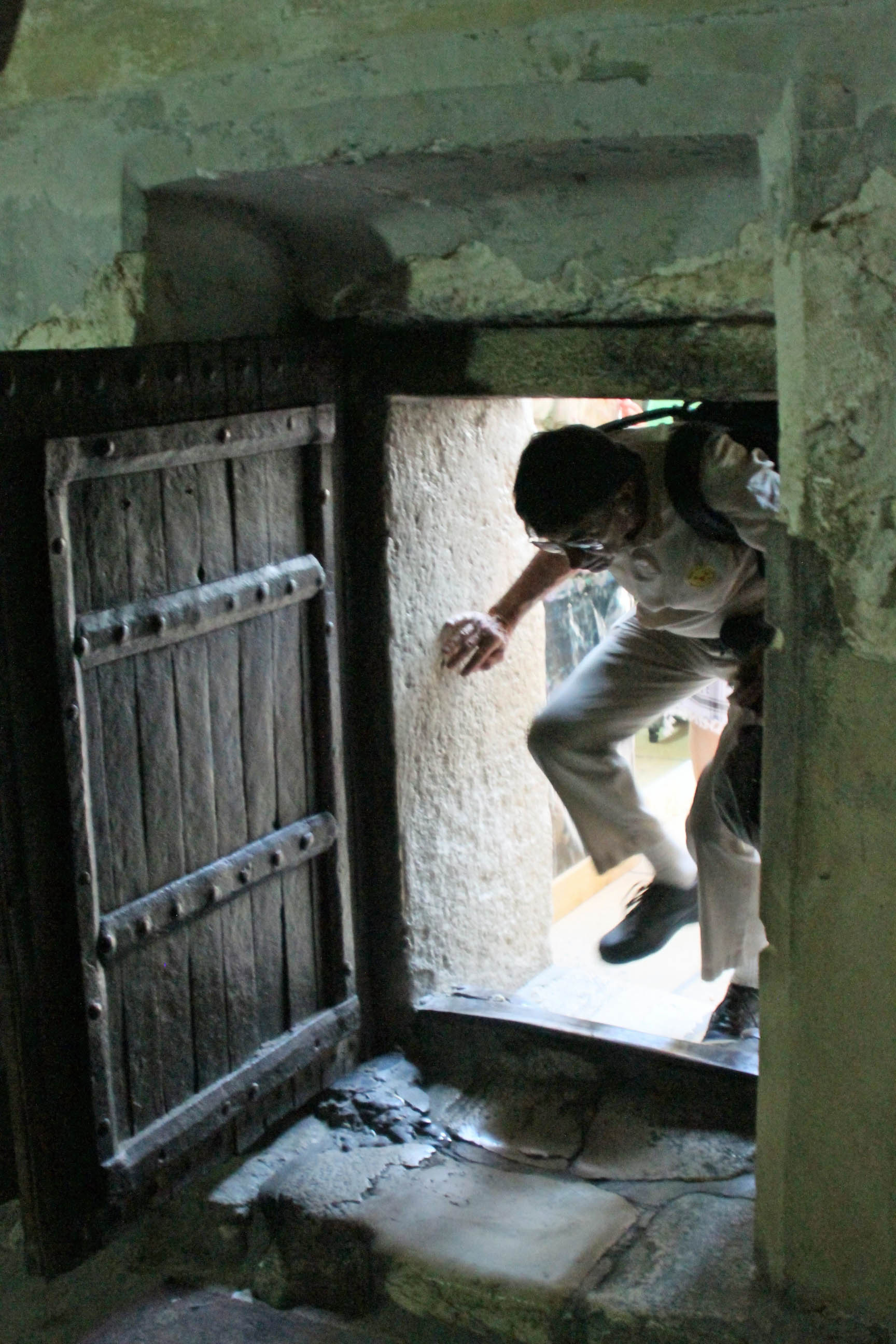
Dad has to stoop low to enter the Church of the Nativity.

Dad has to stoop low to enter the Church of the Nativity.

We waited in line to descend steps into a small area where there was an altar above the place where Mary gave birth to Jesus. The walls were covered with thick tarp and there was another altar where a couple of priests were offering communion to a few visitors. We took our turn and bent down to touch the rock under the altar. I lingered for a few minutes wanting to breathe in the Holy Spirit and to try to meditate about this holy place and what happened there 2,000 years ago. But alas, with a tour group, we were moved along to walk through the church. Below one area was a cave where the holy family lived for a time and where Saint Jerome spent time meditating and translating the bible into Latin (the first time that was done).
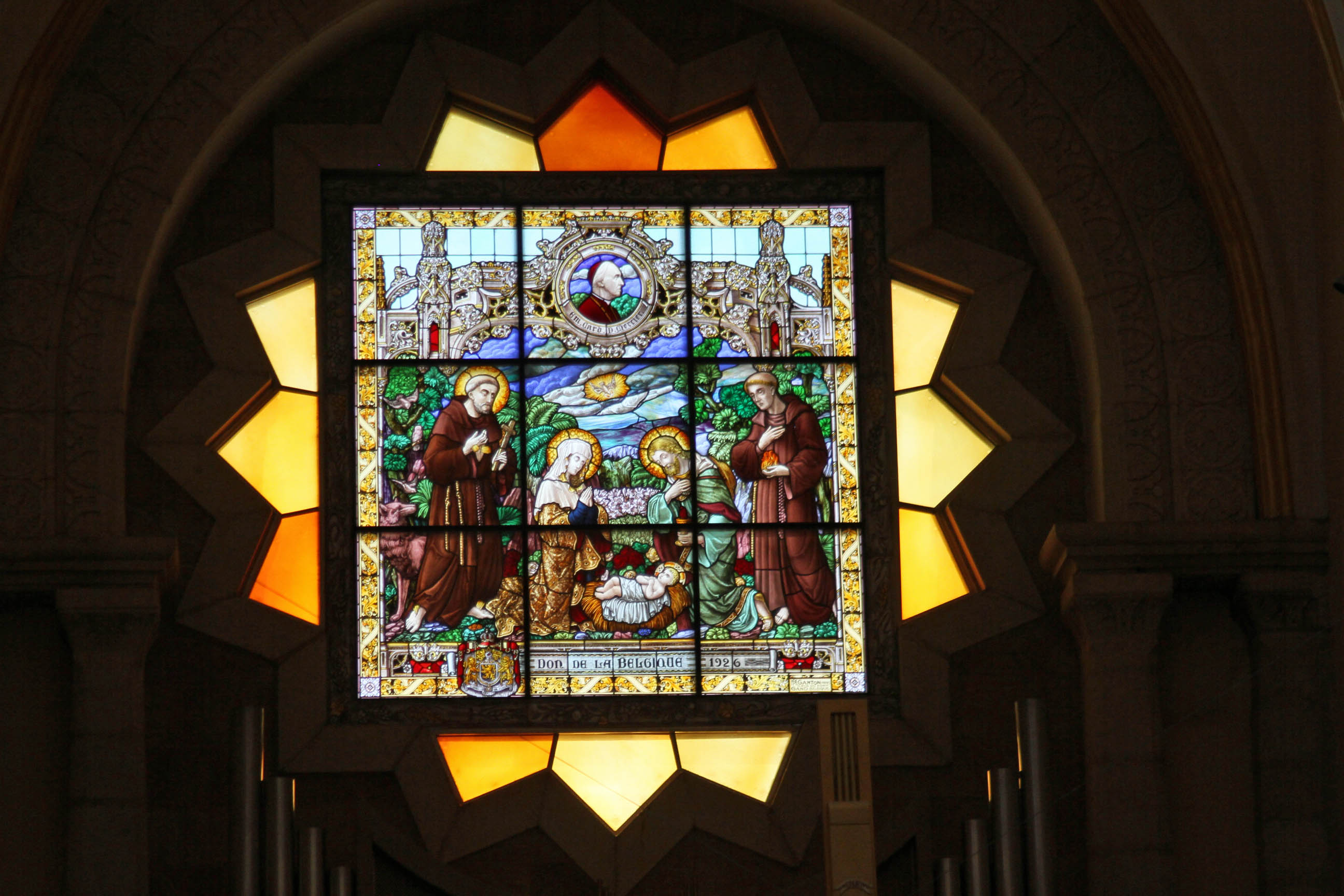
 

IMG_0482


The Obligatory Gift Shop

Our tour ended at Johnny’s gift shop where we found an assortment of goodies—many carvings of the nativity, crosses, and more from a special wood found locally. Not much wood is found in Israel, so this was somewhat unique.

The afternoon was spent strolling through the Old City shopping before we started our journey east.

Ruth 1:16

But Ruth replied, “Don’t urge me to leave you or to turn back from you. Where you go I will go, and where you stay I will stay. Your people will be my people and your God my God.”

IMG_0339

I thought this was a little funny–a place near the Church of Nativity.

IMG_0379

One of the beautiful paintings on the walls of the church at the Shepard’s Field.

IMG_0402

A view of the Church of Nativity. Some construction was going on and it was tucked in off the street.

IMG_0413

The lavish decorations adorning the walls over the entrance to the cave where Jesus was born.

IMG_0416

These items were in a case near the entrance to the birth cave.

IMG_0434

Down in the birth cave inside the Church of the Nativity, a small area was being used by some priests and nuns for prayer and communion.
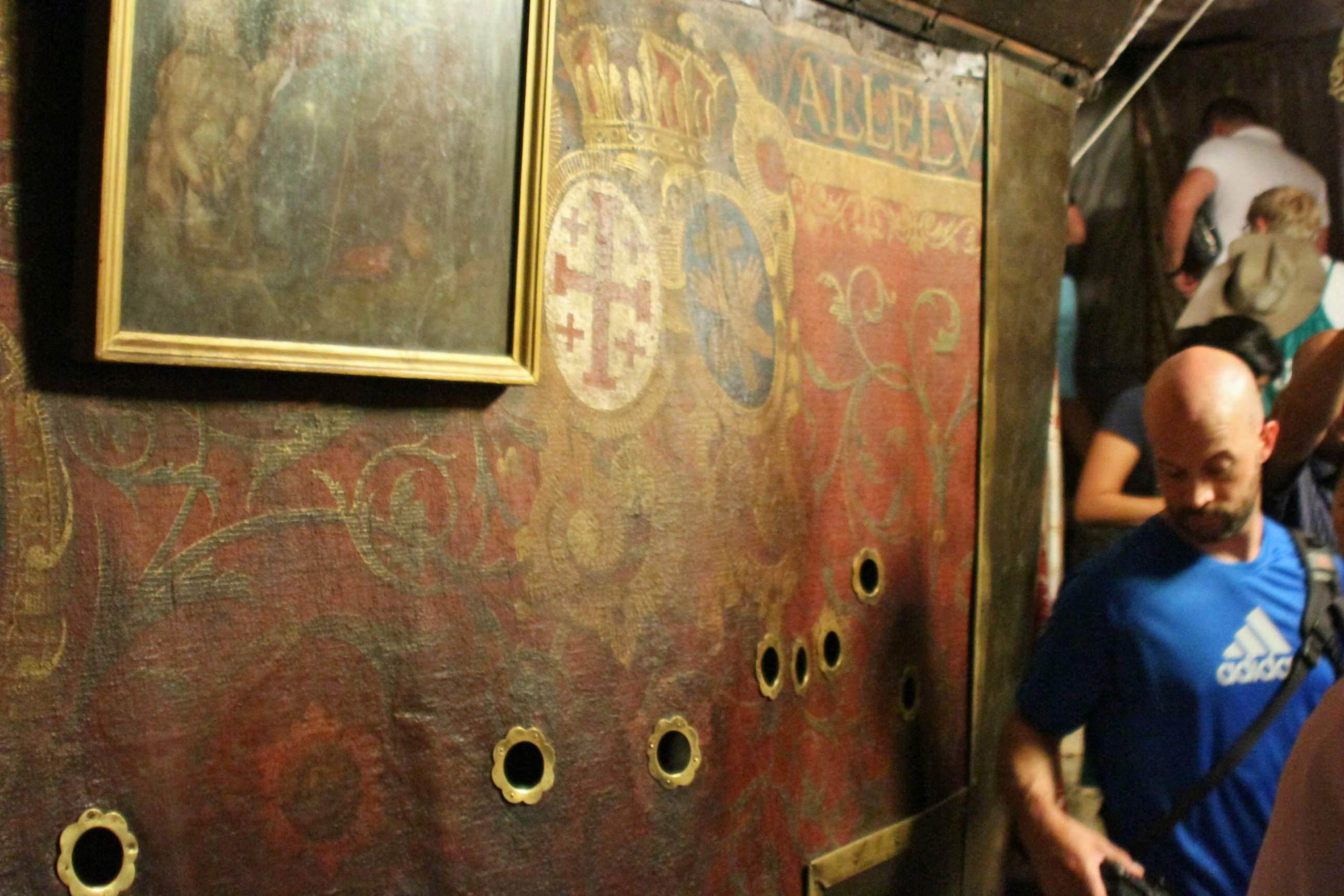
IMG_0435

Down in the cave on the walls around the rock under the altar where Jesus was born, tapestries and paintings hung.

IMG_0442

This beautiful mosaic floor is partially uncovered in the Church of the Nativity.
IMG_0450

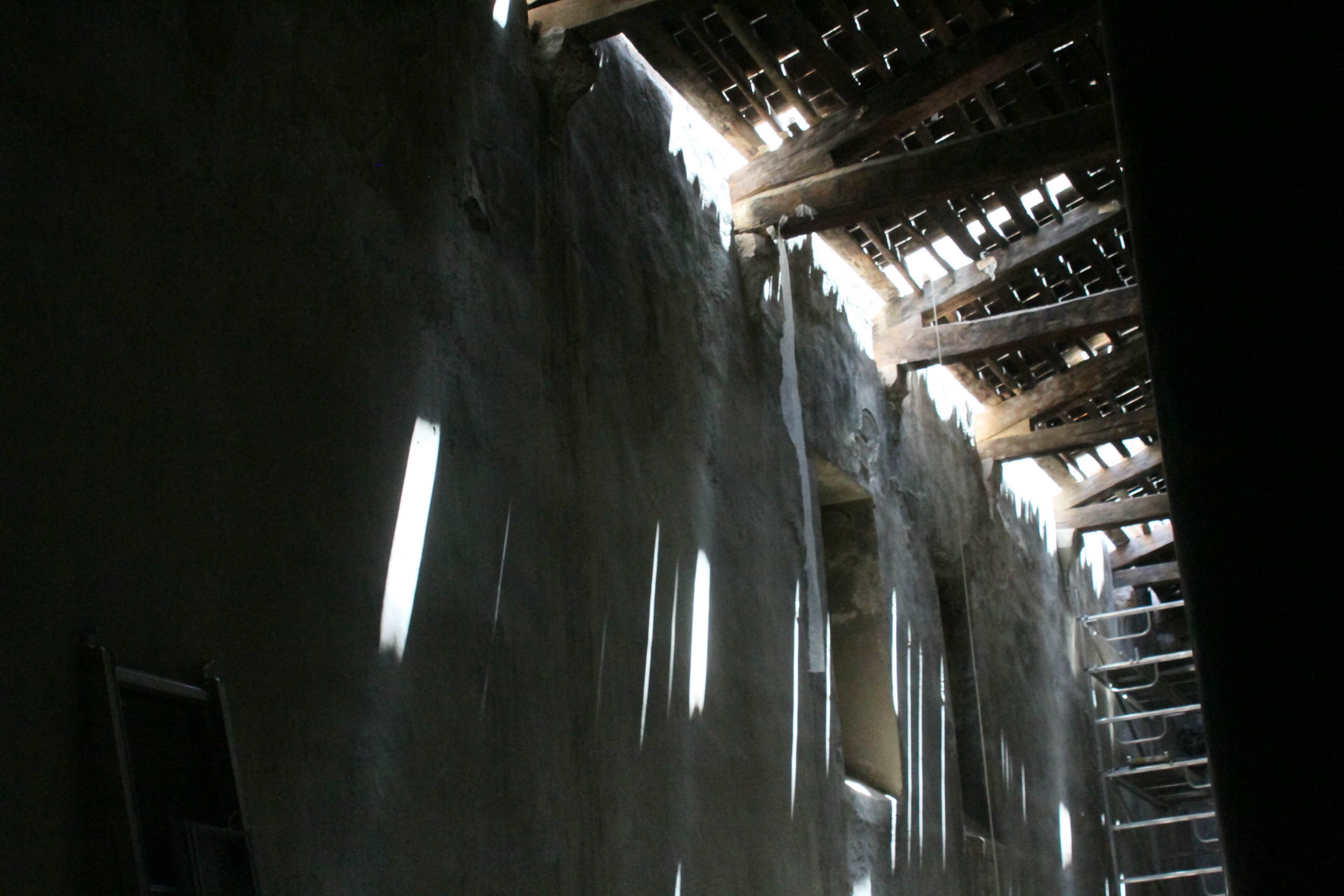
Leaving the area where the birth cave was located and walking into another church connected to it where the holy family lived. The walls reflect the light coming through slats in the roof.

Among our days in the Old City of Jerusalem, we spent time visiting holy sites of the Christian faith including the places Jesus was taken during his trial and crucifixion. Most of these sites have churches built over and around them so it’s somewhat difficult to get the feel of what it was like 2,000 years ago. And for the actual location of the crucifixion and burial of Jesus, there are differences of opinion between the Protestants and the orthodox groups.

The Via Dolorosa, monks, shops and more outside the Church of Holy Sepulcher.

The Via Dolorosa, monks, shops and more outside the Church of Holy Sepulcher.

My feeling after walking around was that as much as I like history and seeing ancient sites and wonders of the world, it’s the Spirit of God that is what moves us. That Spirit can be felt just as powerfully in a walk through the woods or along the sands of the beach as it can sitting in church or standing in the “spot” where Jesus was said to have risen from the dead.

Via Dolorosa

IMG_9891On a Palm Sunday in the spring some 2,000 years ago, Jesus entered Jerusalem through the Golden Gate (now blocked up) on a donkey to the cheers of the crowds. He spent the week praying, scolding, and preaching. On Thursday of that week, he dined with his friends one last time before heading over to the Garden of Gethsemane at the base of the Mt. of Olives. I imagine the hike they took to get there took a while and they had to go down and across the Kidron valley. I wrote before about the steepness of the Mt. of Olives, where He went up to pray to the Father that night. And then once taken by the soldiers, He had to walk back up the steep hill and through the Lion’s Gate—the beginning of the path up the Via Dolorosa.

The indentation in the wall where Jesus placed His hand.

The indentation in the wall where Jesus placed His hand.

Via Dolorosa means “Way of Grief” in Latin. There are stations along the path that mark events that happened while Jesus carried the cross on the way to Golgotha hill, the site of the crucifixion. We stopped at these stations, starting with the churches that now represent where He was tried and beaten. We continued the walk up hill and saw an indentation in a wall where He stopped and placed His hand to catch His balance. As we hiked up the steps I kept thinking that His tortuous walk was made worse by the fact He had to do it uphill in the heat.

More stations marked points where Jesus fell down, saw his mother Mary, and was helped by Simon, the man who just happened to be visiting town on this fateful day. The walk ended at what is now the Church of the Holy Sepulcher.

Church of the Holy Sepulcher

The lavish decorations above the altar of the rock of crucifixion.

The lavish decorations above the altar of the rock of crucifixion.

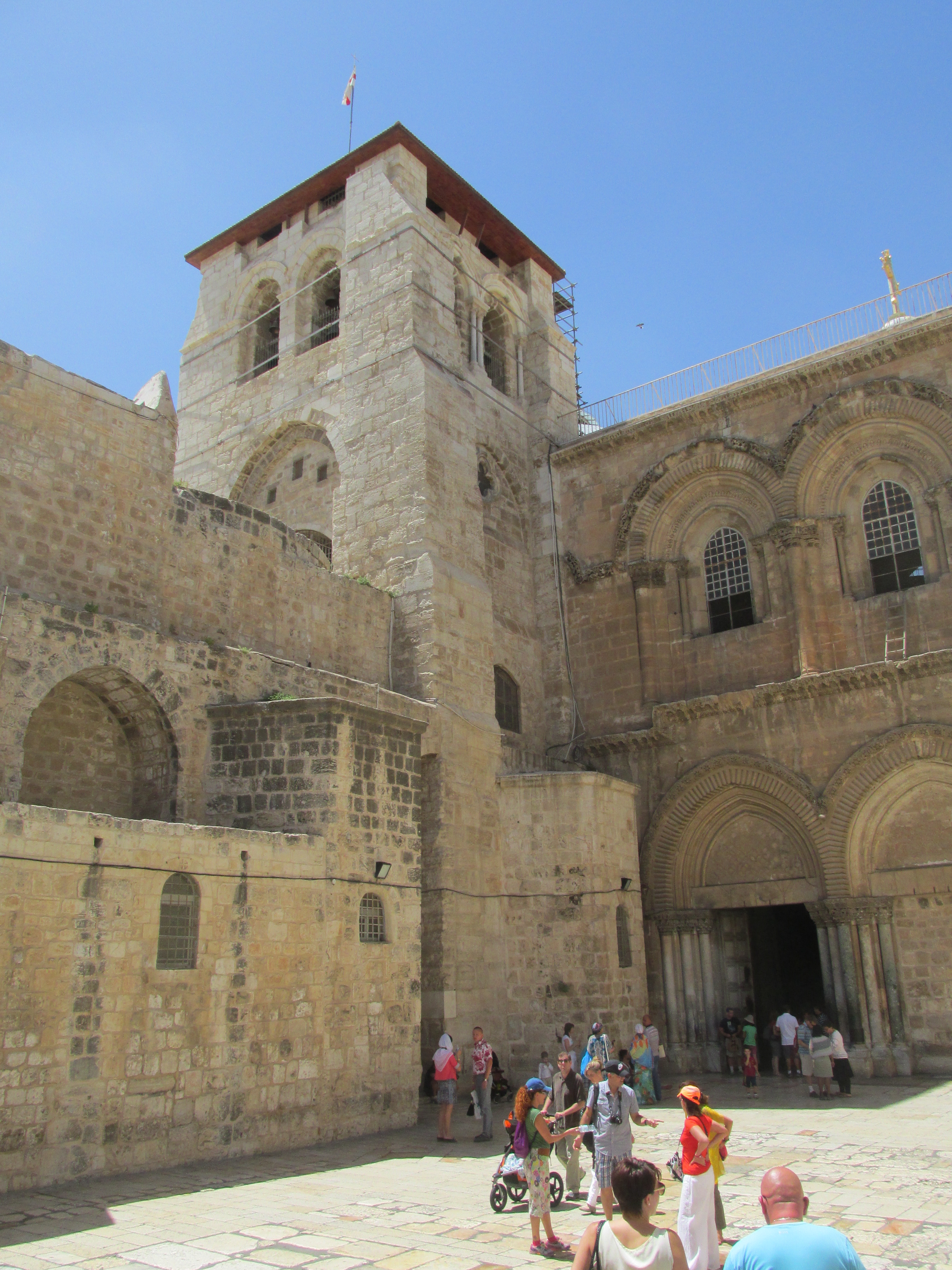
In Jesus’ time the location of the crucifixion and burial was outside the city walls. Back around 300 AD, Emperor Constantine’s mother decided these sites were located in the place that is now the Church of the Holy Sepulcher which houses the crucifixion rock, the place where His body was prepared for burial and the tomb where He was buried. The church is run by six different orthodox churches, each having a space in the church. Some in-fighting led to some interesting rules that were put in effect by the Muslims who were in charge of the city in the mid-1800s. One of the rules was “status quo” meaning everything that was in place at that time was to be kept exactly where it is forever. An interesting result is a ladder outside a second floor window used to help the monks get food and supplies during a siege is now forever in place as part of the façade. Another interesting fact is that a Muslim family holds the keys to the church and every morning one of the family members who has been named custodian, opens the doors.

The Church of the Holy Sepulcher. You can see the ladder outside the top floor window to the right.

The Church of the Holy Sepulcher. You can see the ladder outside the top floor window to the right.

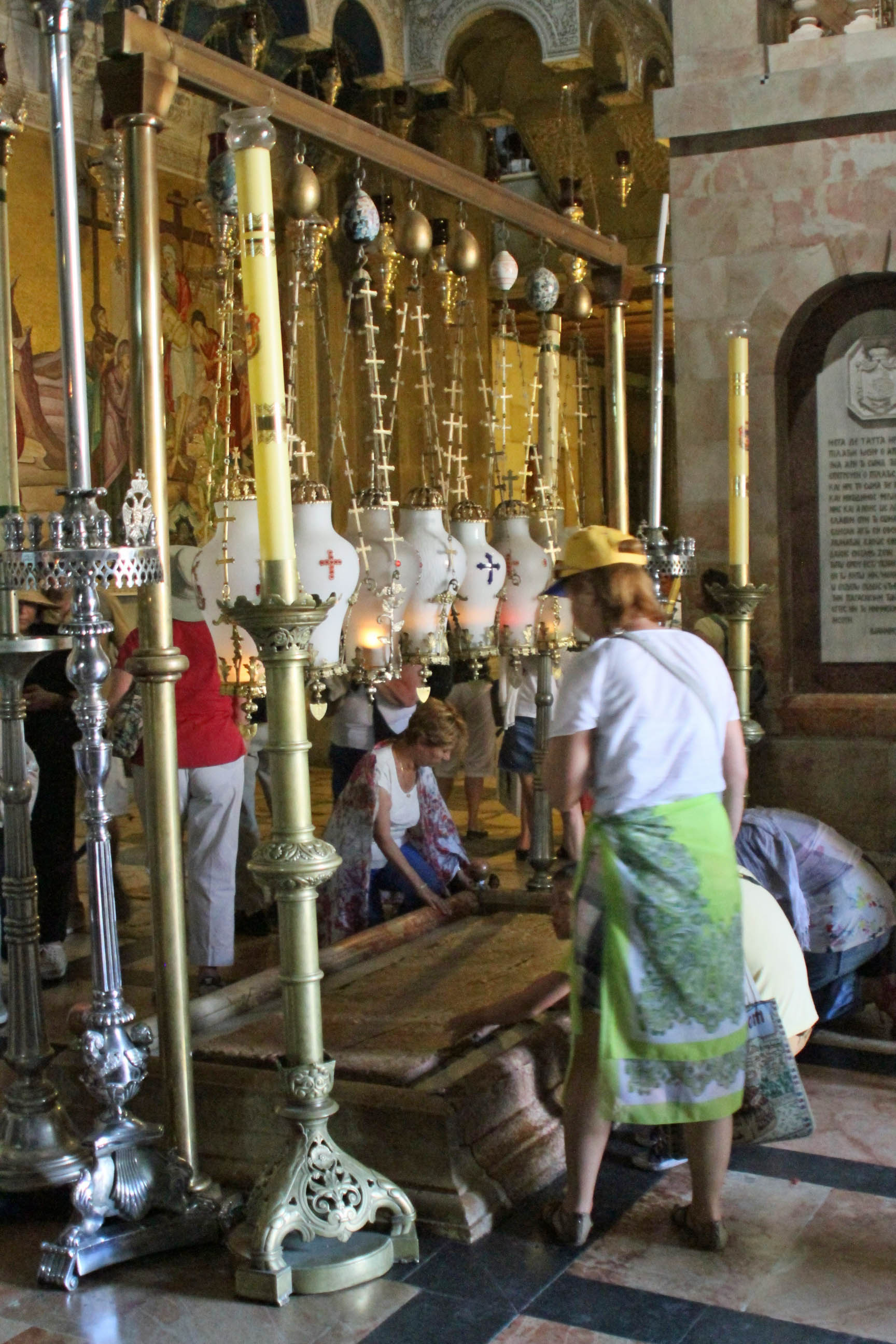
Upon entering, we walked up some steep stairs and lined up behind the masses to get the chance to touch the rock encased in a lavishly decorated room. There was an altar there and a hole where they believe the cross was raised. My mom and I bent down to get our feel of the rock before heading down to see some of the other altars located throughout the beautiful church.

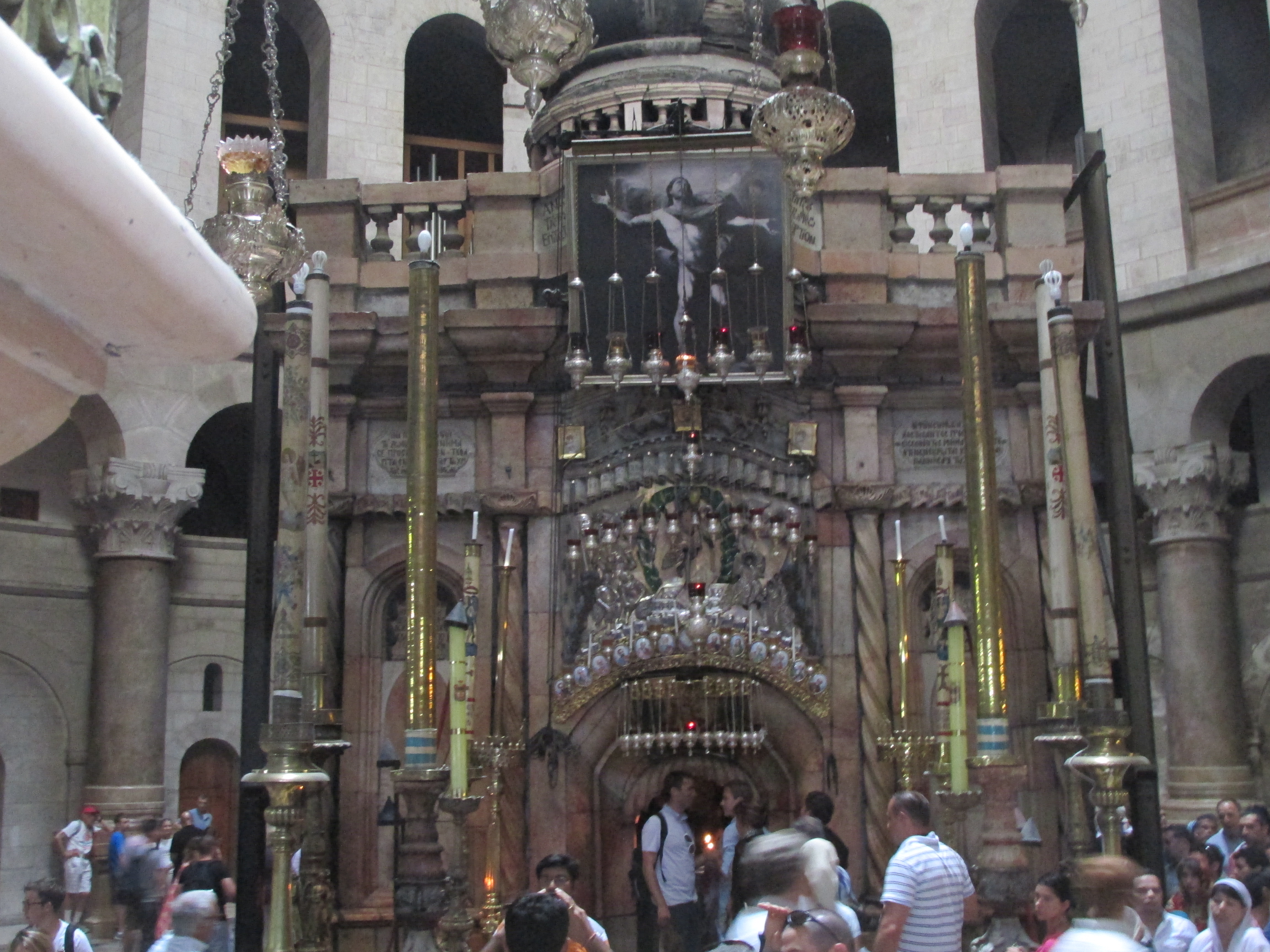
We did not go into the structure that is said to house the tomb. It too was decorated with HUGE candles outside the door. Across from the tomb structure was a beautiful open area with a high dome ceiling. The paintings on the ceiling were of the four gospel writers and in the center of the floor was a religious stone called an omphalos, marking what was once considered to be the center of the earth.

My parents and I thought the church was quite beautiful; however it didn’t really give us a spiritual feeling. As Protestants we weren’t awe-inspired by the all the decorations and incense.

Garden Tomb

The Garden Tomb

The Garden Tomb

Many Protestants believe Golgotha and the tomb are located outside the Damascus gate. We walked a little way down a road and reached a park-like setting called the Garden Tomb. It was absolutely lovely. It had a very tranquil feeling, natural in its beauty. From a bench we could view a large rock cliff. One of the reasons this is considered to be the location of the crucifixion is because the cliff appears to have a face on the side—thus the reason it was called the place of the skull. We continued along a path to the tomb, a cave-like opening in the wall of a cliff nearby. There is much evidence supporting the claim that this area is where the crucifixion and burial happened. What I know is that to me, it brought a feeling of peace and I could really imagine the events taking place here. (Here’s a video of the site with some information on the evidence.)

Golgotha near the Garden Tomb. A face can be seen in the rock of the skull.

Golgotha near the Garden Tomb. A face can be seen in the rock of the skull.

It was a great way to end a very long day of touring. It was now the start of Shabbat so we went home to cook some dinner and prepare for our visit to Bethlehem in the morning.


49 Garden Tomb

The Garden Tomb has two places for bodies to be laid to rest.

45 Tomb Sepulchre

The Byzantine structure that surrounds the tomb located in the Church of the Holy Sepulcher.

IMG_9984

The location where Jesus what convicted by Pilate.

24 7th Dolorosa

One of the stations located along the Via Dolorosa.

Golgotha near the Garden Tomb. A face can be seen in the rock of the skull.

Golgotha near the Garden Tomb. A face can be seen in the rock of the skull.

IMG_0274

The place of Jesus’ anointing located next to rock of crucifixion in the Church of the Holy Sepulcher.

IMG_9889

The Via Dolorosa.

IMG_0190

A simple sign over an archway that opens into a small plaza outside the Church.

IMG_0199

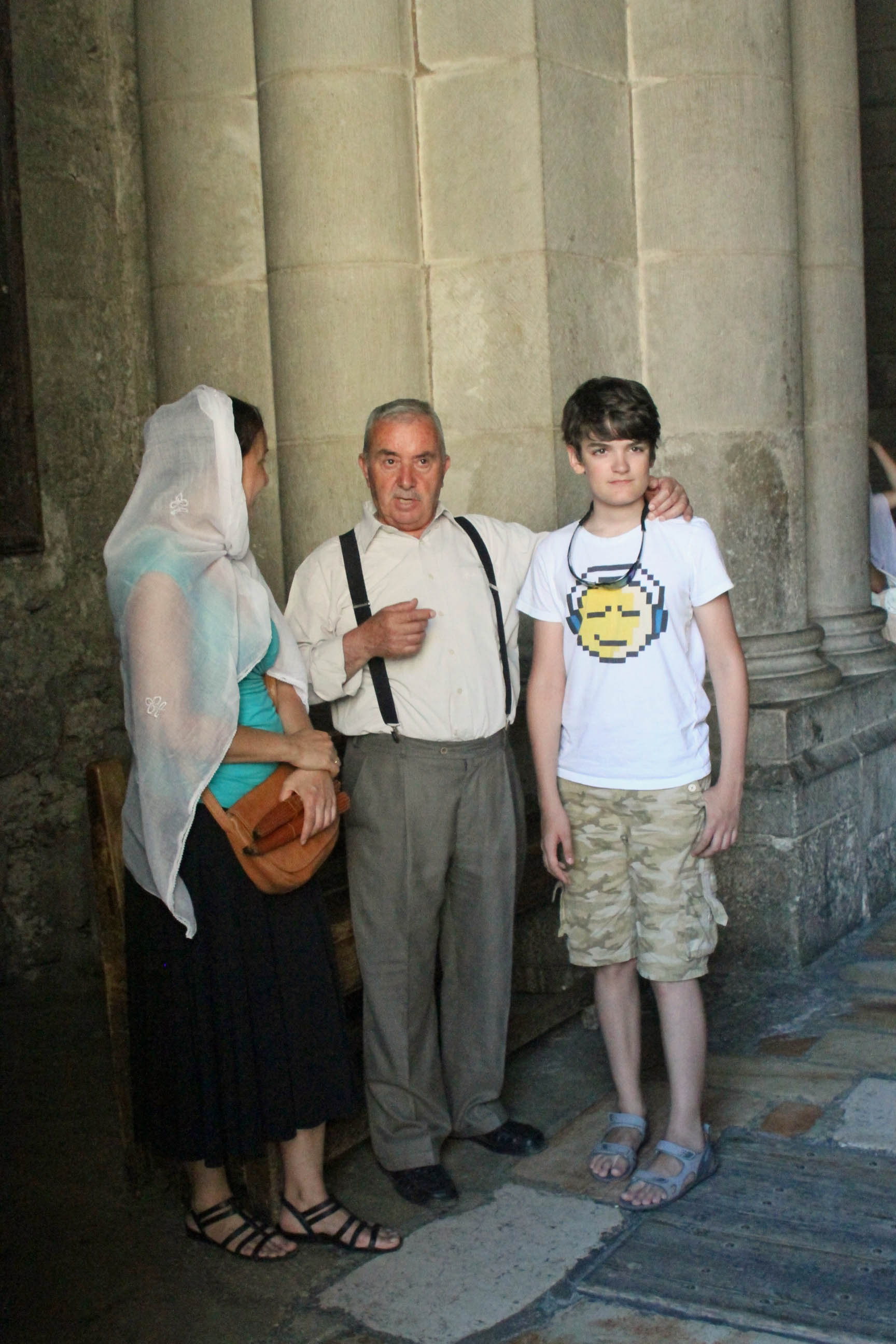
The keeper of the keys to the Church of the Holy Sepulcher.


Our tour of Israel continued in the Old City of Jerusalem with a walk around the four quarters and visits to some of the holy Christian sites.

IMG_0081

Bullet holes can be seen in the Zion Gate from the battle in 1948 when the Jordanians seized control of the city.

Through the Jaffa gate, we walked along a main route through the Armenian section. Each section has one parking lot for everyone to house their vehicles. The Armenian one included an unexcavated Tel—one of many in the land. We arrived shortly at the Zion gate. This gate was riddled with bullet holes from when the British left and the Jordanians came to claim the city in 1948.

IMG_0082

The gates were at right angles to make it difficult for invaders, and hard for cars to come in and out.

Dormition Abby, David’s Tomb, the Last Supper

Beyond the gate, we toured the Dormition Abbey, a church dedicated to where Jesus’ mother Mary “fell asleep”. And then on to David’s tomb and also the site of the upper room of the house where the last supper occurred. It was somewhat difficult to really feel the presence of either of those places in its time. Nothing was there that looked like it would have back then. We were reminded once again that most of these sites are probably not where the actual events occurred or where David was buried—but rather a place someone—whether they be ancient leaders or more modern scholars—decided to put a marker on it as the official site. There was no dining room table or anything obvious like that—just a little church structure.

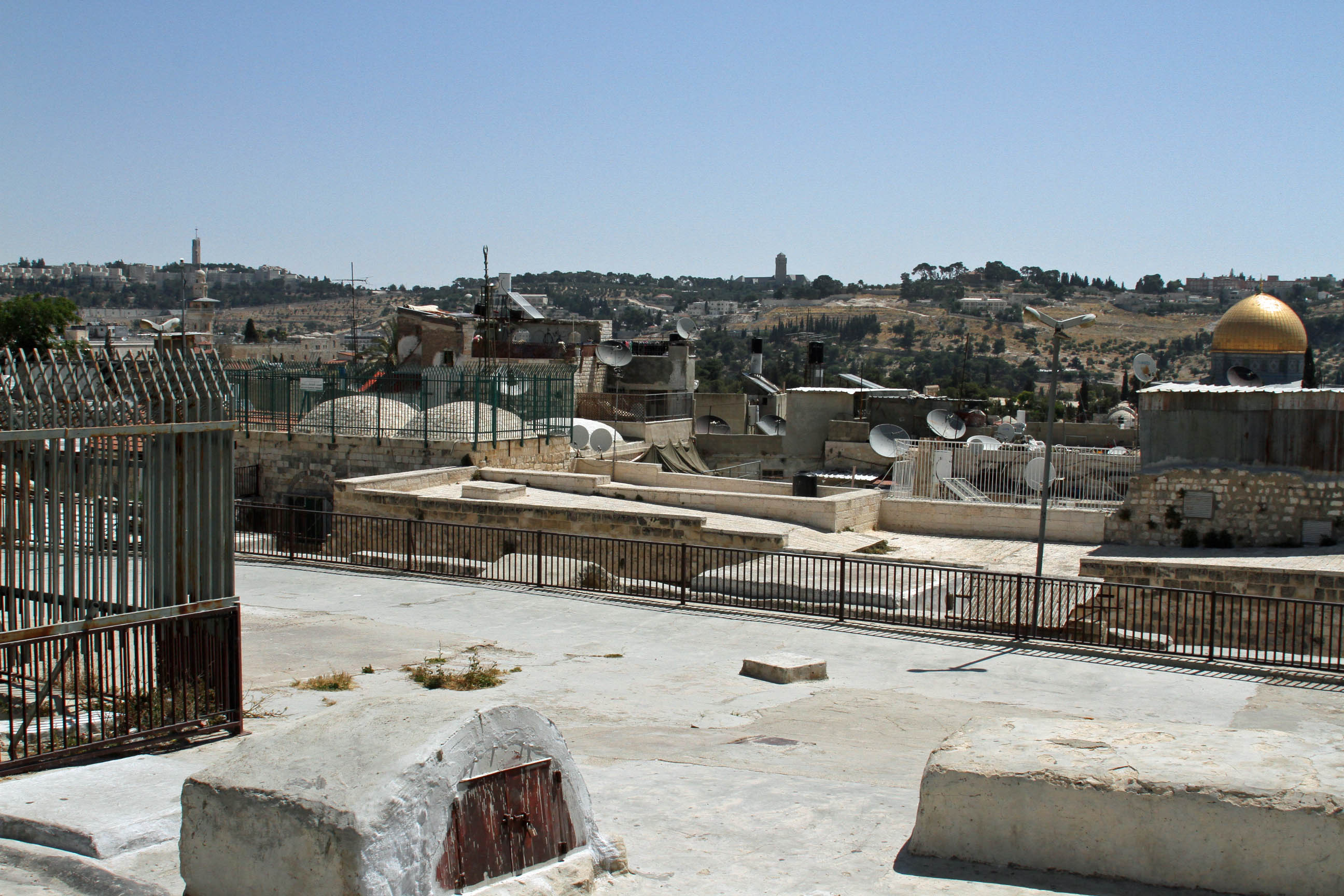
Up top at the four corners of the quarters.

Up top at the four corners of the quarters.

The Four Quarters

We continued through the Jewish quarter and climbed up onto a roof top area where we got a 360 degree view of the tops of the buildings of the city. This was considered the four corners—where the four quarters met. It was an interesting place—you could traverse across the roofs or go under and walk along the market alleyways.

There are no barriers between the four quarters (Christian, Jewish, Armenian, and Muslim) and everyone can walk freely through the city. The Armenians do have locked gates in some places because of previous violence but otherwise this city is a melting pot of cultures that most of the time live in peace.

IMG_0104

A look at the Cardo market from the rooftop.

Main Street and Shopping

The Cardo was Jerusalem’s main street about 1,500 years ago. We walked along this ancient thoroughfare, taking in the wonderful smells of spices and mid-eastern foods, browsed the touristy gifts and the linens and jewelry made by the shopkeepers and Bedouin traders, and felt some of the original stones that lined the ground. The Cardo was pretty wide, unlike the other narrow streets where the shops were just like they were thousands of years ago—pretty much cubby holes with men tending the store—some asleep in the heat, some chatting with friends, and others engaging tourists.

The smells of the spices wafted through the streets.

The smells of the spices wafted through the streets.

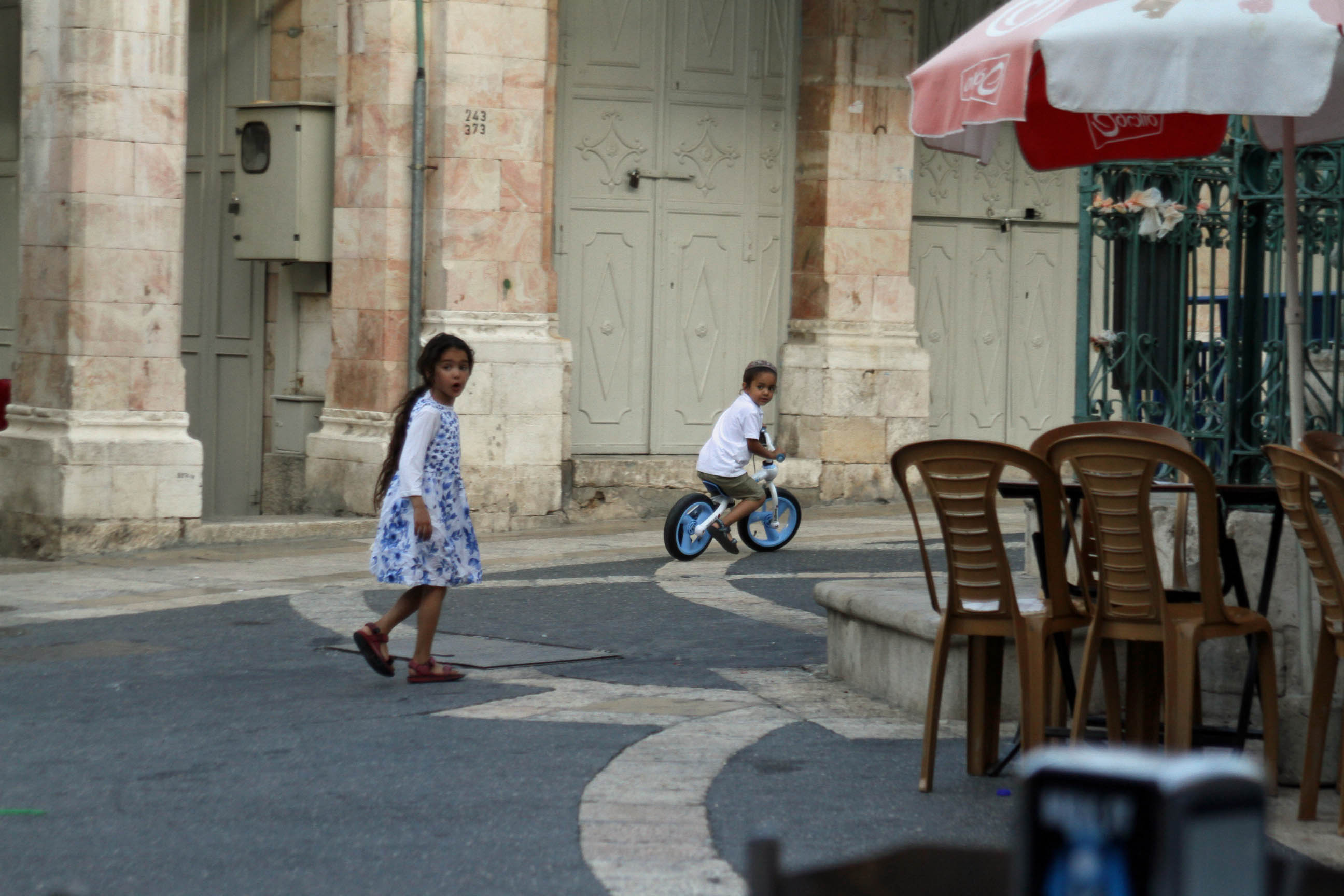
Negotiating is key in this culture. These guys were not afraid to start very high and I had to bring them way down and keep the shekel/dollar conversion in mind. I was delighted by one young man who made some earrings for me on the spot with pieces he had in bowls in his shop. Dad and I bought some gifts and trinkets and strolled through the markets on the Shabbat. We took a break at a nice little outdoor cafe and ate some more shawarma and falafel for dinner while watching the local kids biking and running in the streets. No playgrounds were in site but they found ways to entertain themselves and laugh just like the country kids. There were also a lot of cats who were fed by various locals and tourists—keeping out the rodents is a nice benefit of the strays in the streets.

Next time, we’ll explore the last of the Christian sites we visited in the Old City.

IMG_0023

A beautiful mosaic adorns the walls in the Jewish quarter.

IMG_0120

The rifle isn’t real, or at least not manned. This was a window in a wall above the street.

IMG_0183

Shopkeepers pass the time in the Arab market in the Old City of Jerusalem.

IMG_0288

The ancient stones line this street are beautiful.

IMG_0501

Children come out for play time in the open area where dad and I had dinner.

IMG_0503

It’s dinner time for these lucky kitties.

1 Corinthians 12: 12-13

“The human body has many parts, but the many parts make up one whole body. So it is with the body of Christ. Some of us are Jews, some are Gentiles, some are slaves, and some are free. But we have all been baptized into one body by one Spirit, and we all share the same Spirit.”