travel


The wonderful African Safari continues with a nice stay at the Mt. Kenya Safari Club. During the few days we were there we went out to Nanyuki, the town nearby and did a game drive.

Ol Pejeta and the Chimp Orphans

We started off the first morning on the look-out for the final animal on the Big 5 list, the Rhino. We spotted some elephants and the normal characters—gazelles, baboons, wildebeest and more. Then we were treated to a beautiful site—the reticulated giraffe. This giraffe has different markings than the ones we had been seeing and they looked as though they were wearing socks.

A little while later, as we drove through the Ol Pejeta Conservancy we made a stop at the Chimpanzee sanctuary. Guides took us around the area to view a few of the chimps who gave us a bit of a show. One had a bad attitude and threw sticks at us—but seeing how these guys were rescued from a life of slavery and abuse, I think some patience and forgiveness was in order.

On we went searching for the Rhino who had so far been hiding way off the beaten path, when suddenly we saw several of them hanging out with some Grevy Zebras. These were called “white” rhinos and not because of their color. The name “white” was yet another mistake stemming from those German accents. They were calling the rhinos “wide” because of the shape of their mouths.

The grevy zebras were also a new site for us. These zebra’s had slightly different stripes—narrower—and their stomachs were white. This area was the only place we saw this kind of zebra.

Our final stop was at the big equator sign. We got our photo op and straddled the line, so now I can say I stood on the equator and at one point was standing on both the northern and southern hemispheres. It may have been cooler than it sounds—call me a geek, I don’t care,—it was cool.

Spinners and Weavers

The next day we drove through Nanyuki (what a fun name) to the spinners and weavers guild. More than 140 women who are widowed or come from a bad domestic situation have found employment through the Nanyuki Spinners and Weavers. Their children have a place to go while they are working and there is a girl’s school there as well. This organization has grown quite a bit over the years. We got a tour of the areas where they were spinning and weaving wool into beautiful rugs, shawls, and place mats. They grow the plants that are used for the dyes, they have sheep on site that provide the wool, and every step of the process is controlled through the guild. Our group donated some cash (in addition to the stuff I bought that was made there) so they could buy a new computer and step up their online sales.

The Children’s Rescue Center

Our final stop of the day was a heartbreaking treat. We visited a children’s rescue center. It’s not an orphanage per say but some of the children were in fact orphans. The adults that work there take care of the kids who they have rescued from abandonment, abuse, and other sad situations. They work with the families to rehabilitate the parents and kids so that the children can be returned to the families. I was astounded to hear that—who can possibly be rehabilitated after abandoning their children on the side of a road to fend for themselves? This is one of those things that culturally is hard to understand. What I do know is that the children were absolutely sweet and full of smiles.

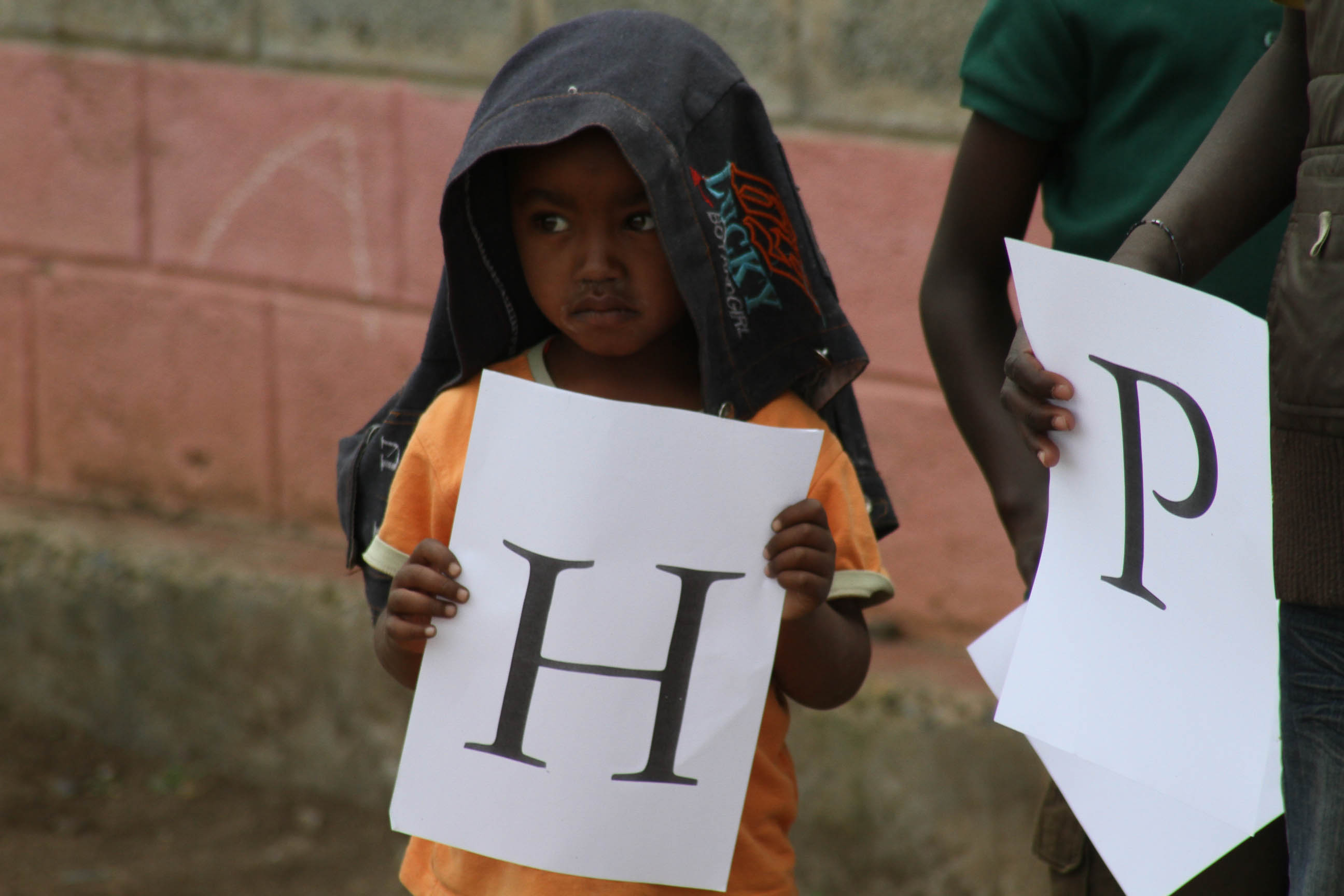
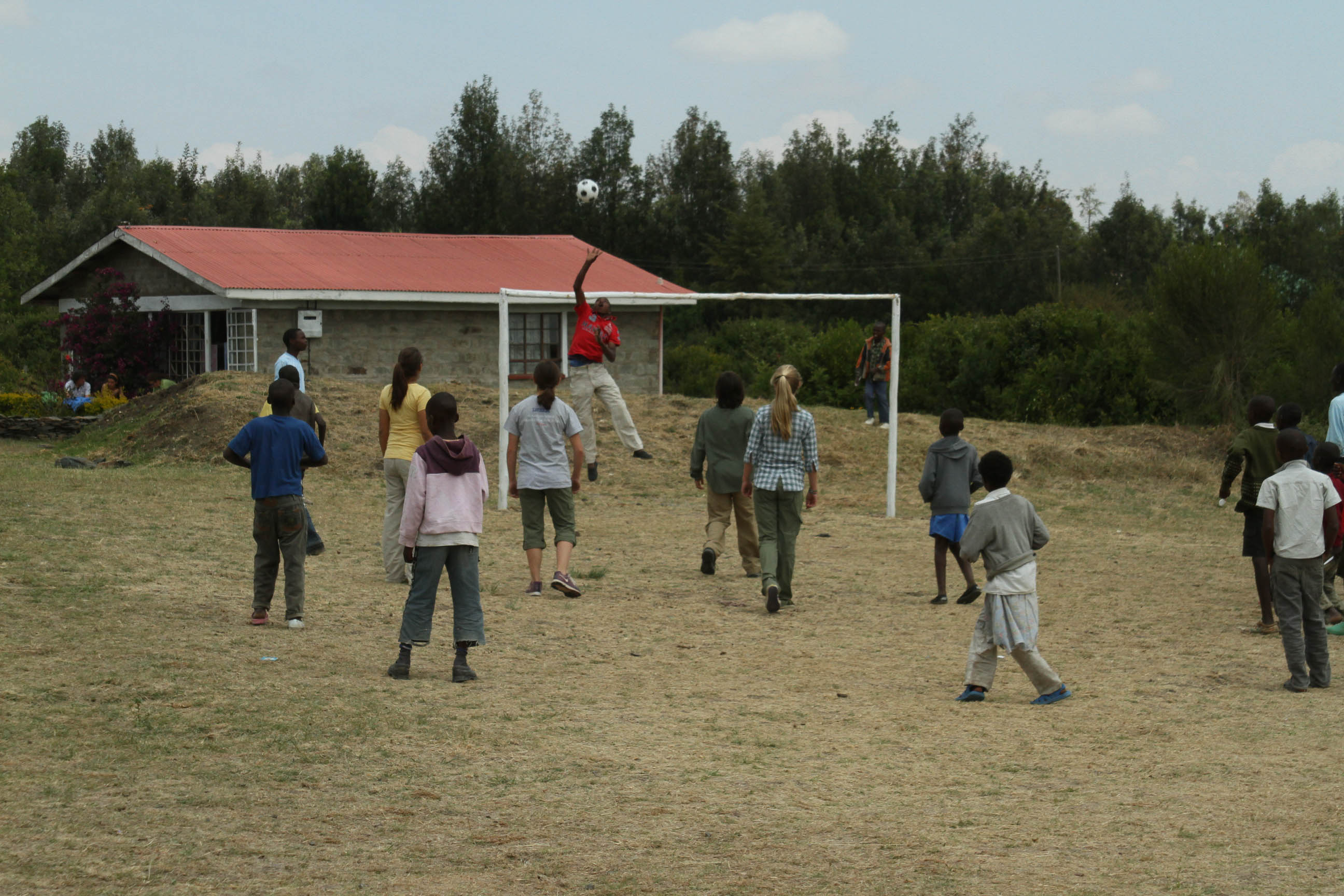
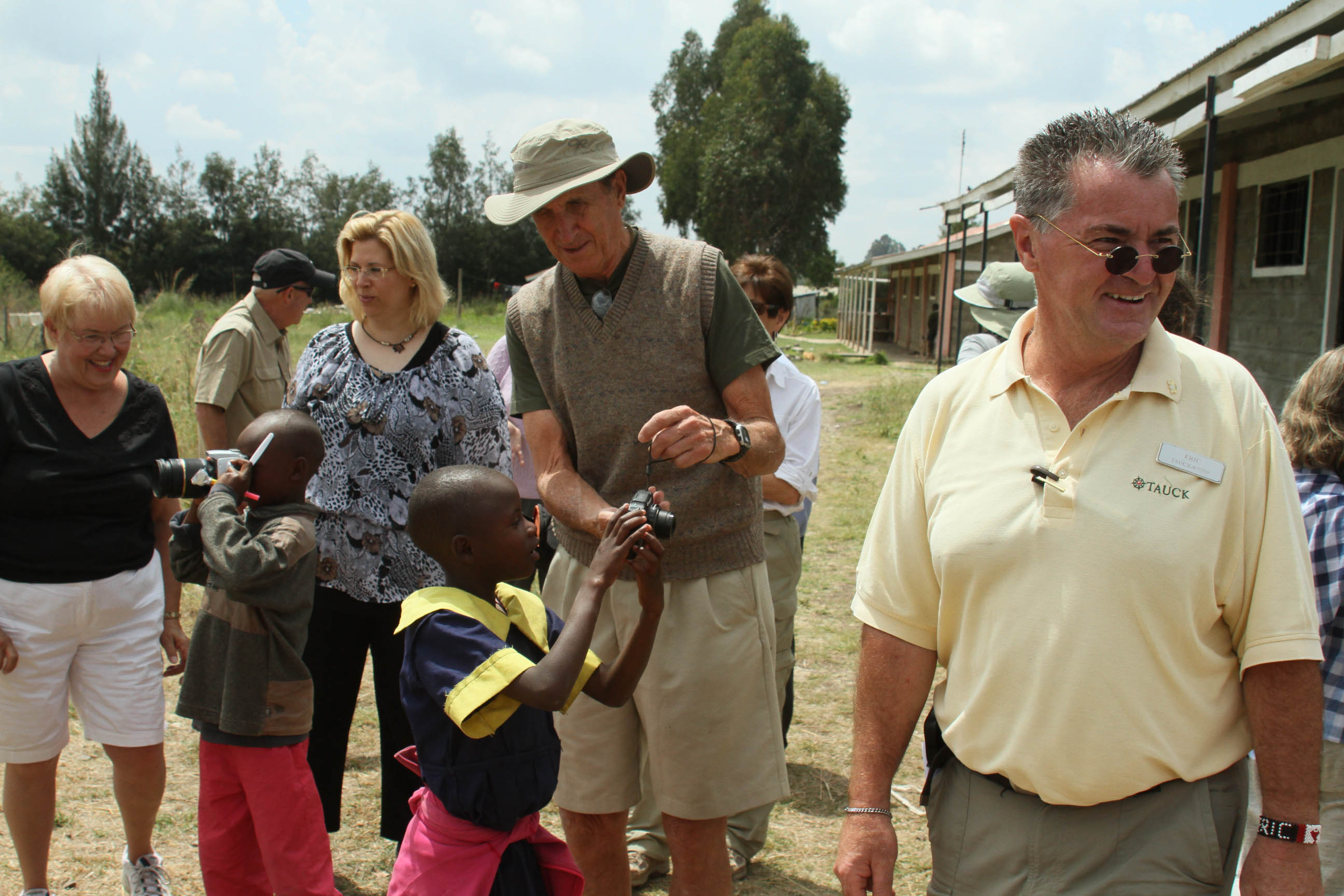
Our tour director, Eric, had the kids hold up letters that spelled out Happy Anniversary Greg and Carol. It was so sweet I cried. After that he gave them noise makers and scoops of ice cream. The fun continued with a game of soccer (Eric brought along a new soccer ball as well). Once again we had fun taking pictures with the kids and then got big hugs before we had to leave.

Africa was a showcase of God’s artwork—through the animals, the grand scale of land, sky, mountains, and desert and also in the people. These people are really poor and many work what we would consider boring, unskilled jobs. But I saw a lot of contented and happy people—especially the kids. Now maybe some of that was the special occasion of having tourists come by with treats, but all in all I would say for sure I am blessed and am finding it hard to hear anyone in our country (with the exception of the truly poor and homeless) complain about not having enough material things or money. I’m not saying that we can’t want things or have things, but I just have a different perspective of needs vs. wants.

An Upscale BBQ in the Bush

When Tauck Tours says we are having a BBQ for dinner, you should raise your expectations. But seriously, whatever they deliver will be much cooler than what you were thinking. Our last night at the Safari Club was topped off by a wonderful dinner under a tent on the Conservancy along a flowing creek. Bonfires and lanterns lit the way to our tables and free booze flowed. That last part is what probably lead to the singing and animal imitations that followed. We had a wonderful guitar player who played everything from the Beetles and Kenny Rogers to Neil Diamond and the Lion King. One fun family we were traveling with entertained the group with imitations of the various animals (ostrich, zebra, lion, and so forth) that we saw on our journey. Hilarious. And I’m not saying that because of all the wine—I have photos to remember it by. I only wish I had recorded the Hakuna Matata (no worries) song. What a great way to end our stay at Mt. Kenya.
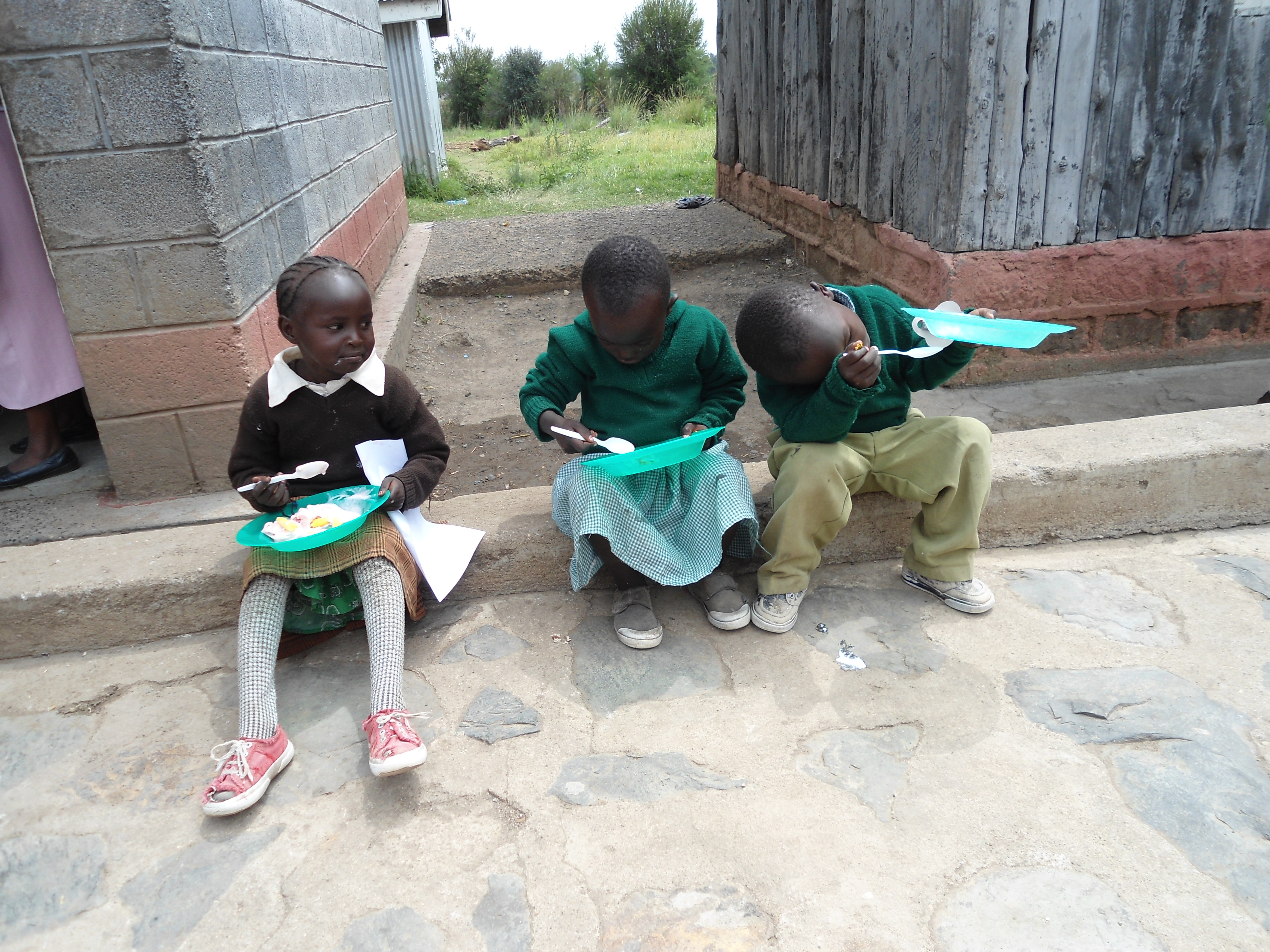
Ice cream for all the kids at the rescue center in Nanyuki.

Ice cream for all the kids at the rescue center in Nanyuki.

George the chimp poses for the cameras at the Ol Pejeta Conservancy.

George the chimp poses for the cameras at the Ol Pejeta Conservancy.

A reticulated giraffe.

A reticulated giraffe.

Giraffe eating the acacia tree.

Giraffe eating the acacia tree.

The equator sign in the Ol Pejeta Conservancy.

The equator sign in the Ol Pejeta Conservancy.

The spinners and weavers guild in Nanyuki.
The spinners and weavers guild in Nanyuki.

The kids hold up a Happy Anniversary sign.

The kids hold up a Happy Anniversary sign.

Kids at the rescue center  love the noise makers.
Kids at the rescue center love the noise makers.

The kids on our tour join the kids at the center for a game of soccer.
The kids on our tour join the kids at the center for a game of soccer.

Dad hangs out with the kids and takes some photos with his camera.

Dad hangs out with the kids and takes some photos with his camera.

Watch George entertain our group.

Our next stop was for three wonderful nights at the famous Mt. Kenya Safari Club. Back in the 50’s, actor William Holden bought the club and invited his fancy, shmancy actor friends to join and hang out on the equator with him.

The Safari Club has a brick path down the center of the hotel in a courtyard to mark the equatorial line. When we arrived we were treated to a fun “crossing the line” ceremony where we danced down a carpet with two locals who were dressed in some pretty native costumes while some guy banged on a drum. I have my certificate and an embarrassing movie to keep for all times. After the ceremony, one of the staff members showed us a neat trick with water. First, in the northern hemisphere he poured water in a bowl and we watched how it moved in a clockwise direction down the bowl as it drained. We then walked about 50 yards over to the southern hemisphere and did the same thing—only the water went in a counterclockwise direction. So  I guess the old tale about the toilet water is true! It really was pretty amazing that this phenomenon could be seen in the space of just 50 yards.

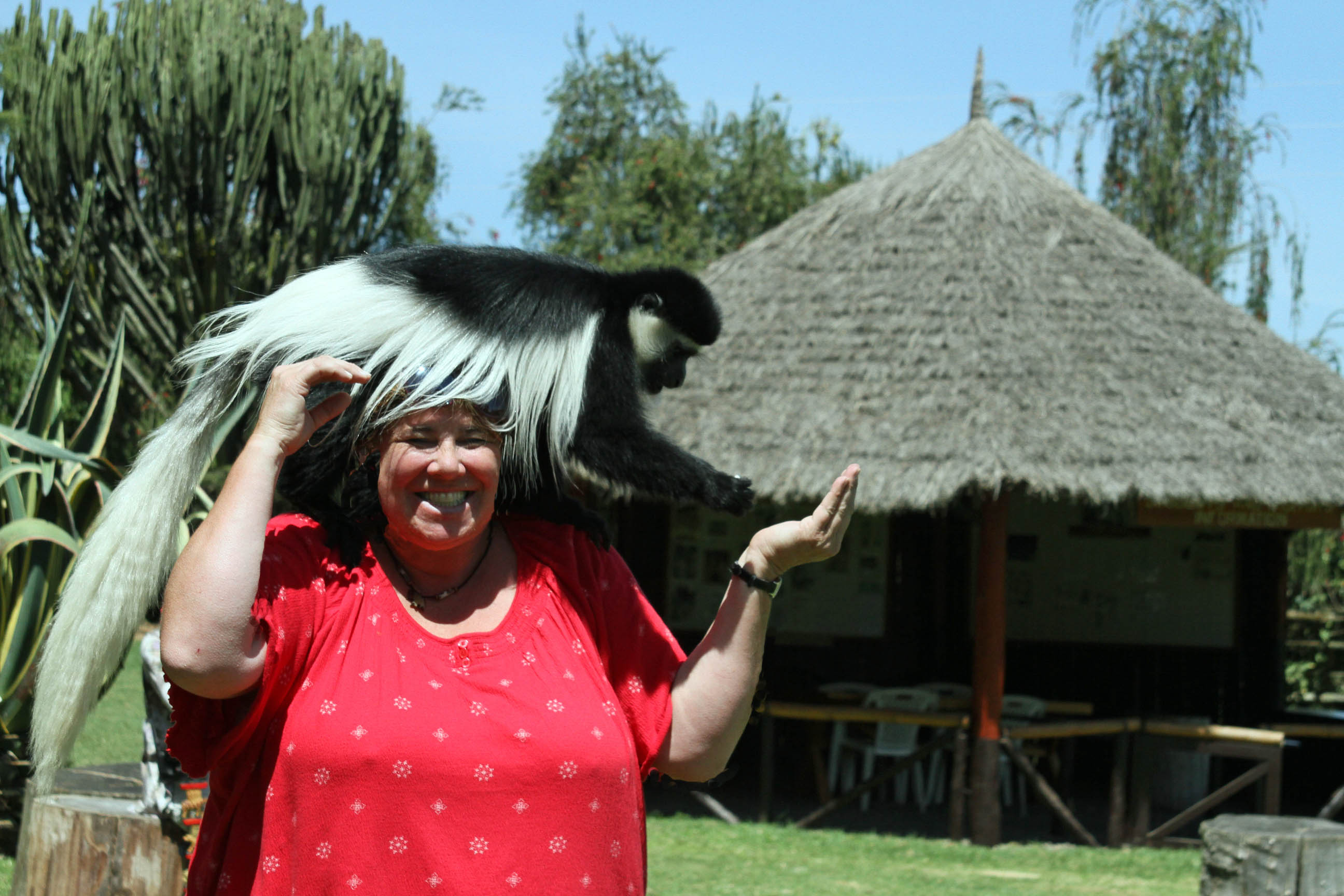
After the demonstration we headed over to the animal orphanage on the premises. Mom and I and a few others from our group got to feed some of the animals that were very friendly and just walking around the area. It wasn’t like a zoo—these animals were being treated and cared for and then the plan is to release them back to the wild—at least some of them. Right off the bat, a little duiker (little antelope type animal) walked up to mom looking for some lovin’. Later I realized they were smart enough to know that the humans feed them, so they come looking for the corn pieces. Some funny looking monkeys that I dubbed skunk monkeys for their black bodies and white striped backs, but were in fact called Colobus monkeys, climbed up on my shoulder, then sat on my head and reached to the other hand to grab the food. It was fun—we had a few laughs at their antics.

We also got to see a 150 year old turtle, who evidently was just a teenager. He was massive—mom got to sit on him and take a little ride. I passed for the sake of the turtle. We were told he had a girlfriend who was nearby (and later heard evidence of their courtship). There were several Caracal (I thought they were Lynx) that did not seem to like our guide—they gave him a hiss and the stink eye when he got too close. But others were friendly—like the crowned cranes, the porcupine, the warthog and pig, and some patas monkeys who were in enclosures. The cheetahs ignored us—acting just like cats do and we got to pet an ostrich as well. One new animal for us that we got to feed was the Bongo (another antelope with chestnut coloring and interesting white stripes) who we were told was a very sought after animal years ago. Every zoo wanted one. They are hard to find and very secretive.

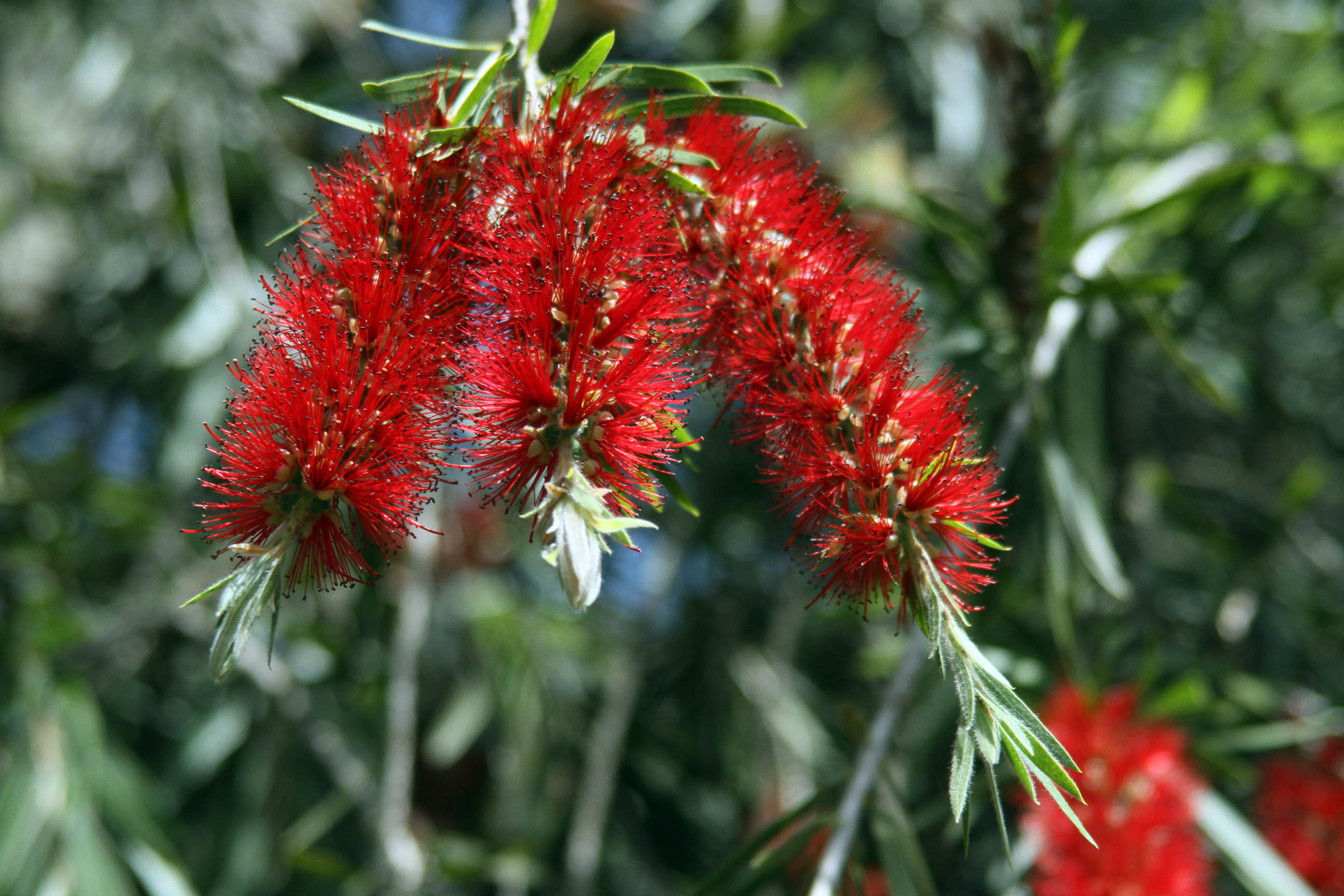
Even the plants here were interesting. One was called a bottle brush and it looks rough but was very soft and a vibrant red color. Roses and other varieties of flowers dotted the landscape throughout the grounds.

Finally we saw some little cats. They called them African wild cats but I swear it looked exactly like my tabby May and in fact I looked it up and they sometimes wander into towns and mate with house cats. Hmmm.

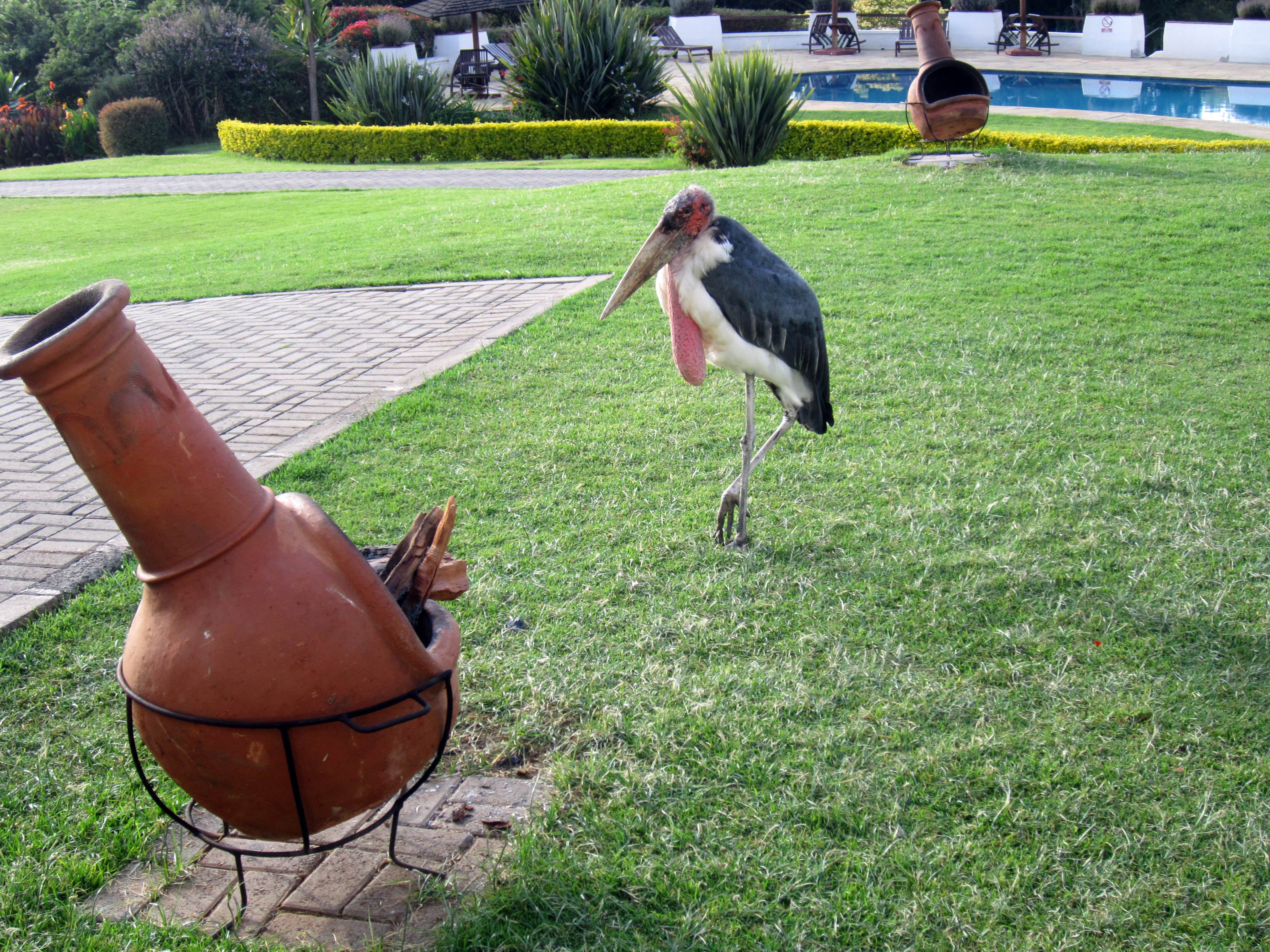
Back at the hotel we relaxed in the pool and gazed at Mt. Kenya off in the distance and then dodged some pretty sizable and scary looking marabou storks back to the beautiful rooms with fireplaces. The staff at this hotel must have been bored and in need of something to do because the service was so exceptional and there were so many of them I swear I felt like they were about to actually spoon feed me at one point.

The next day mom, dad and I walked the hotel’s mascot dogs, Tusker and Grammy, around the grounds (they belong to someone but guests can walk them). We took to them immediately seeing as how they were black labs—our kind of dogs. They had a lot of energy—it was hard to say who was walking who, but cute as buttons.

After the dog walk I of course headed to my happy place—the pool. While ordering some cocktails at the bar, the men working there seemed interested if I was going to swim again and hang out today. I thought that was a bit strange until later when I discovered (through the hostess in the restaurant) that “African men like big women.” Ohhhh, that explains it. Creepy, but okay. In any case, they can’t make a Pina Colada for ca-ca, so don’t bother ordering one. But they did serve it with a smile—what a great place to stay!

The equatorial line at the Mount Kenya Safari Club.

The equatorial line at the Mount Kenya Safari Club.

IMG_8171

bottle brush flower

bottle brush flower

Bongo

Bongo

crowned crane

crowned crane

IMG_8125

caracal--he's grumpy.

caracal–he’s grumpy.

mom rides a 150 year old turtle.

mom rides a 150 year old turtle.

the colobus monkey or my new hair style?

the colobus monkey or my new hair style?

mom and dad at the crossing the equator ceremony.

mom and dad at the crossing the equator ceremony.

water flows in one direction or another depending on what hemisphere you're in.

water flows in one direction or another depending on what hemisphere you’re in.

IMG_8019

marabou stork. Scary looking guys who hung around the hotel grounds.

marabou stork. Scary looking guys who hung around the hotel grounds.

IMG_0758

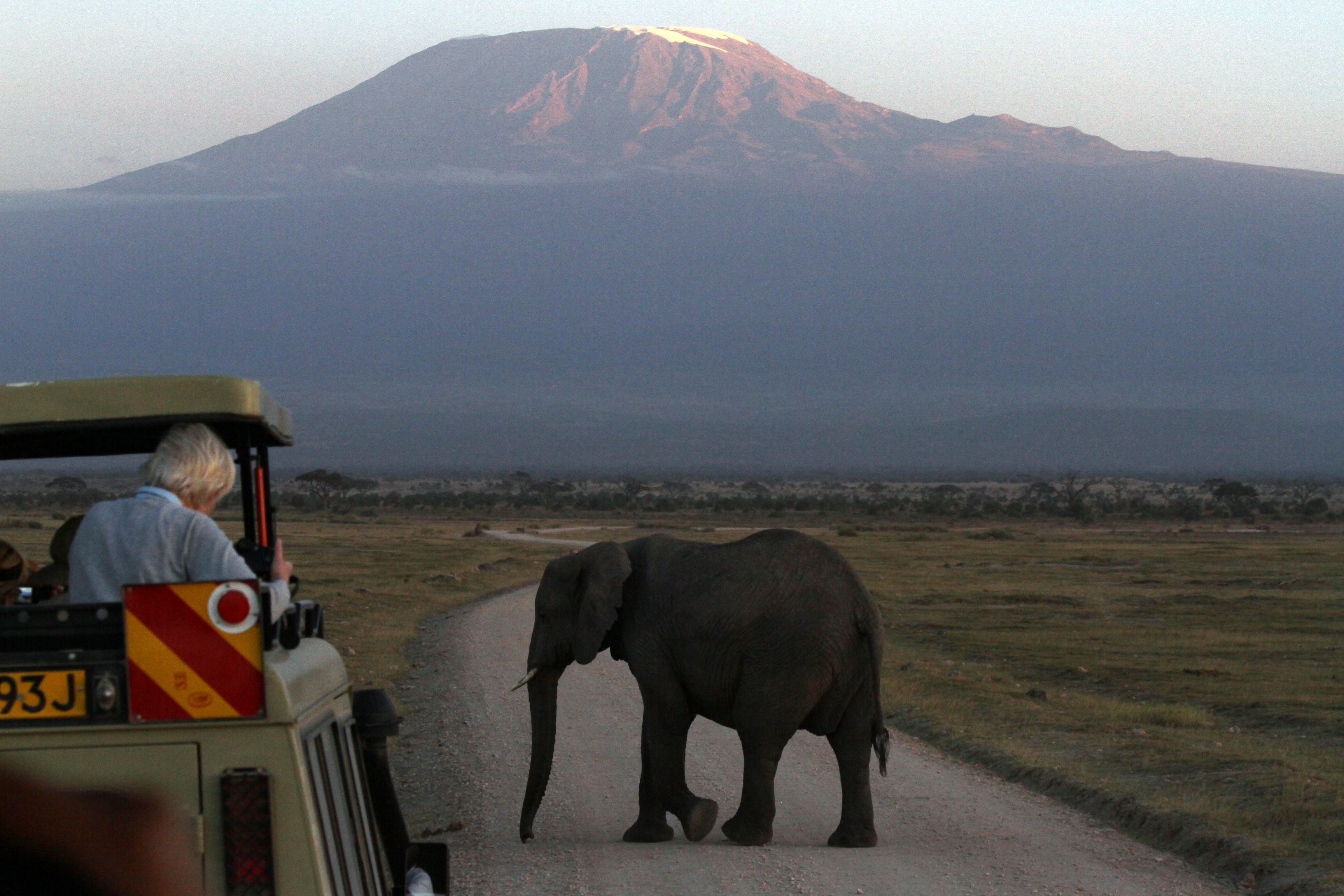
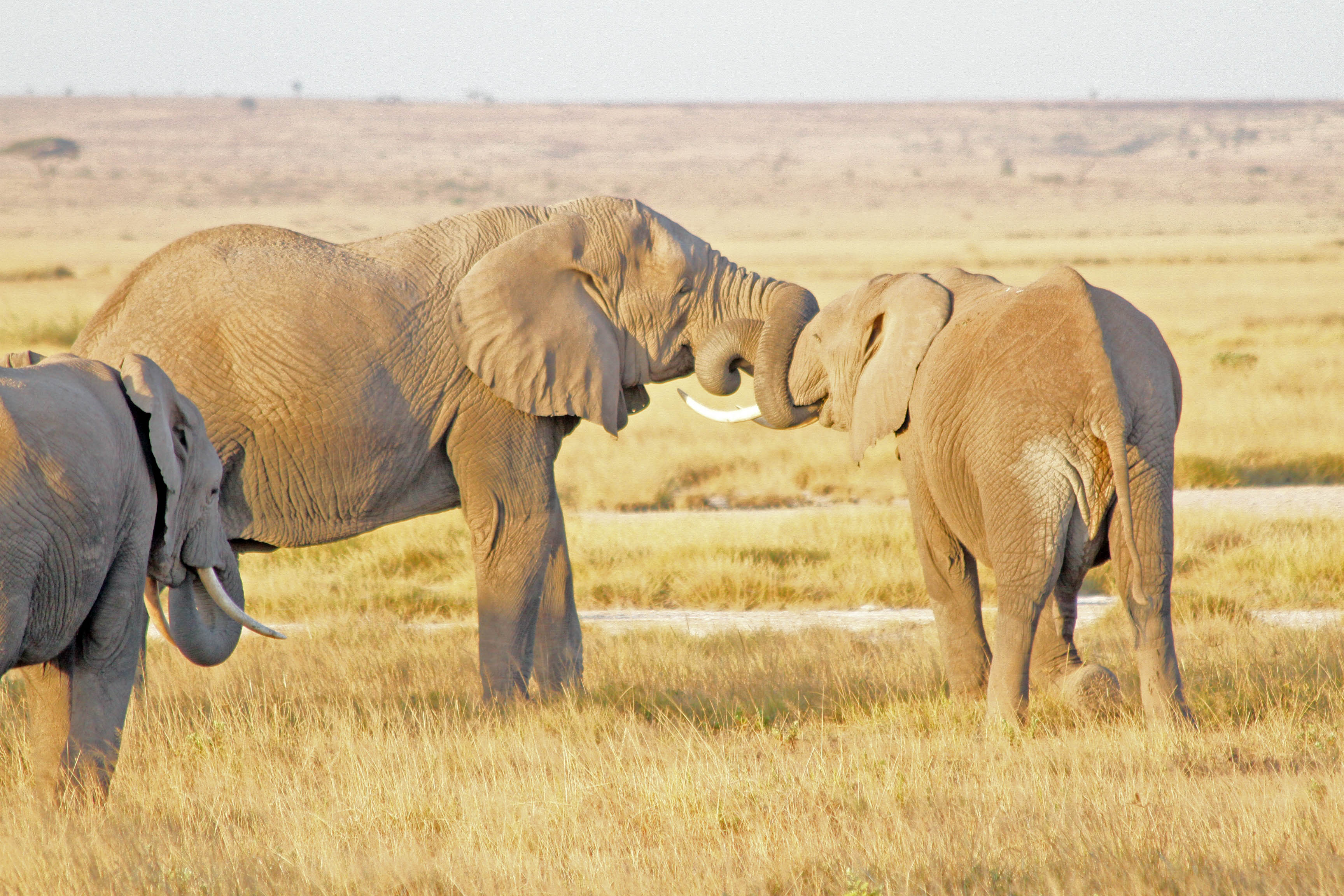
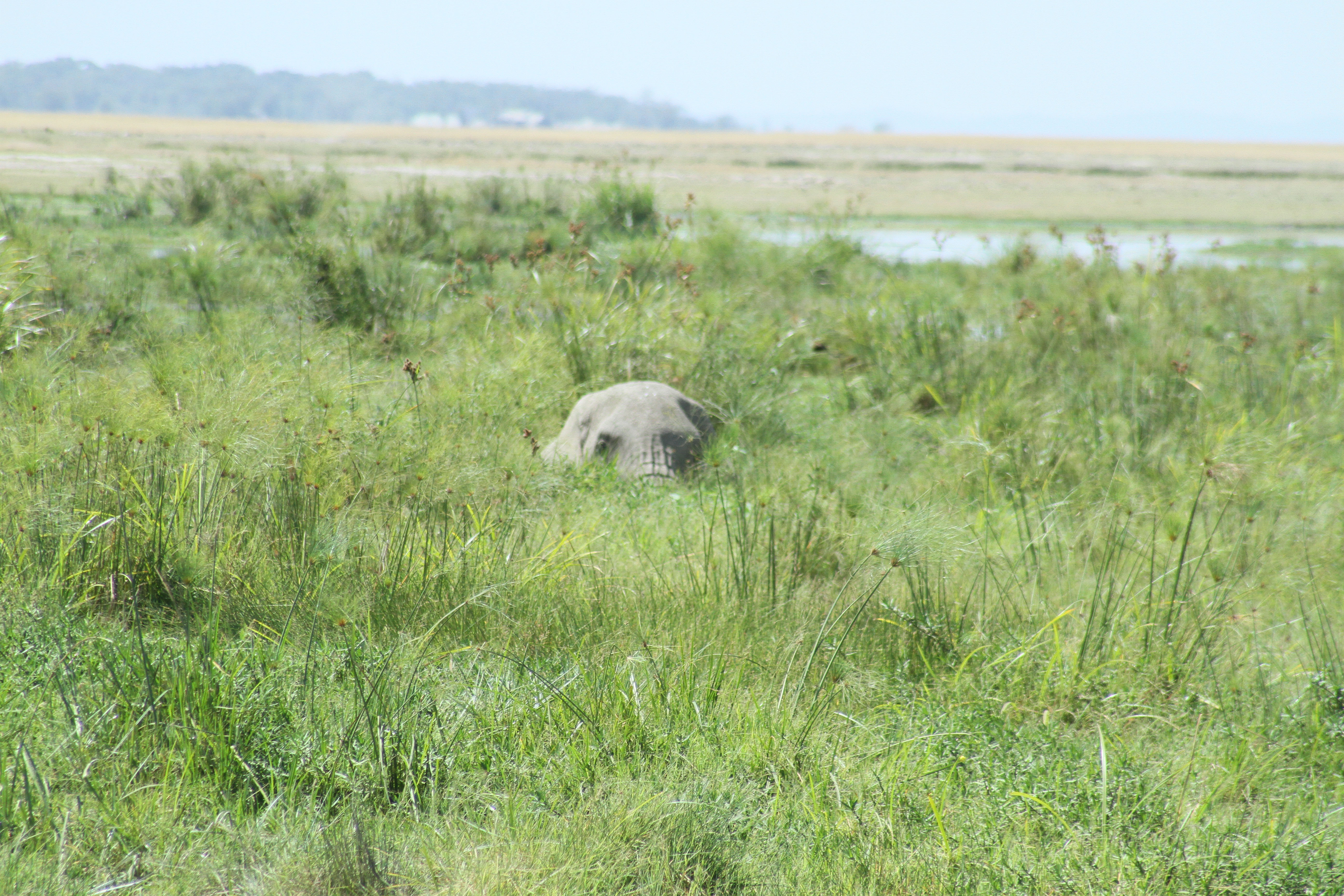
Our first lodgings in Kenya were located in Amboseli National Park which is known for its large elephant herds. We saw plenty of them, some were mucking about in a swamp which was new for me—didn’t know they did that, and others were crossing the great plains eating as they go. Elephants eat about 18 hours a day (or more). They don’t digest all of the food they eat—which is why their poop is very grassy, just in case you wanted to get a good look at it—so they have to eat a lot. Amboseli and the surrounding parks run into a challenge of not having enough foliage and trees to feed the number of elephants roaming about. That’s just one of the challenges they face with the elephants.

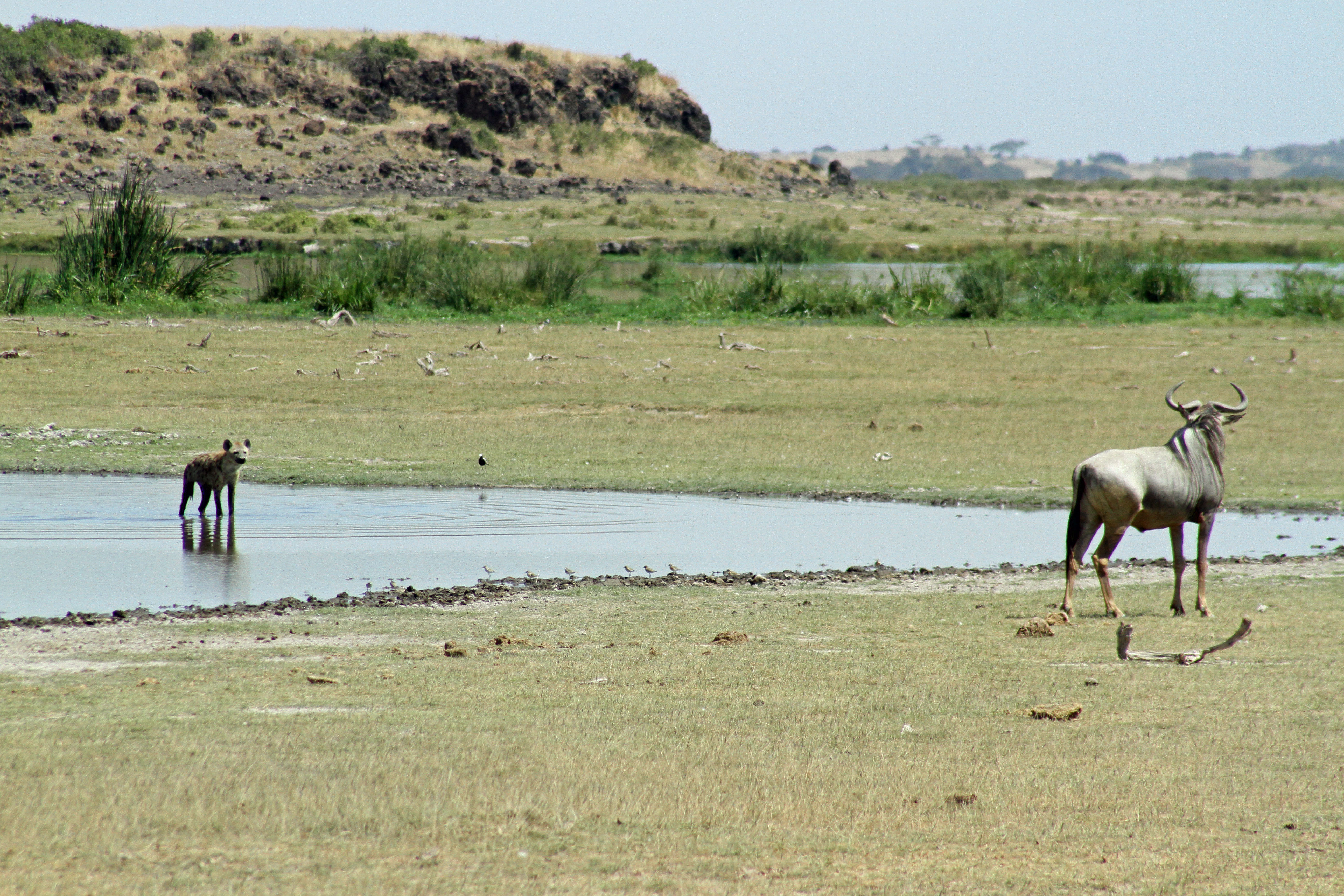
Our arrival at the hotel was delayed because we caught site of some wonderful animals on our game drive through the park. We saw a couple of wildebeest chirping at a hyena that just wanted to cool off in the pond. But they wanted him gone so they harassed the hyena into leaving their area. Pretty funny. We were also treated to a few lions who were ambling across the road. One posed very nicely for me as the sun was setting on our game drive.

Poaching and African Dinner Theatre

That evening we had a wonderful lecture from one of the park’s rangers. He informed us about the poaching problem in Africa—how criminals were killing elephants and taking their tusks. In China, ivory is a big seller, so these people smuggle the tusks out of the country but unfortunately leave devastation behind. The African ecological system depends upon the elephants. Some 30 thousand are killed each year in Africa—mostly so that some people in the Far East can use it as an aphrodisiac (so they think) or for jewelry. One thing we can do as individuals is to spread the word that this is an unacceptable practice and to stop the demand for ivory—don’t buy anything made from it.

Now while we were engrossed in the lecture and enjoying the evening breeze, all of the sudden some monkeys (there were a bunch of them hanging about) started to screech loudly and run up the trees near us. The next thing we see is a flash of something run across the field directly in front of us—just yards away from where we were sitting. As we all got up to look across the lawn to the watering hole just beyond, we could see a lion who then skulked away (too much noise from those humans). Sitting there stunned and a bit hurt was a zebra who after checking to see if Mr. Lion had actually left, got up and ran off to be hunted another day (or maybe later that night). Wow. Not every day are you having a happy hour cocktail and listening to a Kenyan ranger when a lion attack happens in front of you. Very cool.

The monkeys then came down and started harassing everyone again per usual. They were black faced monkeys with blue testicles and they would go into your room and steal things if you left the doors open long enough. We were told they get old after three minutes but one of my traveling companions and I agreed that it was taking us longer to get over them; they were in fact fun to watch.

The Masai

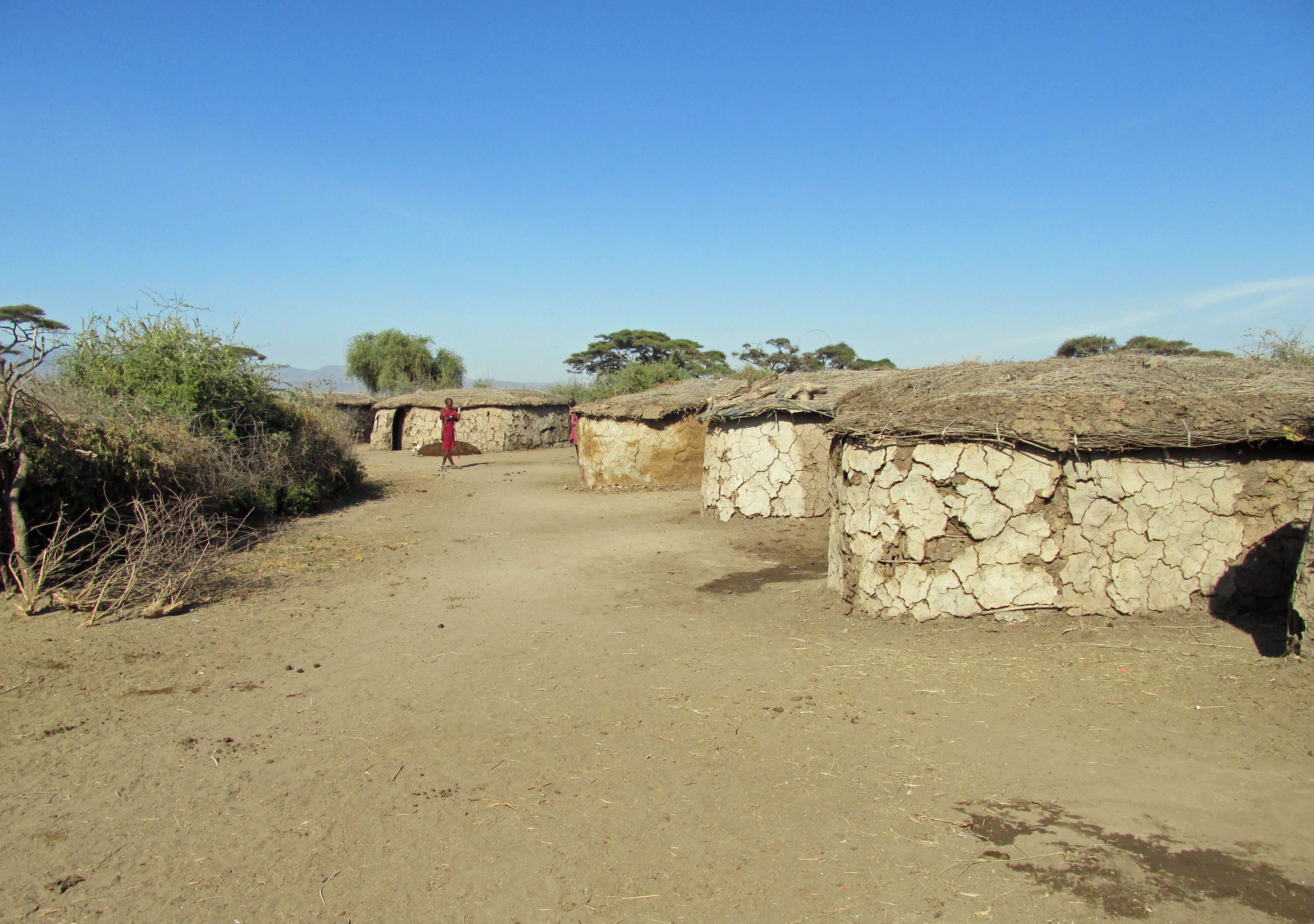
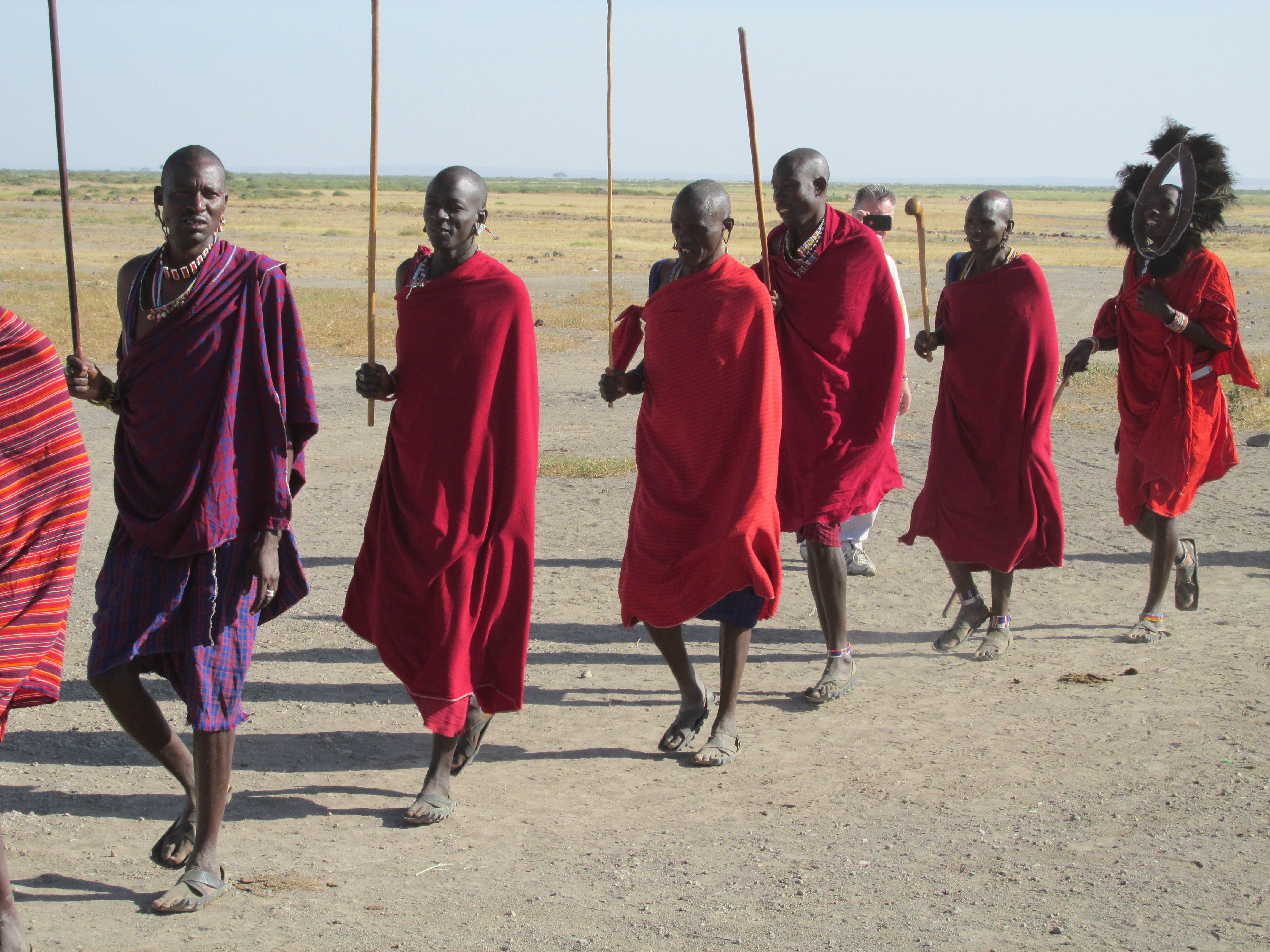
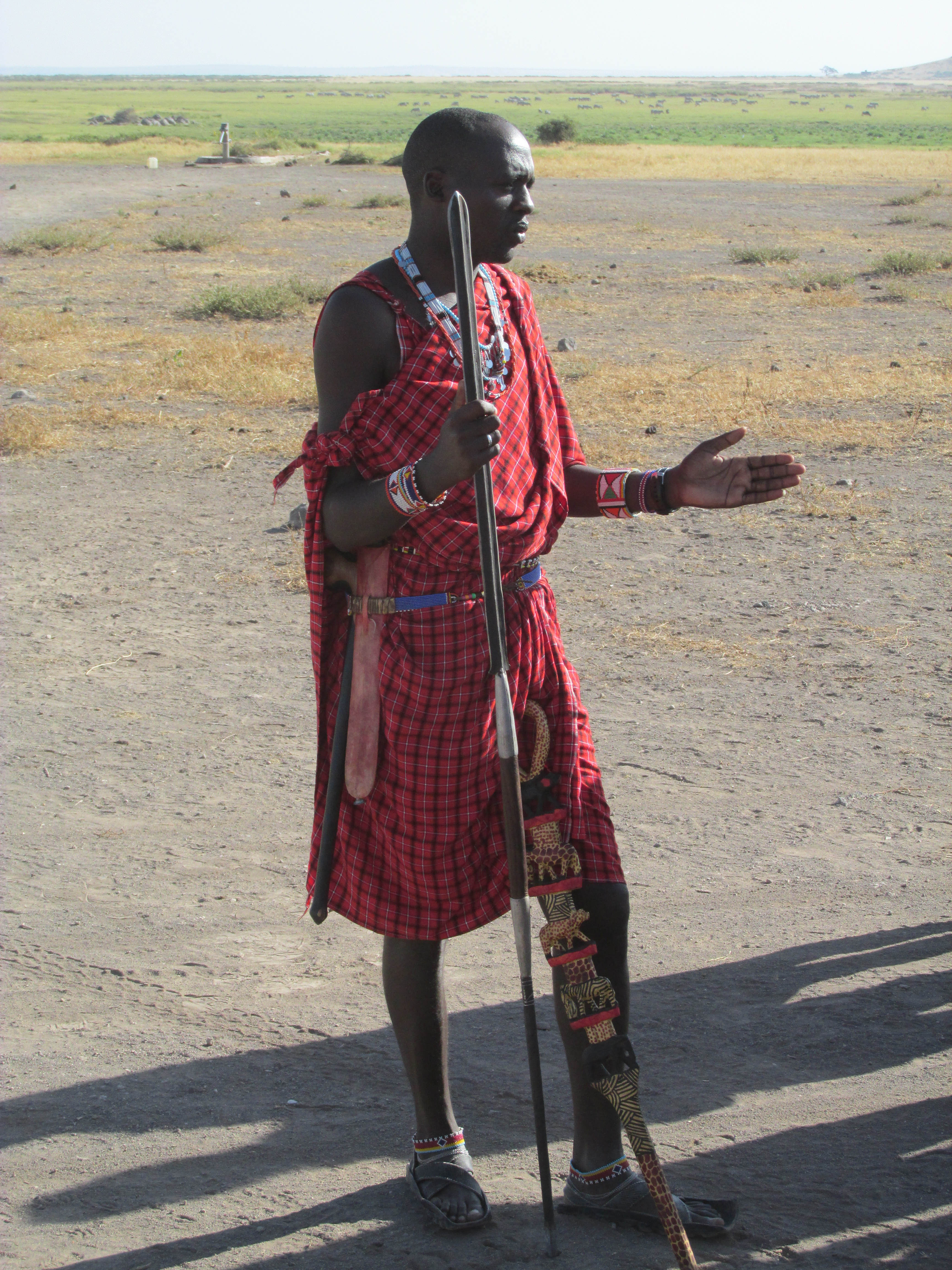
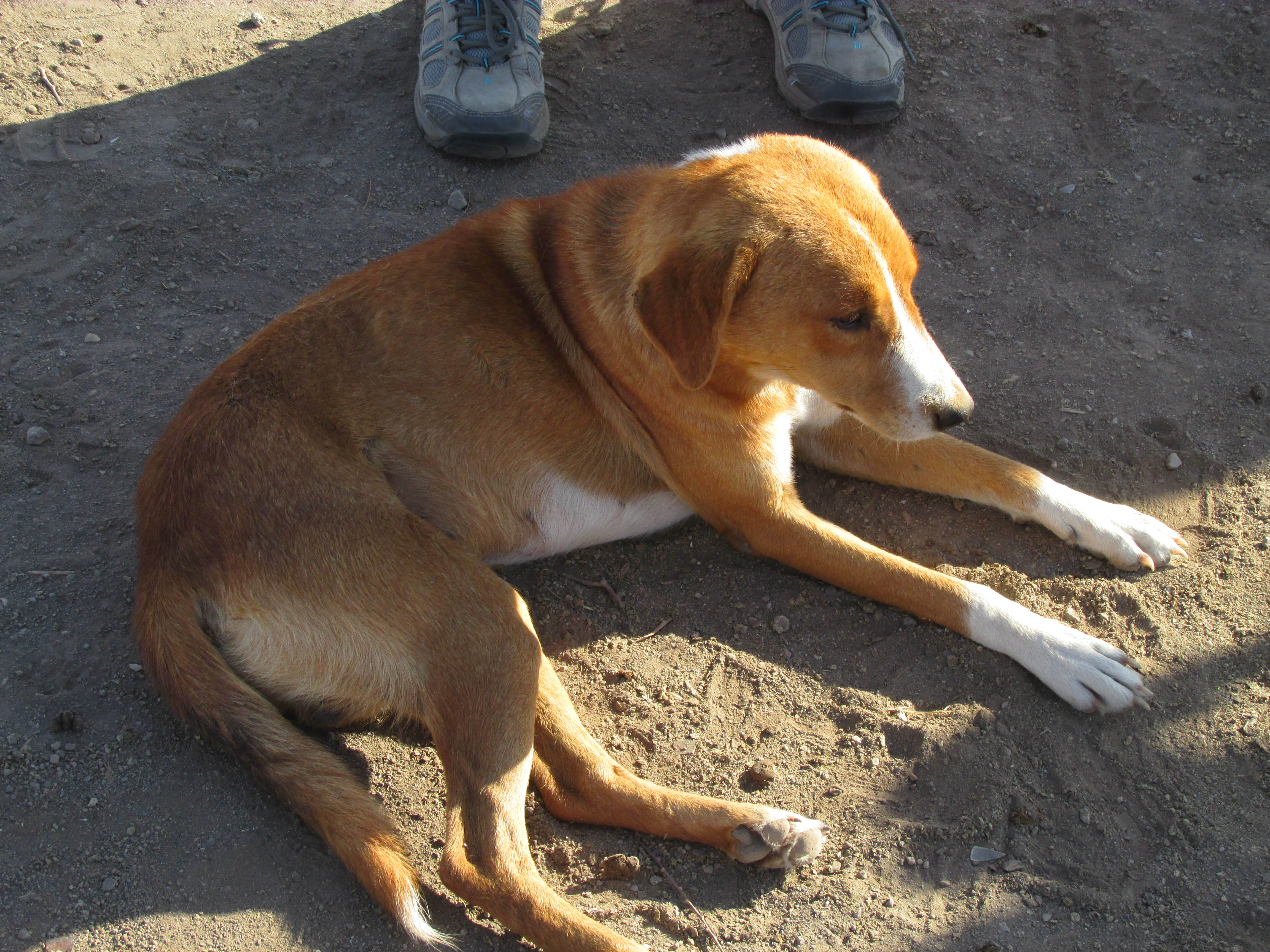
In the morning our group went to visit a local Masai village. Our tour director said if you took the stick away from a Masai he’d probably fall over. After seeing hundreds of them throughout our trip, and each and every one carrying a walking/herding stick, I believed him. On our way we saw their herds of donkeys roaming around the swamp nearby. Once out of the jeep and in front of the Boma (the fence they create around their huts), looking at Mount Kilimanjaro in the background, I stopped to pet a cute dog . One of the Masai, John, came over and introduced himself and his dog, Simba, and told us he was the chief. I was duly impressed. The Masai came out and danced and sang a song for us—all decked out in their beautiful wraps and jewelry, and then gathered us for a prayer. Daniel was our guide through the village (they all have western biblical names that are given to them when they start school).

Daniel explained their customs and way of life telling us that their huts are made of cow dung with twig-like roofs. Their doors are short and narrow (they made sure to point that out to me) and it was very dark inside. I found it comical that there was a small little padlock on the door of the hut—the same hut that had twigs in the window and cow poop for walls. Anyway, it was very small and consisted of two “beds” –one for dad and the boys and one for mom and the girls. They had a “kitchen” in the middle which was basically a few rocks where they lit fires. They light their fires with elephant dung—because all that grass in it makes for a good source of fire.

Each of the families had a hut (one hut per wife—the men are allowed more than one wife but must treat them equally, therefore no sharing of huts) with a little back yard. I spotted some girls giggling in the back of one hut and they shared their tiny little puppies with us. I was holding the puppy they named “Toby.”

We got a demonstration of how they bleed their cows by hitting it in the neck with a blunt arrow without killing it. They mix the blood and milk and that is part of their diet. We also were shown some of the herbs and medicines they use; of course they had their own version of Viagra seeing as how the men can take more than one wife.

When the men are ready to marry, his parents get to decide who the lucky lady will be. And since everyone in the Boma is related, they go to another village to find her. The second wife is chosen by the first wife. Some poetic justice in that I suppose. It costs a man about 10-15 cows for a wife. In the Masai world, the more cows you have the richer you are. In the past, the Masai used to steal cattle from other people. Their shoes are rectangular so that when they were stealing cattle, the pursuers wouldn’t know what direction the footsteps were going. Clever little cattle rustlers!

There is a lot more to tell about this group of people. They are the one tribe in the Tanzania and Kenya regions that is still clinging to their traditions and heritage, but that is changing and some speculate that if you return to Africa in 20 years, you may not see a Masai village like this. But who knows, in the future they may still pull out two of their front teeth to identify themselves as Masai (an awful tradition in my opinion). We ended our stay with the Masai by walking through their “market.” They had all their trinkets laid out on blankets and we picked up what we were interested in (or handed by desperate husbands). At the end, my guide James and I went through negotiations. I put a lot of the stuff back, feeling bad after seeing the little babies and knowing they needed the money, but thinking I had enough stuff I didn’t need at all.

The Masai and Amboseli Park were a wonderful treat. Even the baboons who have taken over an abandoned hotel were fun to watch. Some were fighting, some staring at the workmen having lunch in the distance, and some were just hanging out eating and playing. Tauck Tours does a great job of giving their guests a well-rounded experience of the cultures they visit.

Masai woman collecting water at the well outside the Boma (and too close to the swamp).

Masai woman collecting water at the well outside the Boma (and too close to the swamp).

The market at the Masai village

The market at the Masai village

IMG_0395

Inside the Masai hut, our host sits on his bed.

Inside the Masai hut, our host sits on his bed.

IMG_0375

The Masai warriors outside the Boma.

IMG_0372

Our Masai guide James, who probably has a professional job in town and comes back to the village after work.

Simba the dog. Dogs are used by the Masai as guards to warn of carnivores.

Simba the dog. Dogs are used by the Masai as guards to warn of carnivores.

IMG_7958

These monkeys were all over the hotel grounds.

IMG_7936

Elephants returning to their evening resting place.

IMG_7924

These two male elephants are fighting for supremacy.

These two male elephants are fighting for supremacy.

IMG_7848

These baboons watch a fight unfold while the workman in the background have lunch. The workmen probably stay in bunk houses in the old hotel grounds.

IMG_7854

This hyena is alone and being told to "git" by the wildebeest.

This hyena is alone and being told to “git” by the wildebeest.

IMG_7790

This elephant is sitting in the muck of the swamp.

IMG_7772

This guy got really close and passed right in front of us–no care about the humans!

IMG_7769

lions roaming Amboseli Park with Mount Kilimanjaro in the background

lions roaming Amboseli Park with Mount Kilimanjaro in the background

« Previous PageNext Page »